Chatterjee Soumick, Prabhu Kartik, Pattadkal Mahantesh, Bortsova Gerda, Sarasaen Chompunuch, Dubost Florian, Mattern Hendrik, de Bruijne Marleen, Speck Oliver, Nürnberger Andreas
Faculty of Computer Science, Otto von Guericke University Magdeburg, 39106 Magdeburg, Germany.
Data and Knowledge Engineering Group, Otto von Guericke University Magdeburg, 39106 Magdeburg, Germany.
J Imaging. 2022 Sep 22;8(10):259. doi: 10.3390/jimaging8100259.
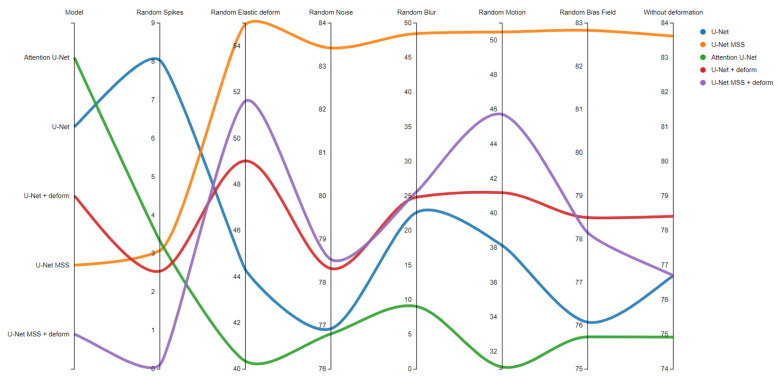
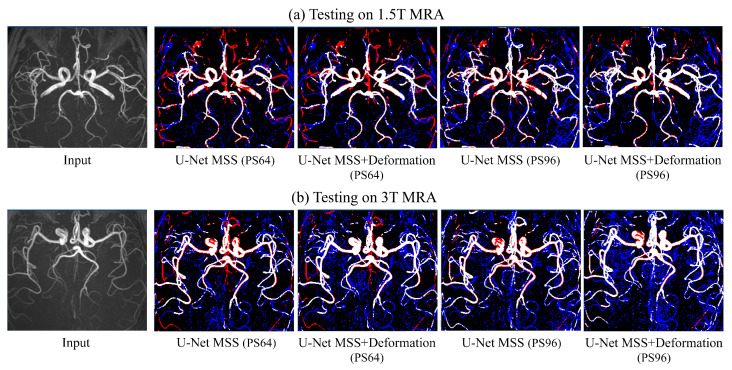
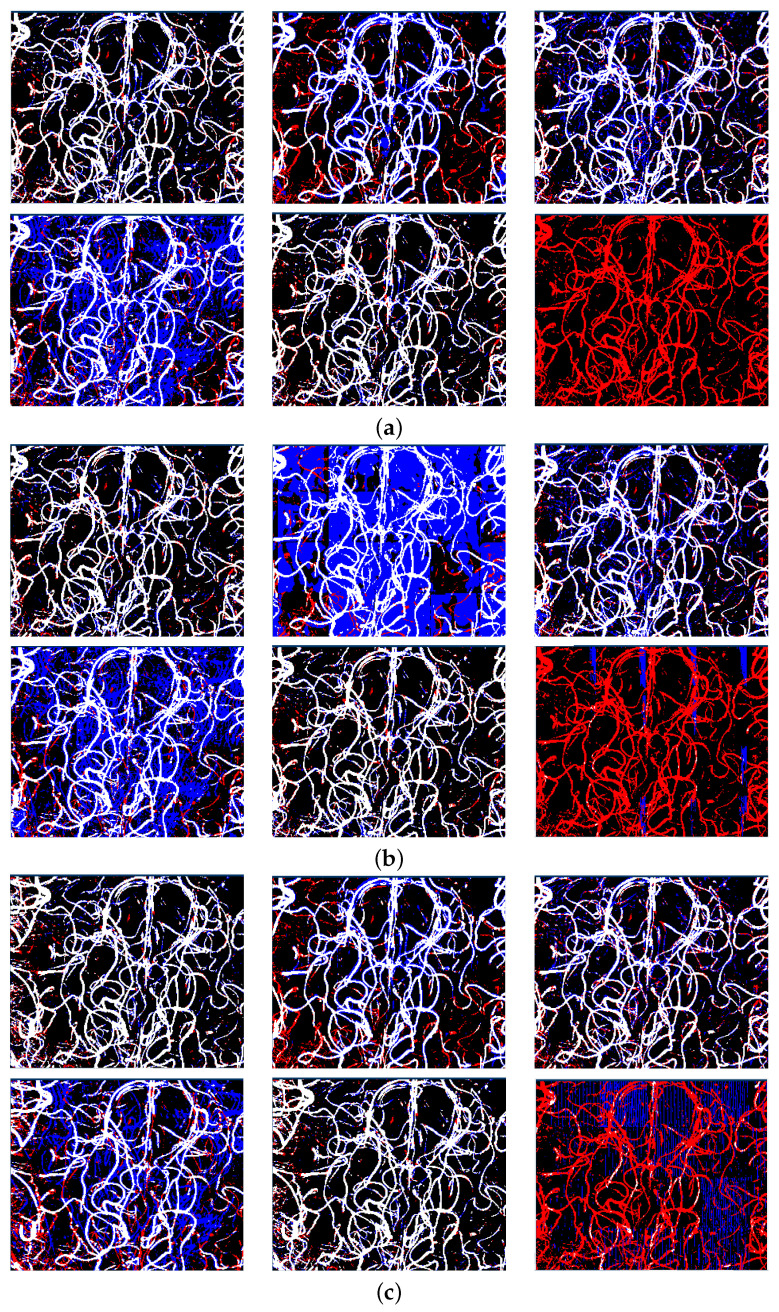
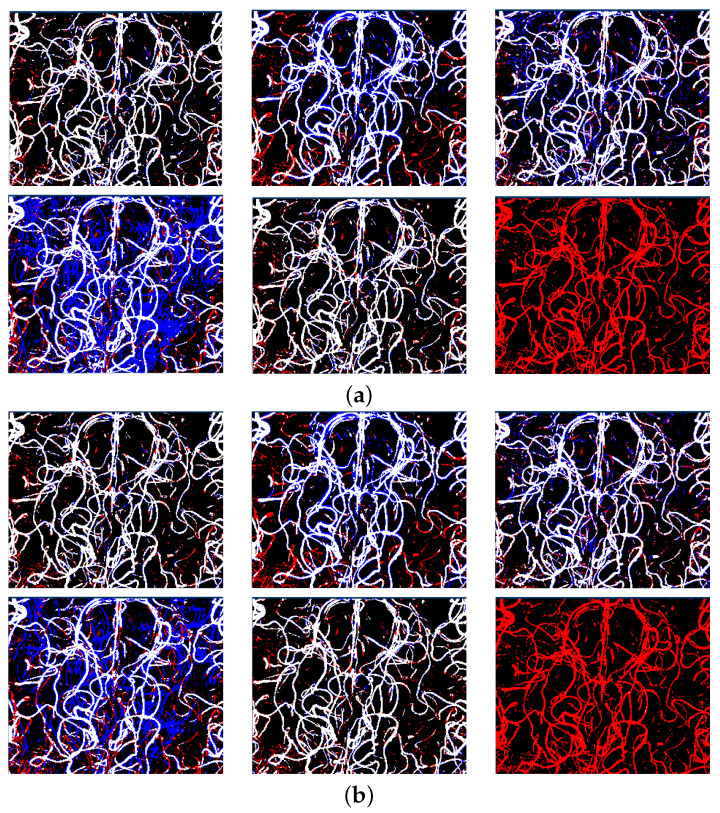
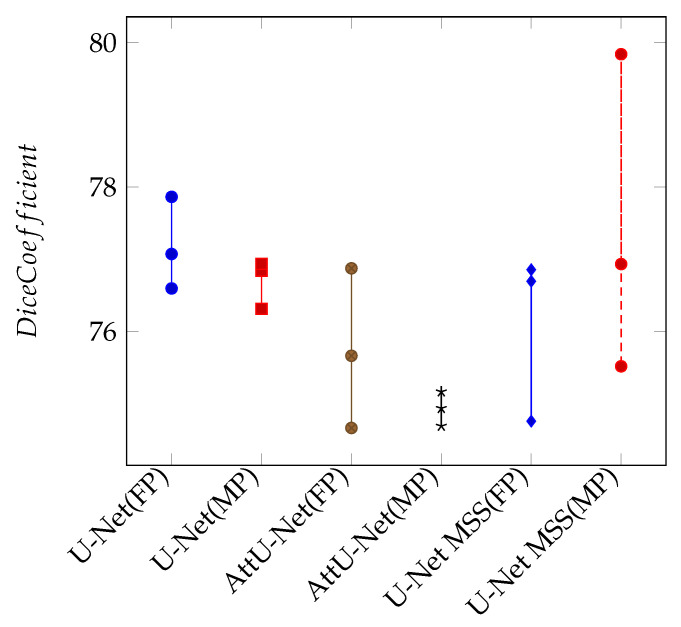
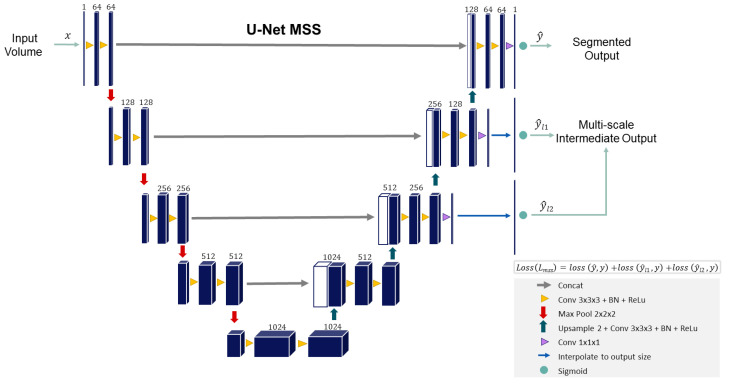
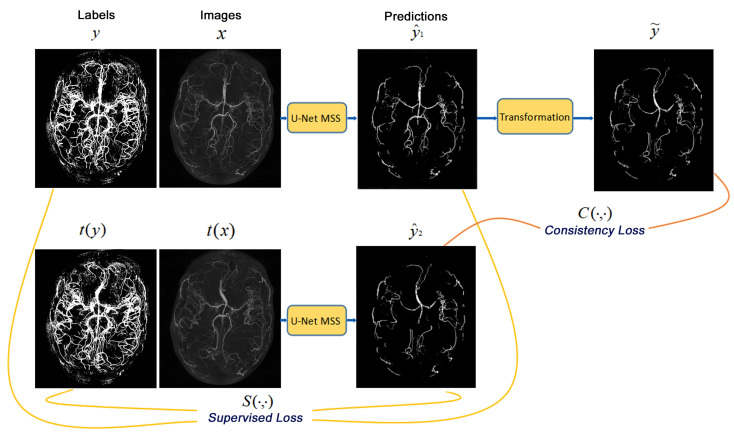
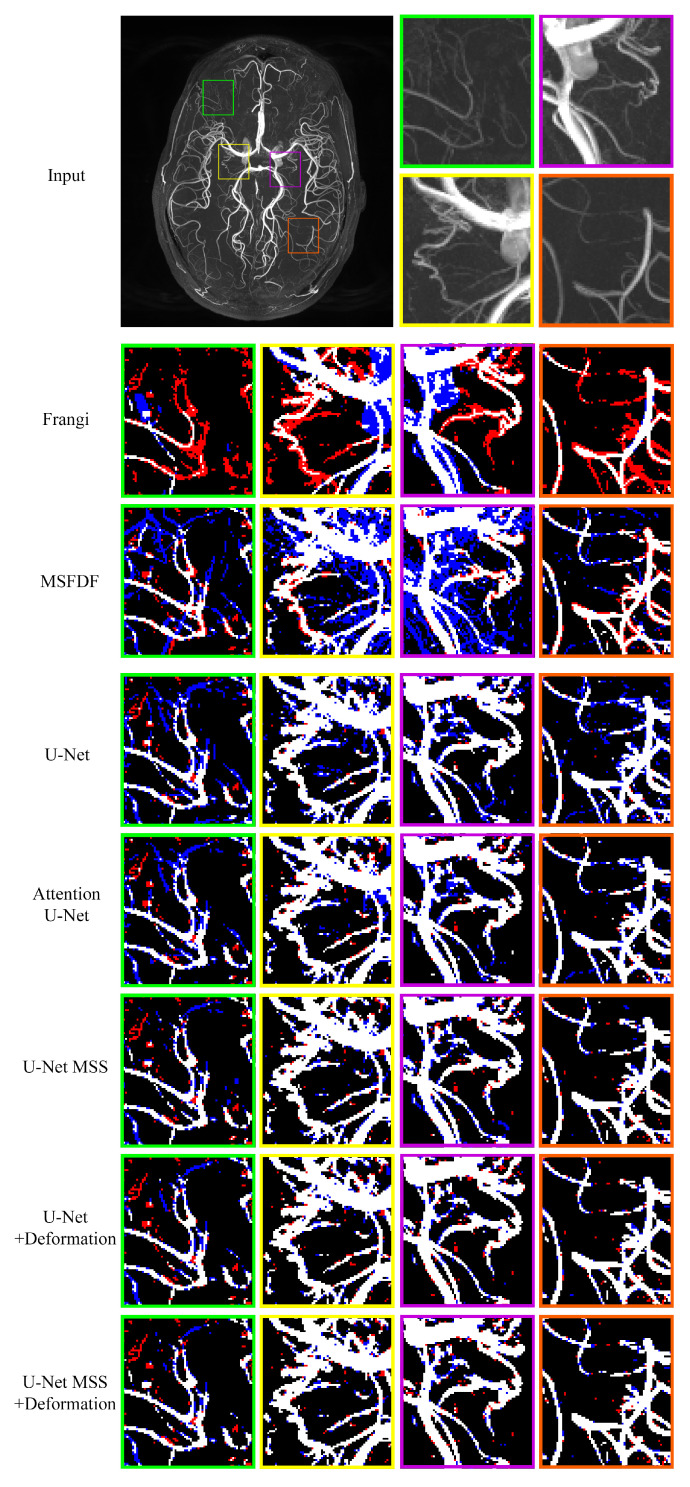
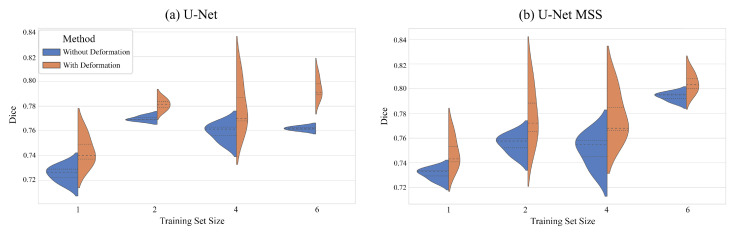
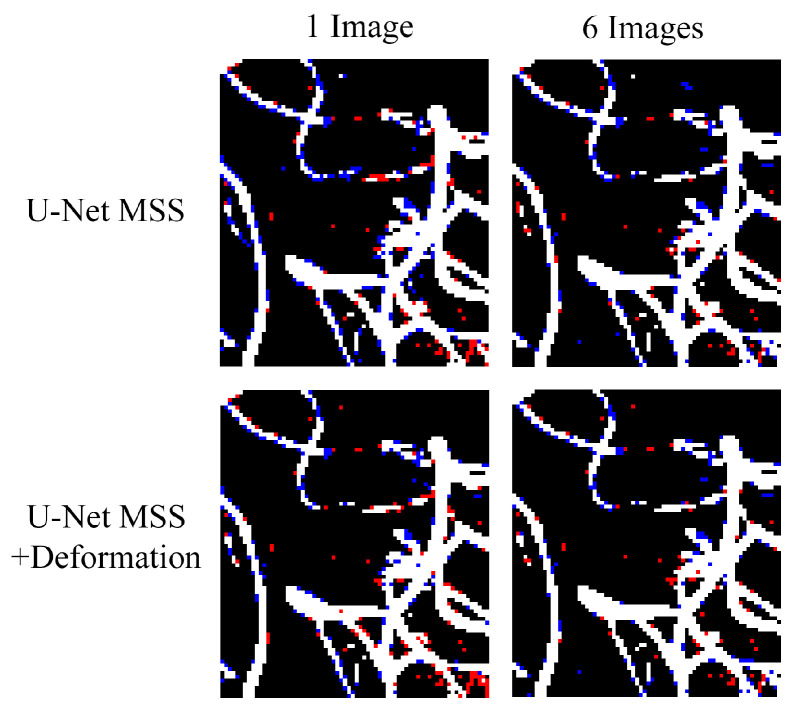
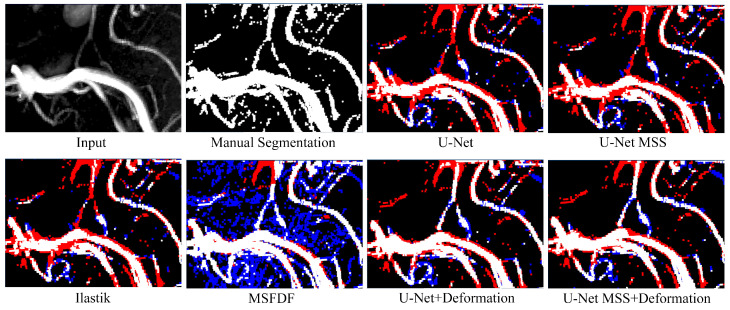
Blood vessels of the brain provide the human brain with the required nutrients and oxygen. As a vulnerable part of the cerebral blood supply, pathology of small vessels can cause serious problems such as Cerebral Small Vessel Diseases (CSVD). It has also been shown that CSVD is related to neurodegeneration, such as Alzheimer's disease. With the advancement of 7 Tesla MRI systems, higher spatial image resolution can be achieved, enabling the depiction of very small vessels in the brain. Non-Deep Learning-based approaches for vessel segmentation, e.g., Frangi's vessel enhancement with subsequent thresholding, are capable of segmenting medium to large vessels but often fail to segment small vessels. The sensitivity of these methods to small vessels can be increased by extensive parameter tuning or by manual corrections, albeit making them time-consuming, laborious, and not feasible for larger datasets. This paper proposes a deep learning architecture to automatically segment small vessels in 7 Tesla 3D Time-of-Flight (ToF) Magnetic Resonance Angiography (MRA) data. The algorithm was trained and evaluated on a small imperfect semi-automatically segmented dataset of only 11 subjects; using six for training, two for validation, and three for testing. The deep learning model based on U-Net Multi-Scale Supervision was trained using the training subset and was made equivariant to elastic deformations in a self-supervised manner using deformation-aware learning to improve the generalisation performance. The proposed technique was evaluated quantitatively and qualitatively against the test set and achieved a Dice score of 80.44 ± 0.83. Furthermore, the result of the proposed method was compared against a selected manually segmented region (62.07 resultant Dice) and has shown a considerable improvement (18.98%) with deformation-aware learning.
脑血管为人类大脑提供所需的营养和氧气。作为脑供血的脆弱部分,小血管病变会引发诸如脑小血管疾病(CSVD)等严重问题。研究还表明,CSVD与神经退行性变有关,如阿尔茨海默病。随着7特斯拉MRI系统的发展,可以实现更高的空间图像分辨率,从而能够描绘大脑中非常小的血管。基于非深度学习的血管分割方法,例如使用后续阈值处理的Frangi血管增强算法,能够分割中大型血管,但往往无法分割小血管。通过广泛的参数调整或手动校正,可以提高这些方法对小血管的敏感度,尽管这会使其耗时、费力,并且对于更大的数据集不可行。本文提出了一种深度学习架构,用于自动分割7特斯拉三维时间飞跃(ToF)磁共振血管造影(MRA)数据中的小血管。该算法在一个仅包含11名受试者的不完美半自动分割的小数据集上进行训练和评估;其中6名用于训练,2名用于验证,3名用于测试。基于U-Net多尺度监督的深度学习模型使用训练子集进行训练,并通过变形感知学习以自监督的方式使其对弹性变形具有等变性,以提高泛化性能。所提出的技术针对测试集进行了定量和定性评估,获得了80.44±0.83的骰子系数。此外,将所提出方法的结果与选定的手动分割区域(骰子系数为62.07)进行了比较,结果表明通过变形感知学习有了显著改进(提高了18.98%)。