Ciarcià Giulia, Bianchi Simone, Tomasello Barbara, Acquaviva Rosaria, Malfa Giuseppe Antonio, Naletova Irina, La Mantia Alfonsina, Di Giacomo Claudia
Department of Drug and Health Sciences, University of Catania, Viale A. Doria 6, 95125 Catania, Italy.
Research Center on Nutraceuticals and Health Products (CERNUT), University of Catania, Viale A. Doria 6, 95125 Catania, Italy.
Biomedicines. 2022 Oct 3;10(10):2473. doi: 10.3390/biomedicines10102473.
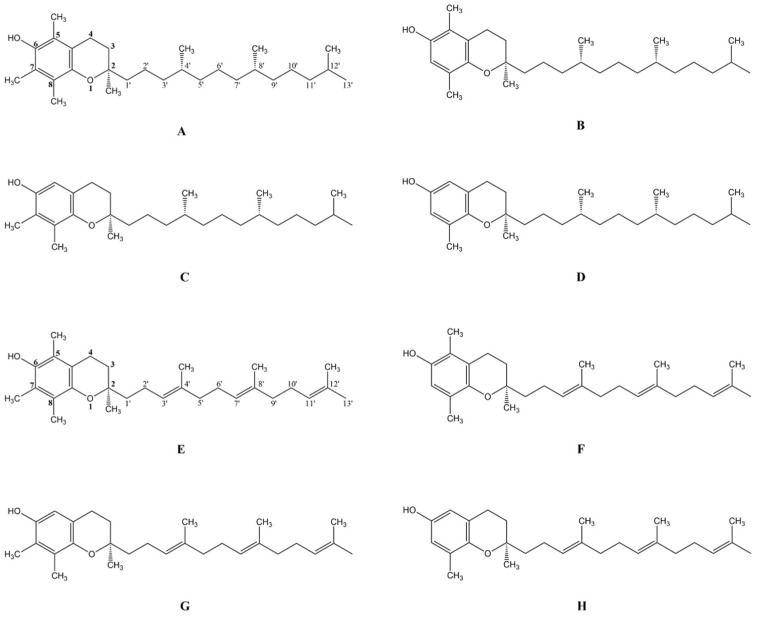
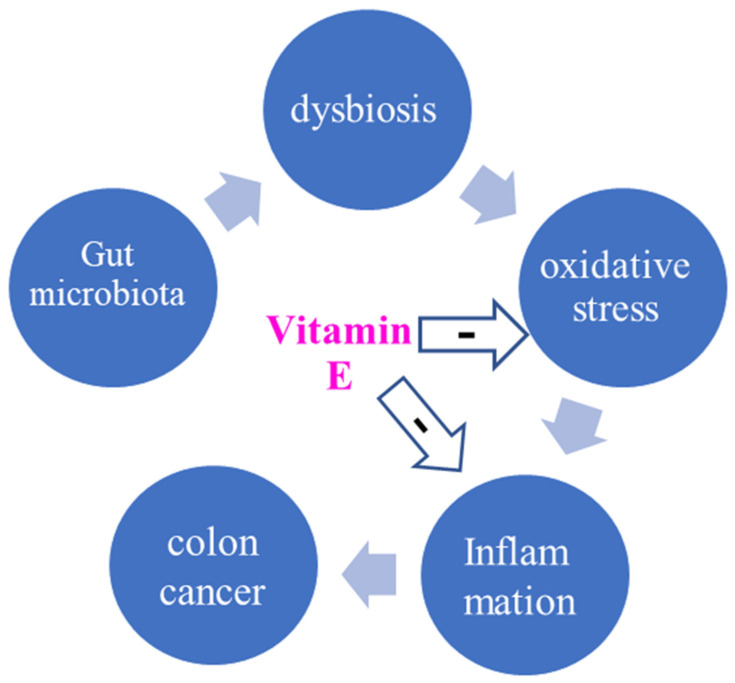
Vitamin E, a nutrient found in several foods, comprises eight lipophilic vitamers, the α-, β-, γ- and δ-tocopherols and the α-, β-, γ- and δ-tocotrienols. This vitamin is capable of exerting antioxidant and anti-inflammatory activities, and acting as immunomodulators. Despite these well-known biological activities, the findings regarding the ability of vitamin E and its serum metabolites to prevent and/or control chronic disease are often conflicting and inconsistent. In this review, we have described the metabolism of vitamin E and its interaction with the gut microbiota, considering that these factors may be partially responsible for the divergent results obtained. In addition, we focused on the correlations between vitamin E serum levels, dietary intake and/or supplementation, and the main non-communicable diseases, including diabetes mellitus, asthma, cardiovascular diseases, and the four most common cancers (breast cancer, lung cancer, colorectal cancer, and prostate cancer) with the intention of providing an overview of its health effects in the non-communicable-diseases prevention.
维生素E是一种存在于多种食物中的营养素,由八种亲脂性维生素形式组成,即α-、β-、γ-和δ-生育酚以及α-、β-、γ-和δ-生育三烯酚。这种维生素能够发挥抗氧化和抗炎活性,并作为免疫调节剂发挥作用。尽管有这些众所周知的生物学活性,但关于维生素E及其血清代谢产物预防和/或控制慢性病能力的研究结果往往相互矛盾且不一致。在这篇综述中,我们描述了维生素E的代谢及其与肠道微生物群的相互作用,认为这些因素可能部分导致了所获得的不同结果。此外,我们重点关注了维生素E血清水平、饮食摄入和/或补充与主要非传染性疾病之间的相关性,这些疾病包括糖尿病、哮喘、心血管疾病以及四种最常见的癌症(乳腺癌、肺癌、结直肠癌和前列腺癌),目的是概述其在预防非传染性疾病方面对健康的影响。