Department of Plant Physiology, Institute for Biological Research "Siniša Stanković", National Institute of Republic of Serbia, University of Belgrade, Bulevar Despota Stefana 142, 11000 Belgrade, Serbia.
Department of Microbiology, Faculty of Biology, University of Belgrade, Student Square 16, 11000 Belgrade, Serbia.
Molecules. 2022 Oct 11;27(20):6806. doi: 10.3390/molecules27206806.
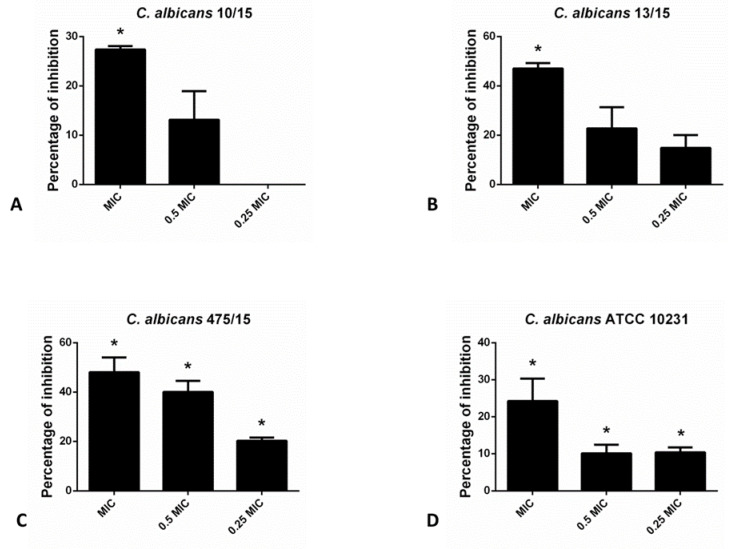
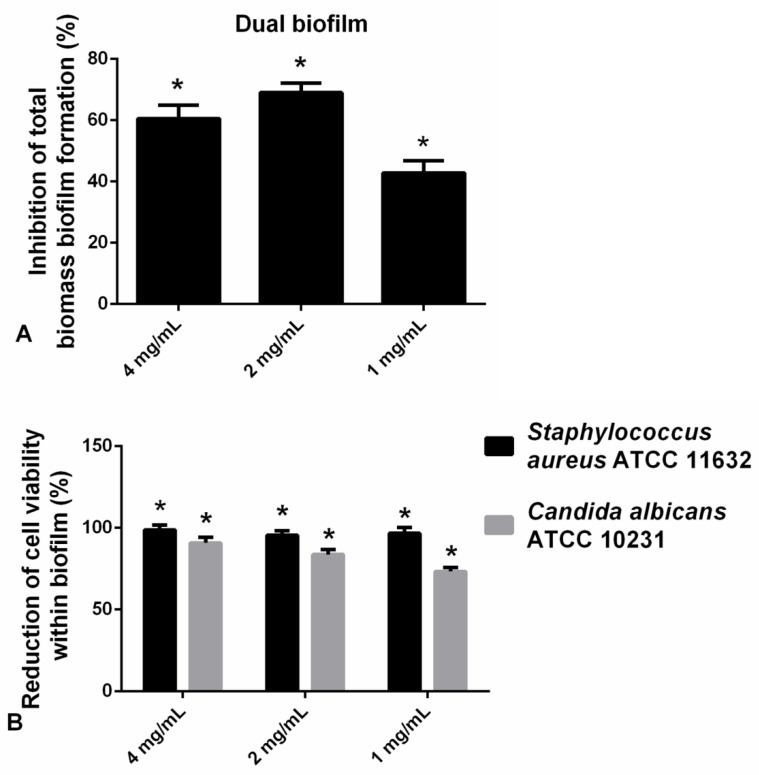
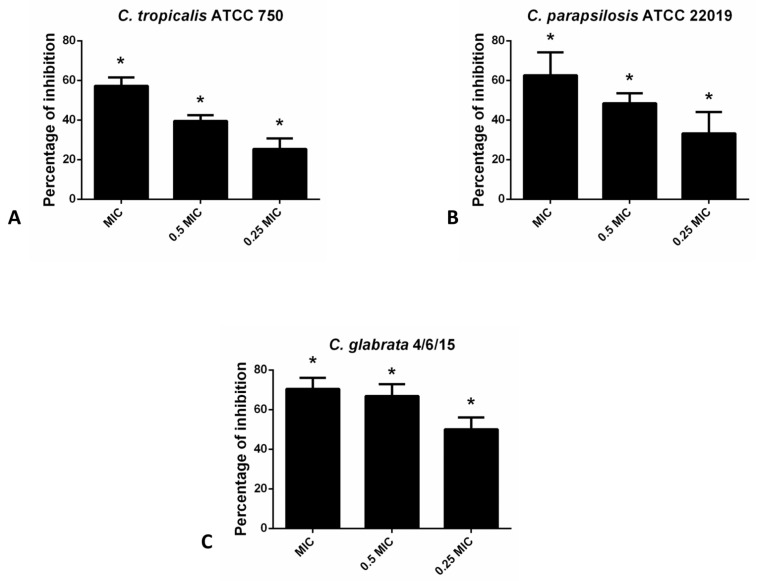
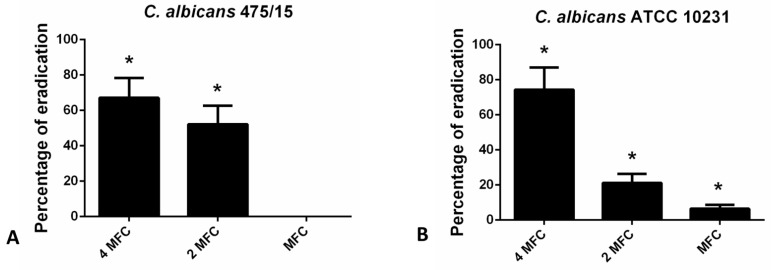
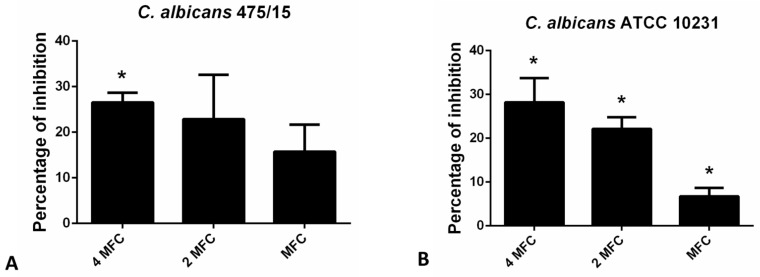
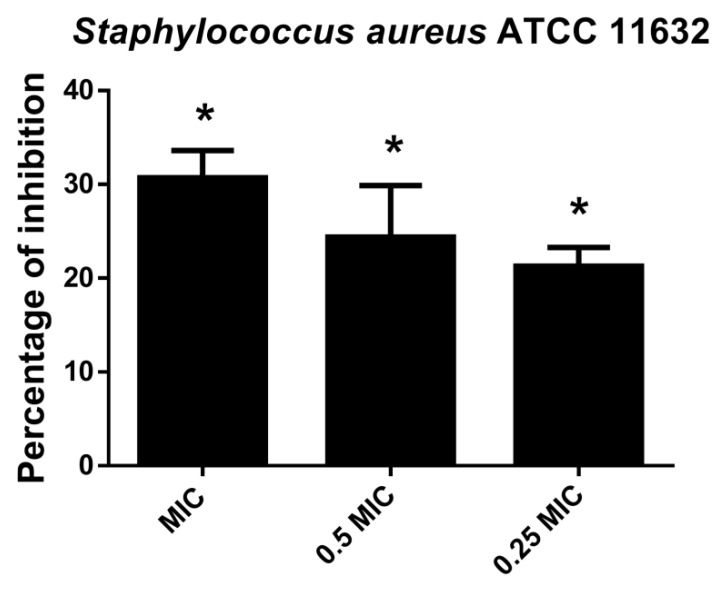
Hesperetin is the aglycone of citrus flavonoid hesperidin. Due to the limited information regarding hesperetin antimicrobial potential and emerging need for novel antimicrobials, we have studied its antimicrobial activity (microdilution assay), antibiofilm activity with different assays in two models (mono- and polymicrobial biofilm), and toxicity (MTT and brine shrimp lethality assays). Hesperetin inhibited growth of all Candida isolates (minimal inhibitory concentration, MIC, 0.165 mg/mL), while it’s inhibitory potential towards Staphylococcus aureus was lower (MIC 4 mg/mL). Hesperetin (0.165 mg/mL) reduced ability of Candida to form biofilms and moderately reduced exopolysaccharide levels in biofilm matrix. Effect on the eradication of 24 h old C. albicans biofilms was promising at 1.320 mg/mL. Inhibition of staphylococcal biofilm formation required higher concentrations of hesperetin (<50% inhibition with MIC 4 mg/mL). Establishment of polymicrobial C. albicans-S. aureus biofilm was significantly inhibited with the lowest examined hesperetin concentration (1 mg/mL) in crystal violet and CFU assays. Hesperetin toxicity was examined towards MRC-5 fibroblasts (IC50 0.340 mg/mL) and in brine shrimp lethality assay (LC50 > 1 mg/mL). Hesperetin is efficient in combating growth and biofilm formation of Candida species. However, its antibacterial application should be further examined due to the cytotoxic effects provoked in the antibacterial concentrations.
橙皮素是柑橘类黄酮橙皮苷的苷元。由于关于橙皮素抗菌潜力的信息有限,而且新的抗菌药物的需求也在不断涌现,我们研究了它的抗菌活性(微量稀释法)、两种模型(单种和混合生物膜)中的抗生物膜活性以及毒性(MTT 和卤虫致死试验)。橙皮素抑制了所有念珠菌分离株的生长(最小抑菌浓度,MIC,0.165mg/mL),而对金黄色葡萄球菌的抑制作用较低(MIC 4mg/mL)。橙皮素(0.165mg/mL)降低了念珠菌形成生物膜的能力,并适度降低了生物膜基质中的胞外多糖水平。在 1.320mg/mL 时,对 24 小时龄的 C. albicans 生物膜的清除效果很有前景。抑制葡萄球菌生物膜形成需要更高浓度的橙皮素(MIC 4mg/mL 时<50%抑制)。用最低浓度(1mg/mL)的橙皮素在结晶紫和 CFU 测定中,显著抑制了多菌种 C. albicans-S. aureus 生物膜的建立。橙皮素的细胞毒性通过 MRC-5 成纤维细胞(IC50 0.340mg/mL)和卤虫致死试验(LC50 > 1mg/mL)进行了检测。橙皮素在对抗念珠菌属物种的生长和生物膜形成方面很有效。然而,由于在抗菌浓度下引起的细胞毒性作用,其抗菌应用应该进一步研究。