Laser Research Centre, University of Johannesburg, Johannesburg 2028, South Africa.
Molecules. 2022 Oct 13;27(20):6862. doi: 10.3390/molecules27206862.
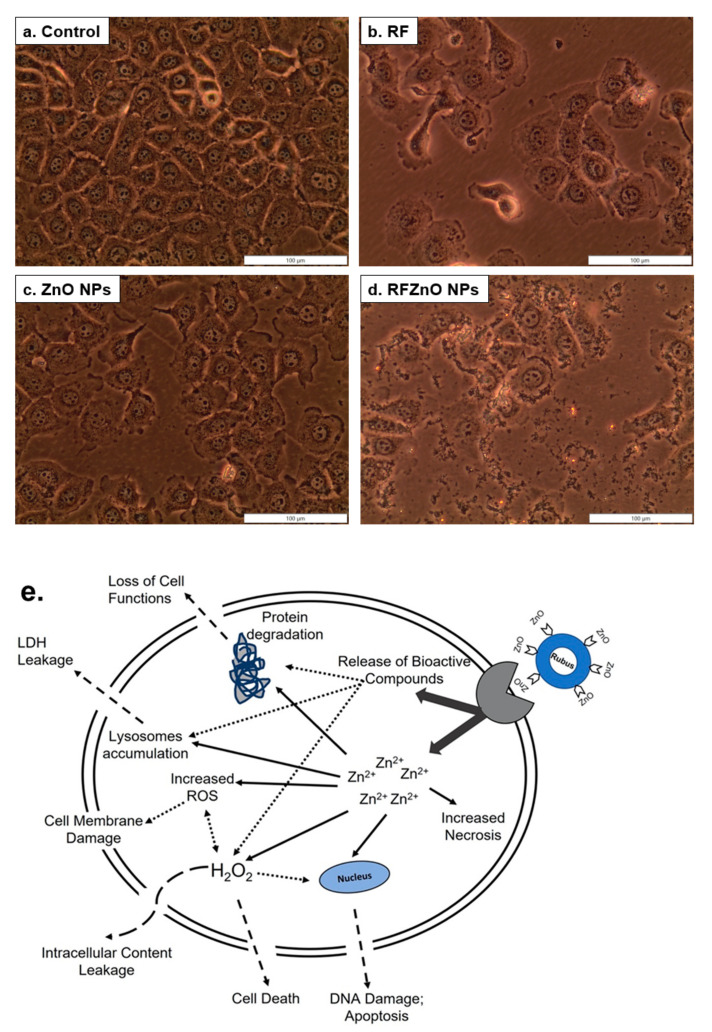
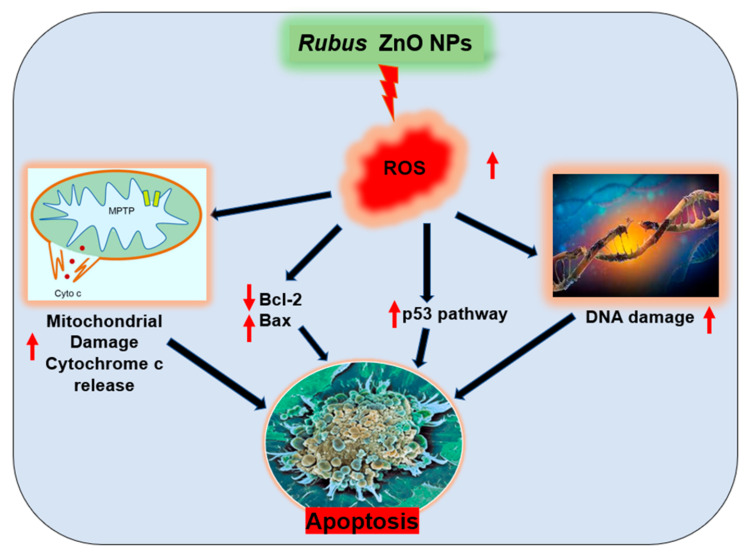
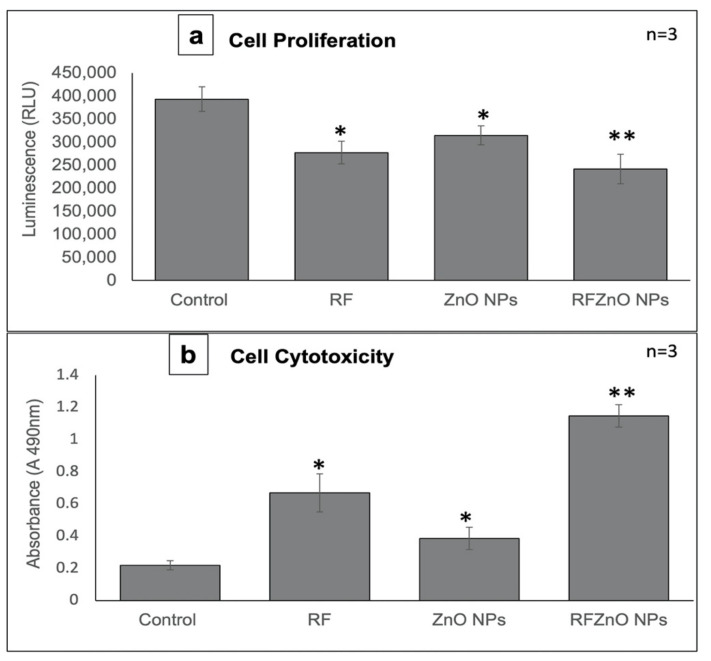
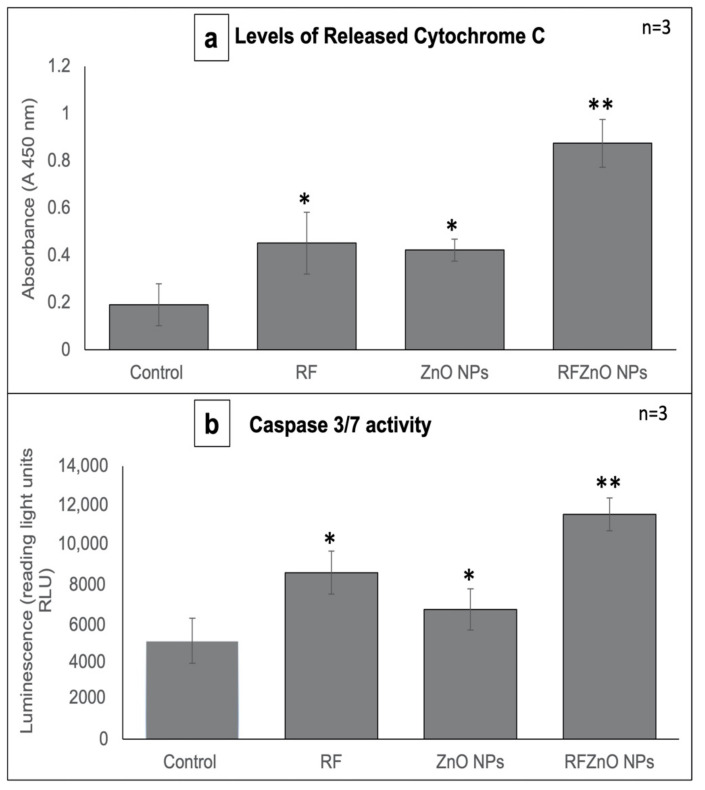
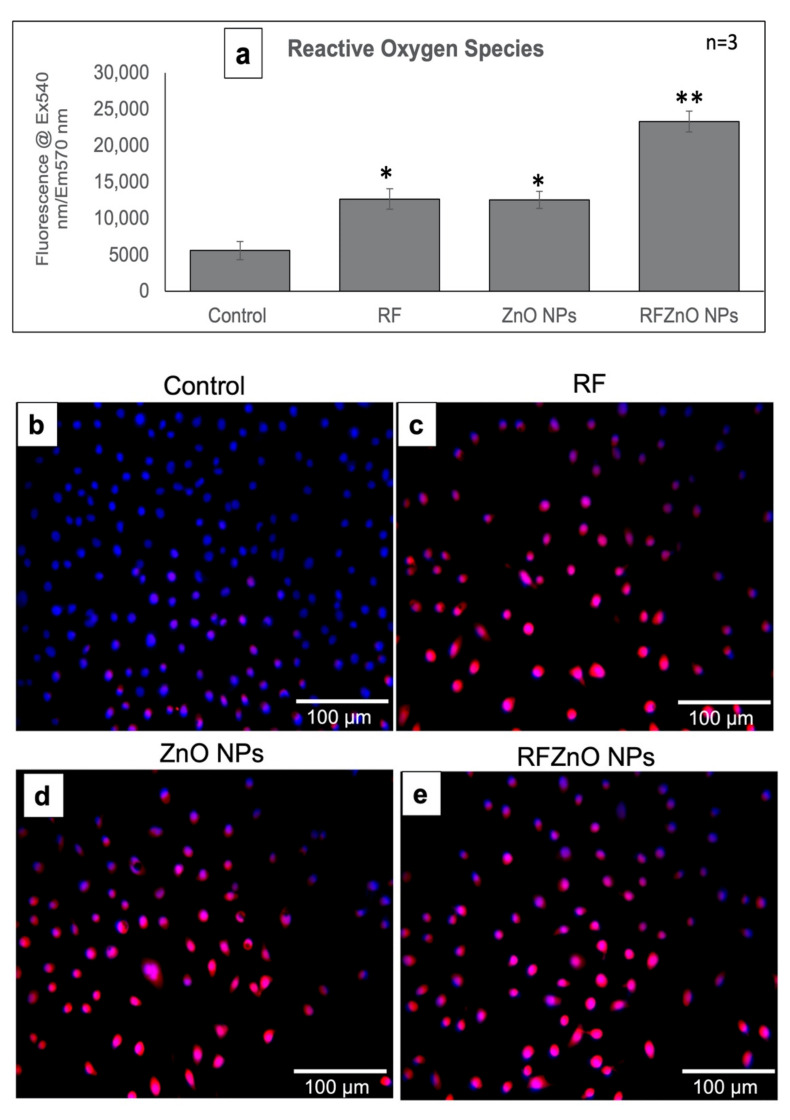
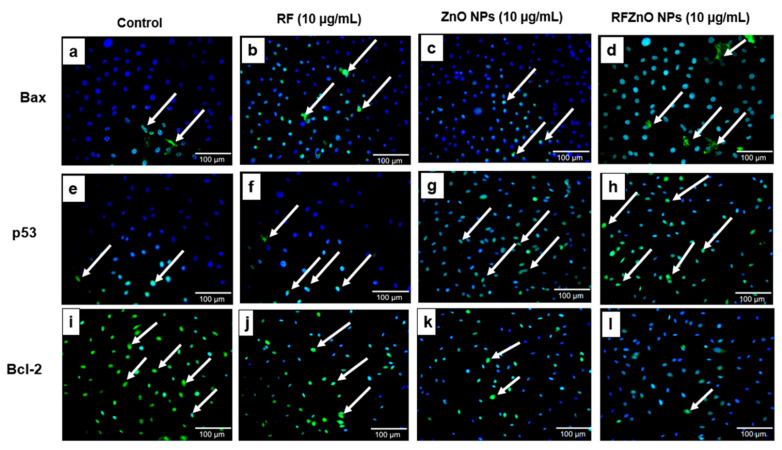
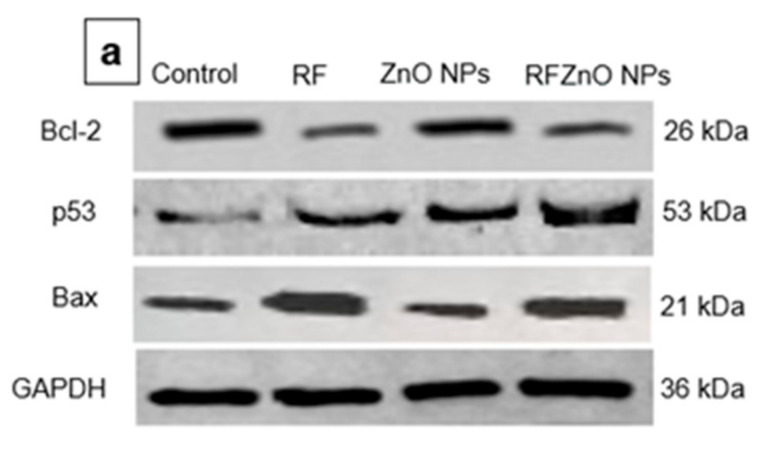
(RF) has widely been used to treat various ailments, including pain, diabetes, and cancer. Zinc oxide nanoparticles (ZnO NPs) have drawn attention in modern healthcare applications. Hence, we designed this study to synthesize zinc oxide (ZnO) nanoparticles using root extract to investigate its synergistic cytotoxic effect on MCF-7 cells and explore the possible cell death mechanism. ZnO NPs were synthesized via green synthesis using root extract, and the effect on MCF-7 cells was determined by looking at cellular morphology, proliferation, cytotoxicity, apoptosis, and reactive oxygen species (ROS). The results showed that cellular proliferation was reduced following treatment with capped zinc oxide nanoparticles (RFZnO NPs), while cytotoxicity and ROS were increased. There was also an increase in apoptosis as indicated by the significant increase in cytoplasmic cytochrome c and caspase 3/7 (markers of apoptosis), as well as increased levels of pro-apoptotic proteins (p53, Bax) and decreased levels of anti-apoptotic protein (Bcl-2). In conclusion, these results showed that RFZnO NPs induce apoptosis in breast cancer cells via a mitochondria-mediated caspase-dependent apoptotic pathway and suggest the use of acetone root extract of for the treatment of cancer-related ailments.
(RF)已被广泛用于治疗各种疾病,包括疼痛、糖尿病和癌症。氧化锌纳米粒子(ZnO NPs)在现代医疗保健应用中引起了关注。因此,我们设计了这项研究,使用 根提取物合成氧化锌(ZnO)纳米粒子,以研究其对 MCF-7 细胞的协同细胞毒性作用,并探讨可能的细胞死亡机制。使用 根提取物通过绿色合成法合成了 ZnO NPs,并通过观察细胞形态、增殖、细胞毒性、细胞凋亡和活性氧(ROS)来确定其对 MCF-7 细胞的影响。结果表明,用 包被的氧化锌纳米粒子(RFZnO NPs)处理后,细胞增殖减少,而细胞毒性和 ROS 增加。细胞凋亡也增加,这表明细胞质细胞色素 c 和 caspase 3/7(凋亡标志物)显著增加,以及促凋亡蛋白(p53、Bax)水平增加和抗凋亡蛋白(Bcl-2)水平降低。总之,这些结果表明,RFZnO NPs 通过线粒体介导的 caspase 依赖性凋亡途径诱导乳腺癌细胞凋亡,并提示使用 丙酮根提取物治疗与癌症相关的疾病。