Al-Nemrawi Nusaiba K, Darweesh Ruba S, Al-Shriem Lubna A, Al-Qawasmi Farah S, Emran Sereen O, Khafajah Areej S, Abu-Dalo Muna A
Department of Pharmaceutical Technology, Faculty of Pharmacy, Jordan University of Science and Technology, P.O. Box 3030, Irbid 22110, Jordan.
Department of Chemistry, Faculty of Science and Art, Jordan University of Science and Technology, P.O. Box 3030, Irbid 22110, Jordan.
Polymers (Basel). 2022 Oct 21;14(20):4450. doi: 10.3390/polym14204450.
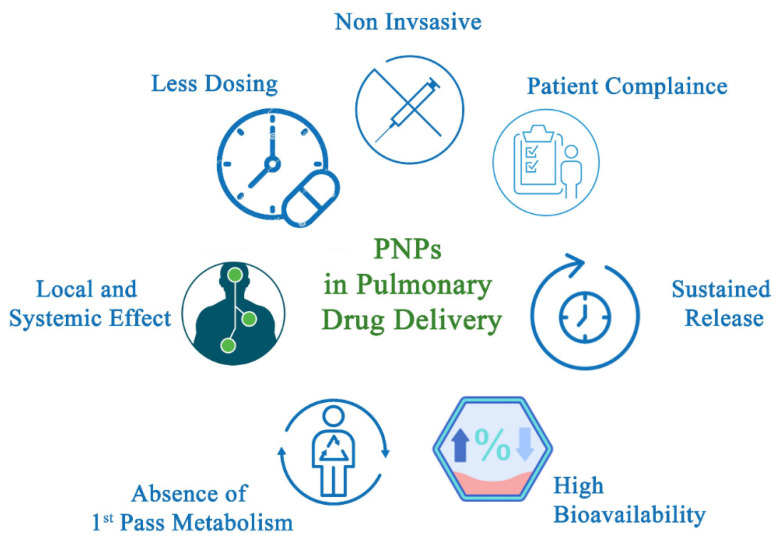
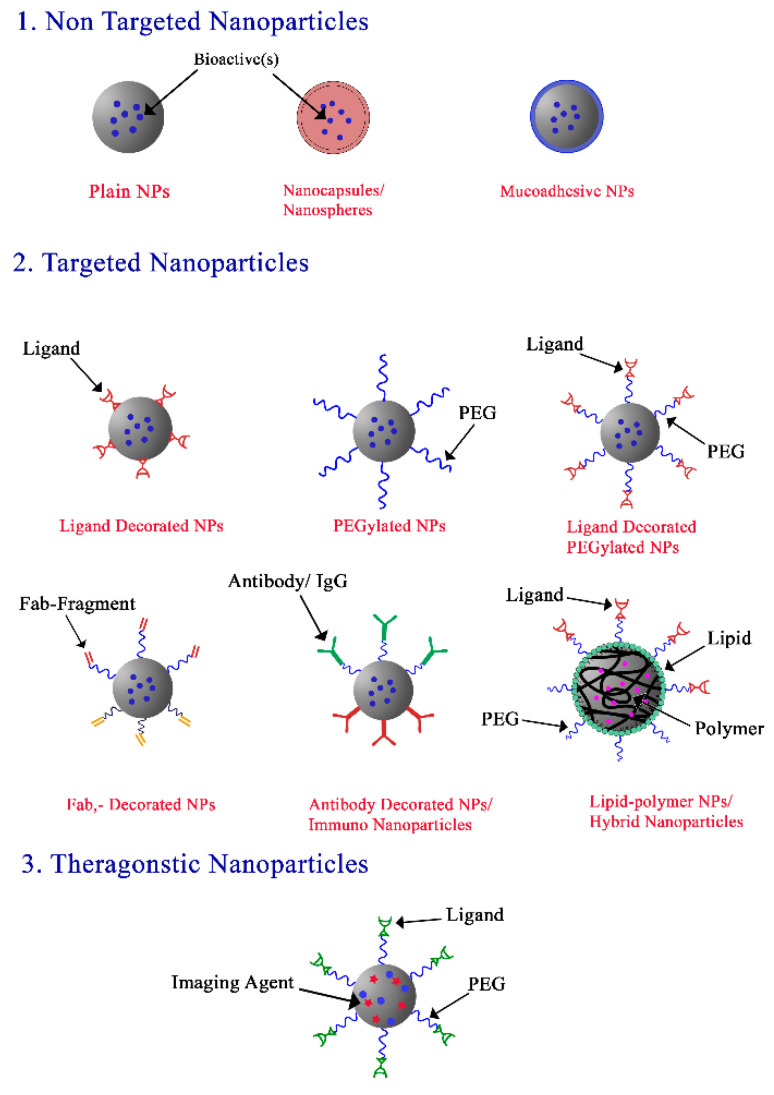
Many recent studies focus on the pulmonary delivery of vaccines as it is needle-free, safe, and effective. Inhaled vaccines enhance systemic and mucosal immunization but still faces many limitations that can be resolved using polymeric nanoparticles (PNPs). This review focuses on the use of properties of PNPs, specifically chitosan and PLGA to be used in the delivery of vaccines by inhalation. It also aims to highlight that PNPs have adjuvant properties by themselves that induce cellular and humeral immunogenicity. Further, different factors influence the behavior of PNP in vivo such as size, morphology, and charge are discussed. Finally, some of the primary challenges facing PNPs are reviewed including formulation instability, reproducibility, device-related factors, patient-related factors, and industrial-level scale-up. Herein, the most important variables of PNPs that shall be defined in any PNPs to be used for pulmonary delivery are defined. Further, this study focuses on the most popular polymers used for this purpose.
最近许多研究聚焦于疫苗的肺部给药,因为它无需针头、安全且有效。吸入式疫苗可增强全身和黏膜免疫,但仍面临许多可通过使用聚合物纳米颗粒(PNP)解决的局限性。本综述着重于PNP的特性,特别是壳聚糖和聚乳酸-羟基乙酸共聚物(PLGA)在吸入式疫苗递送中的应用。它还旨在强调PNP本身具有佐剂特性,可诱导细胞和体液免疫原性。此外,还讨论了诸如尺寸、形态和电荷等不同因素对PNP体内行为的影响。最后,综述了PNP面临的一些主要挑战,包括制剂稳定性、可重复性、与设备相关的因素、与患者相关的因素以及工业规模放大。在此,定义了用于肺部递送的任何PNP中应确定的最重要的PNP变量。此外,本研究聚焦于用于此目的的最常用聚合物。