Department of Arbovirology and Hemorrhagic Fevers, Evandro Chagas Institute, BR 316, km 07, s/n, Levilândia, Ananindeua 67030-000, PA, Brazil.
Department of Virology, Evandro Chagas Institute, BR 316, km 07, s/n, Levilândia, Ananindeua 67030-000, PA, Brazil.
Viruses. 2022 Sep 22;14(10):2101. doi: 10.3390/v14102101.
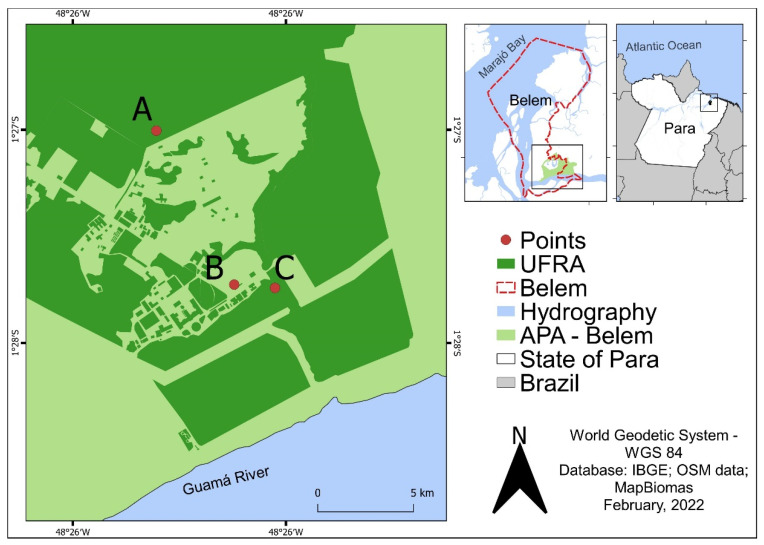
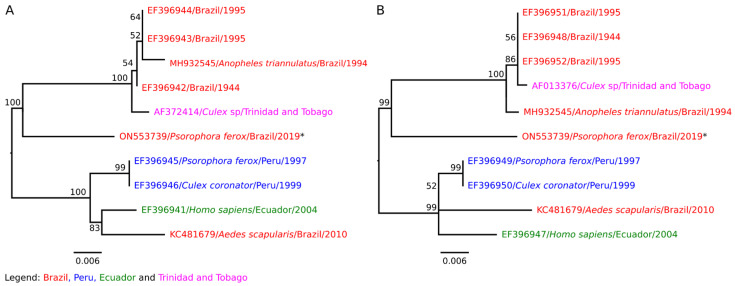
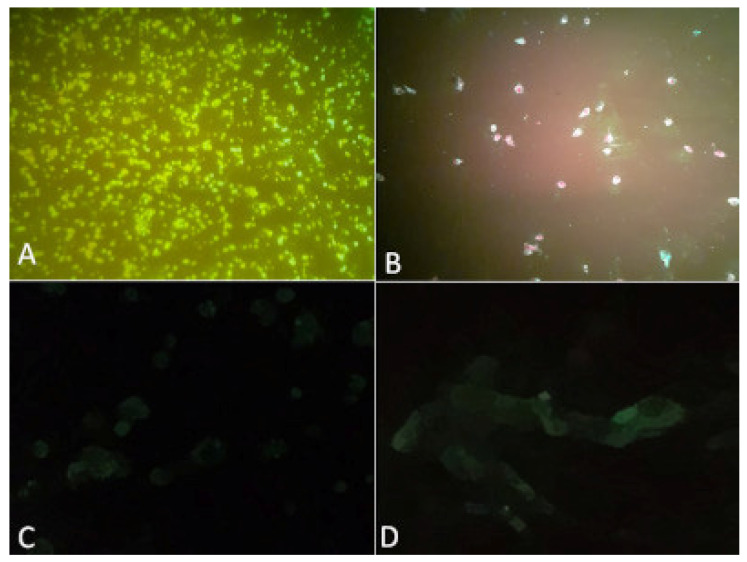
The rapid and disorderly urbanization in the Amazon has resulted in the insertion of forest fragments into cities, causing the circulation of arboviruses, which can involve hematophagous arthropods and free-ranging birds in the transmission cycles in urban environments. This study aimed to evaluate the circulation of arboviruses in free-ranging birds and hematophagous arthropods captured in an Environmental Protection Area in the Belem metropolitan area, Brazil. Birds were captured using mist nets, and hematophagous arthropods were collected using a human protected attraction technique and light traps. The birds' sera were subjected to a hemagglutination inhibition test to detect antibodies against 29 arbovirus antigens. Arthropod macerates were inoculated into C6/36 and VERO cell cultures to attempt viral isolation and were tested using indirect immunofluorescence, subsequent genetic sequencing and submitted for phylogenetic analysis. Four bird sera were positive for arbovirus, and one batch of was positive for on viral isolation and indirect immunofluorescence. In addition, the was detected in the sequencing and phylogenetic analysis. The presence of antibodies in sera from free-ranging birds and the isolation of in indicate the circulation of arboviruses in forest remnants in the urban center of Belem.
亚马逊地区快速无序的城市化导致森林碎片插入城市,造成虫媒病毒循环,在城市环境中,这些病毒可能涉及吸血节肢动物和自由放养的鸟类的传播循环。本研究旨在评估巴西贝伦大都市区一个环境保护区中自由放养鸟类和吸血节肢动物中虫媒病毒的循环情况。使用网捕捉鸟类,使用人体吸引技术和灯光陷阱收集吸血节肢动物。对鸟类血清进行血凝抑制试验,以检测针对 29 种虫媒病毒抗原的抗体。将节肢动物磨碎物接种到 C6/36 和 VERO 细胞培养物中,尝试进行病毒分离,并使用间接免疫荧光法、随后的遗传测序和提交进行系统发育分析。四份鸟类血清对虫媒病毒呈阳性反应,一批对间接免疫荧光呈阳性反应。此外,在测序和系统发育分析中检测到。从自由放养鸟类的血清中检测到抗体,以及在分离物中检测到,表明虫媒病毒在贝伦市中心的森林残余物中循环。