Gao Juan, Wang Mei-Jing, Wang Jing-Jing, Lu Hai-Ping, Liu Jian-Xiang
State Key Laboratory of Plant Physiology and Biochemistry, College of Life Sciences, Zhejiang University, Hangzhou, 310027 China.
aBIOTECH. 2021 Nov 25;3(1):1-11. doi: 10.1007/s42994-021-00062-1. eCollection 2022 Mar.
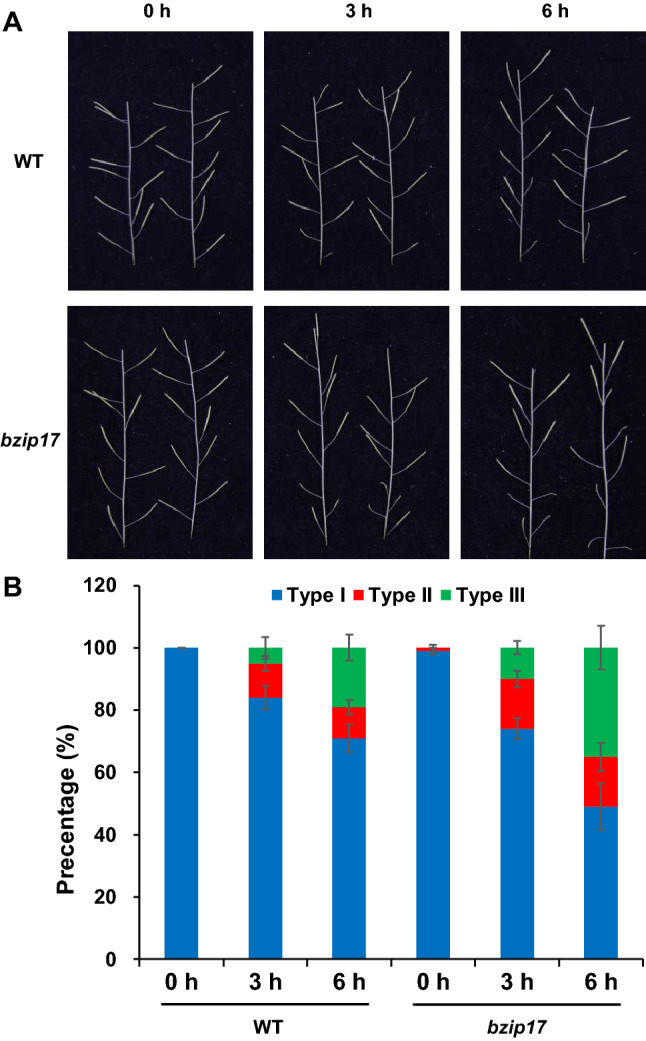
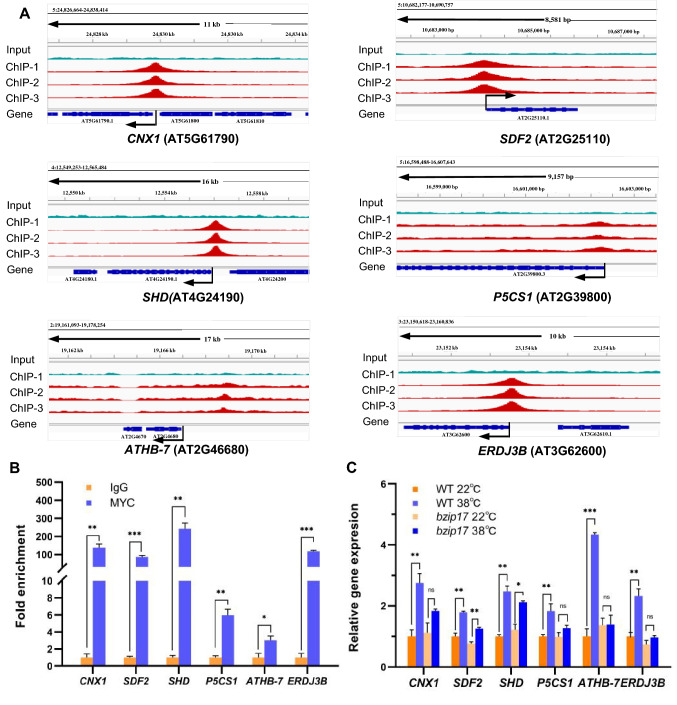
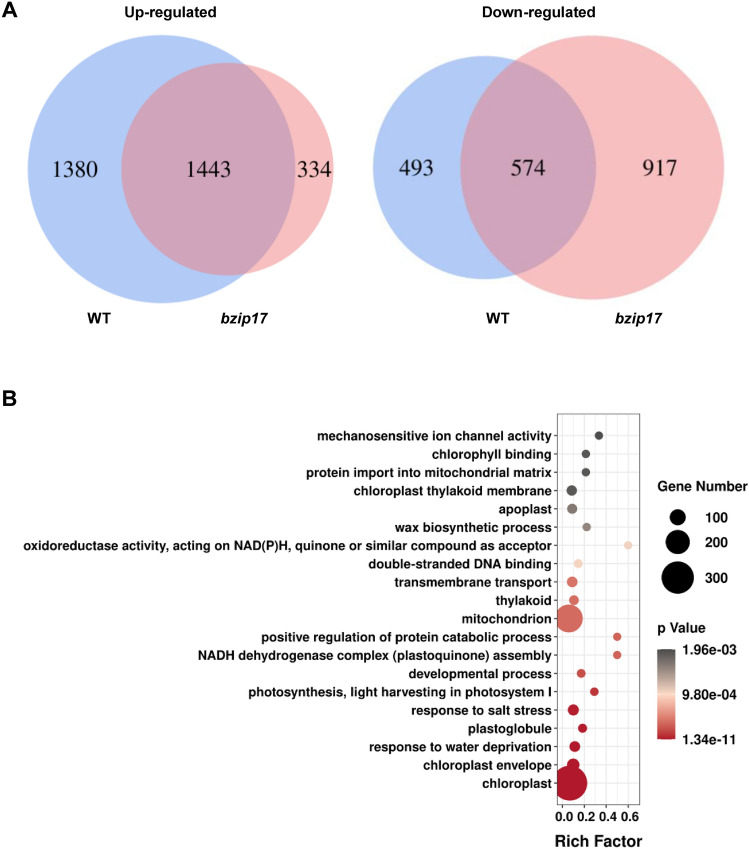
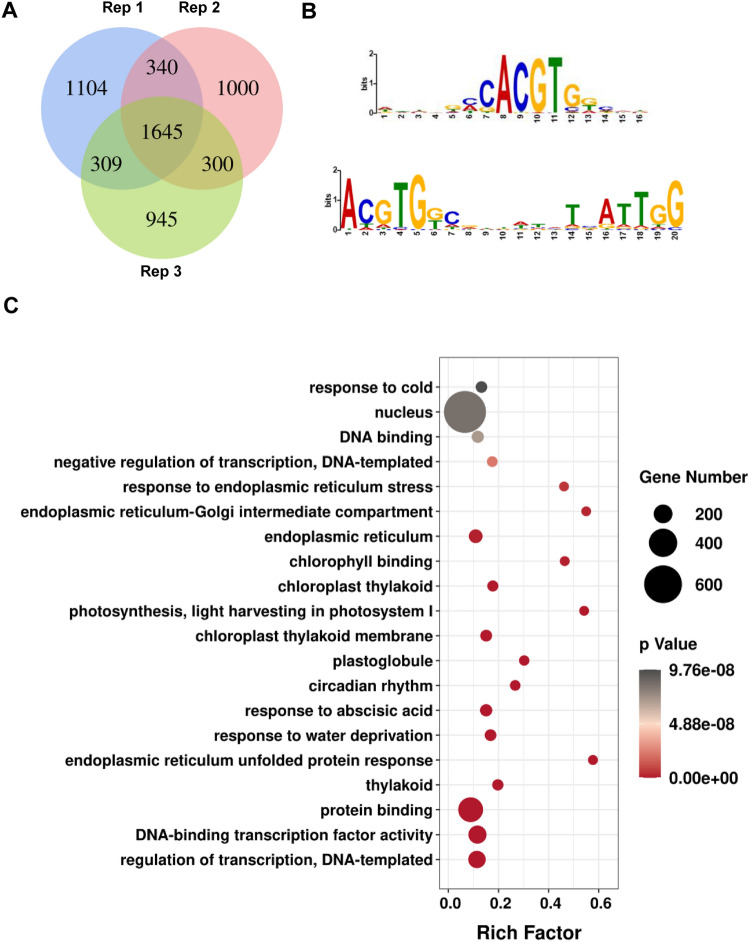
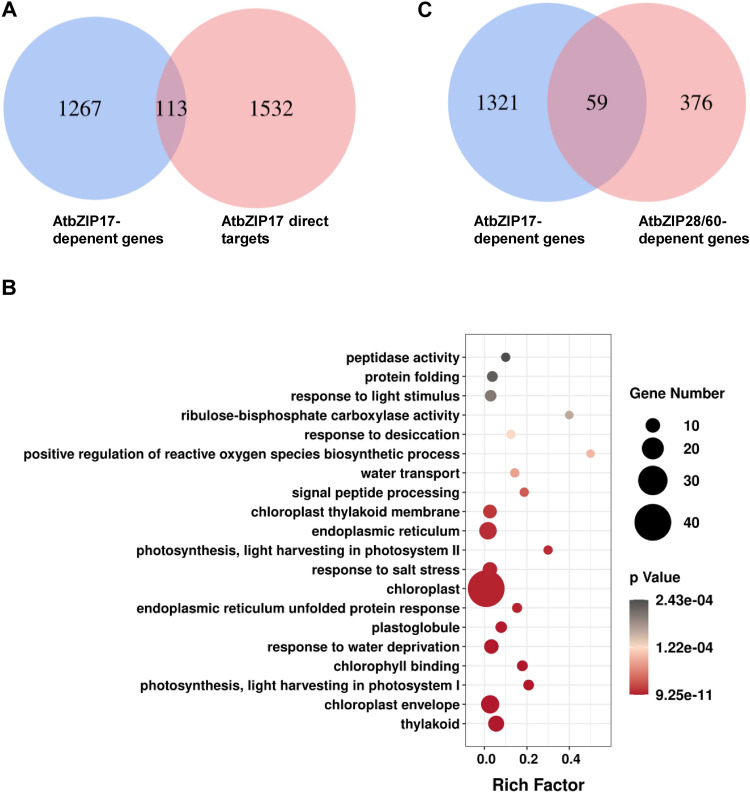
High temperature elicits a well-conserved response called the unfolded protein response (UPR) to bring protein homeostasis in the endoplasmic reticulum (ER). Two key UPR regulators bZIP28 and bZIP60 have been shown to be essential for maintaining fertility under heat stress conditions in , however, the function of transcriptional activator bZIP17, a paralog of bZIP28, in heat stress response at reproductive stage is not reported. Here we found that mutant plants were sensitive to heat stress in terms of silique length and fertility comparing to that of wildtype (WT) plants, and transcriptomic analysis showed that 1380 genes were specifically up-regulated and 493 genes were specifically down-regulated by heat stress in the flowers of WT plants comparing to that in mutant plants. These bZIP17-dependent up-regulated genes were enriched in responses to abiotic stresses such as water deprivation and salt stress. Further chromatin immuno-precipitation coupled with high-throughput sequencing (ChIP-Seq) uncovered 1645 genes that were direct targets of bZIP17 in expressing seedlings subjected to heat stress. Among these 1645 genes, ERSE-II -element was enriched in the binding peaks of their promoters, and the up-regulation of 113 genes by heat stress in flowers was dependent on bZIP17. Our results revealed direct targets of bZIP17 in flowers during heat stress responses and demonstrated the important role of bZIP17 in maintaining fertility upon heat stress in plants.
The online version contains supplementary material available at 10.1007/s42994-021-00062-1.
高温引发一种保守性良好的反应,称为未折叠蛋白反应(UPR),以在内质网(ER)中实现蛋白质稳态。已证明两个关键的UPR调节因子bZIP28和bZIP60对于在热胁迫条件下维持育性至关重要,然而,转录激活因子bZIP17(bZIP28的旁系同源物)在生殖阶段热应激反应中的功能尚未见报道。在这里,我们发现与野生型(WT)植物相比, 突变体植物在角果长度和育性方面对热胁迫敏感,转录组分析表明,与 突变体植物相比,野生型植物花中1380个基因在热胁迫下特异性上调,493个基因特异性下调。这些依赖bZIP17上调的基因在对缺水和盐胁迫等非生物胁迫的反应中富集。进一步的染色质免疫沉淀结合高通量测序(ChIP-Seq)发现了1645个基因,这些基因是热胁迫下 表达幼苗中bZIP17的直接靶标。在这1645个基因中,ERSE-II -元件在其启动子的结合峰中富集,花中113个基因的热胁迫上调依赖于bZIP17。我们的结果揭示了热胁迫反应期间花中bZIP17的直接靶标,并证明了bZIP17在植物热胁迫下维持育性中的重要作用。
在线版本包含可在10.1007/s42994-021-00062-1获取的补充材料。