College of Computer Science and Electronic Engineering, Hunan University, Changsha, Hunan 410082, P.R. China.
Department of Population Health Sciences, Weill Cornell Medical College, Cornell University, New York, NY 10065, USA.
Cell Rep Med. 2022 Dec 20;3(12):100794. doi: 10.1016/j.xcrm.2022.100794. Epub 2022 Oct 27.
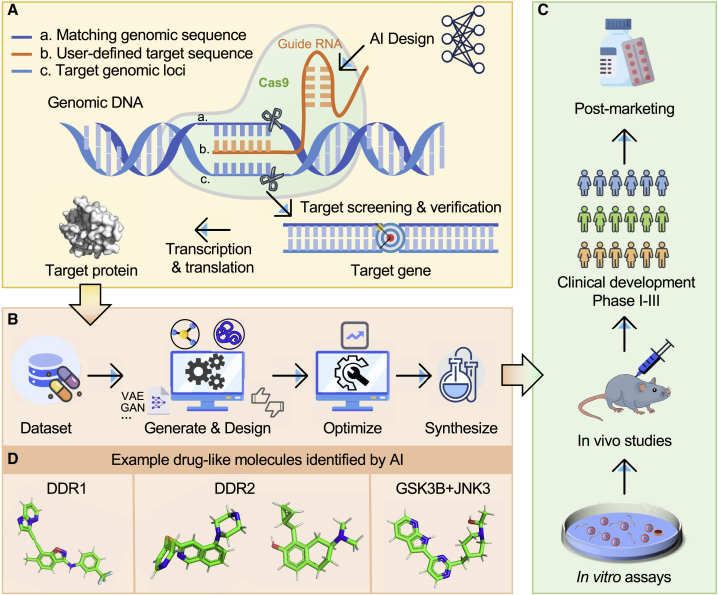
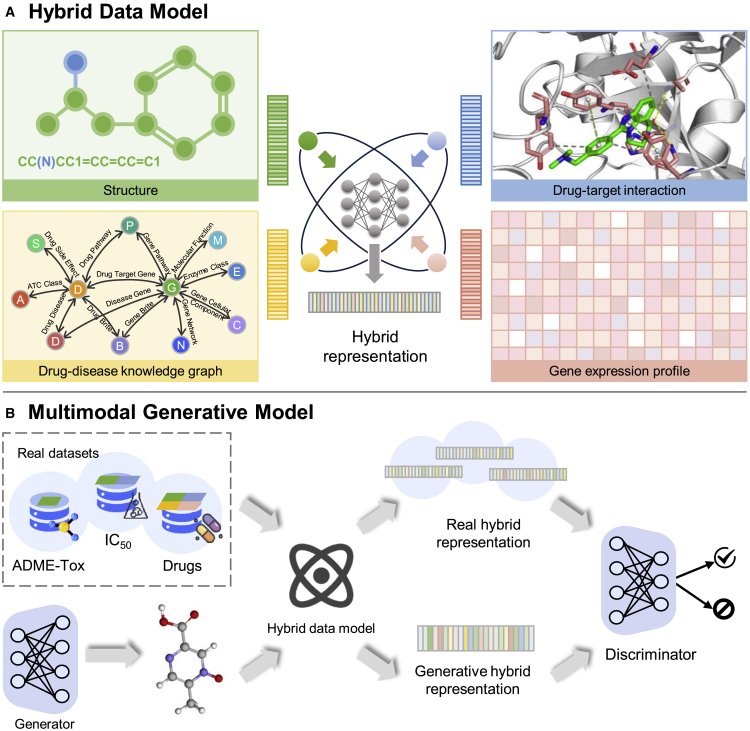
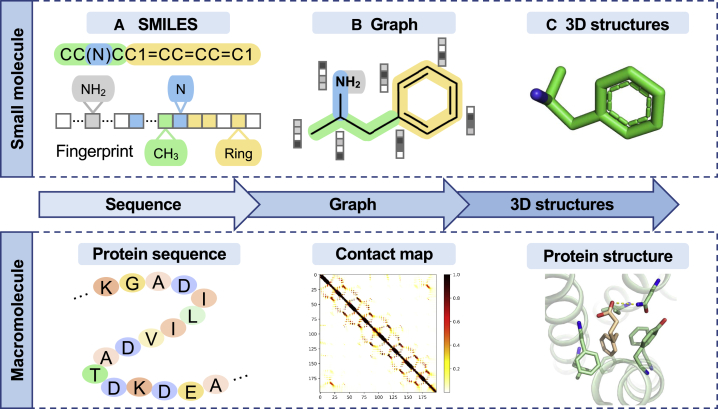
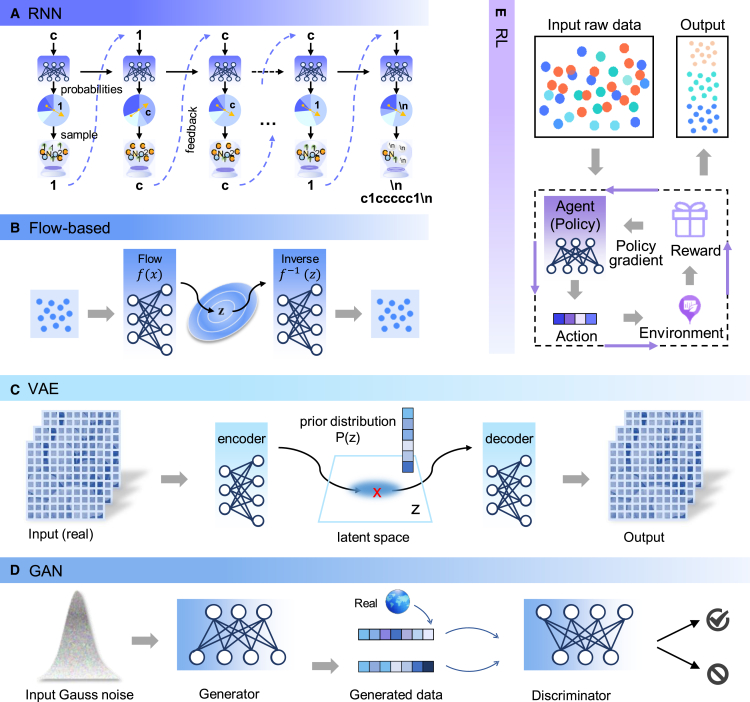
Recent advances and accomplishments of artificial intelligence (AI) and deep generative models have established their usefulness in medicinal applications, especially in drug discovery and development. To correctly apply AI, the developer and user face questions such as which protocols to consider, which factors to scrutinize, and how the deep generative models can integrate the relevant disciplines. This review summarizes classical and newly developed AI approaches, providing an updated and accessible guide to the broad computational drug discovery and development community. We introduce deep generative models from different standpoints and describe the theoretical frameworks for representing chemical and biological structures and their applications. We discuss the data and technical challenges and highlight future directions of multimodal deep generative models for accelerating drug discovery.
人工智能(AI)和深度生成模型的最新进展和成果已经证明了它们在医学应用中的有用性,特别是在药物发现和开发方面。为了正确应用 AI,开发者和用户面临着许多问题,例如应该考虑哪些方案、应该仔细检查哪些因素,以及深度生成模型如何整合相关学科。这篇综述总结了经典和新开发的 AI 方法,为广泛的计算药物发现和开发社区提供了一个更新和易于理解的指南。我们从不同的角度介绍了深度生成模型,并描述了表示化学和生物结构及其应用的理论框架。我们讨论了数据和技术方面的挑战,并强调了多模态深度生成模型在加速药物发现方面的未来方向。