Department of Nephrology, Yueyang Hospital of Integrated Traditional Chinese and Western Medicine, Shanghai University of Traditional Chinese Medicine, Shanghai, China.
Department of Hemodialysis, Lin'an Third People's Hospital, Hangzhou, Zhejiang, China.
Front Endocrinol (Lausanne). 2022 Oct 20;13:1018093. doi: 10.3389/fendo.2022.1018093. eCollection 2022.
Gut microbiota has been reported to play an important role in diabetic kidney disease (DKD), however, the alterations of gut bacteria have not been determined.
Studies comparing the differences of gut microbiome between patients with DKD and non-DKD individuals using high-throughput sequencing technology, were systematically searched and reviewed. Outcomes were set as gut bacterial diversity, microbial composition, and correlation with clinical parameters of DKD. Qualitative data were summarized and compared through a funnel R script, and quantitative data were estimated by meta-analysis.
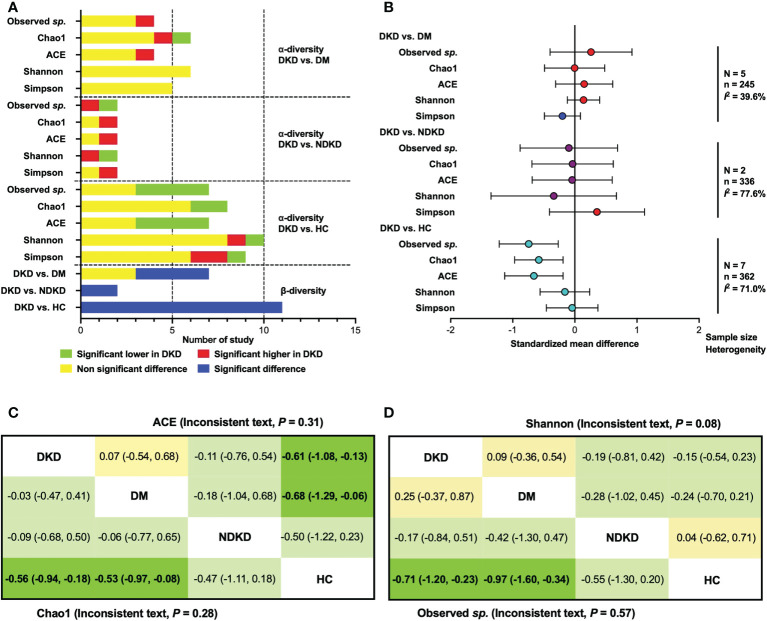
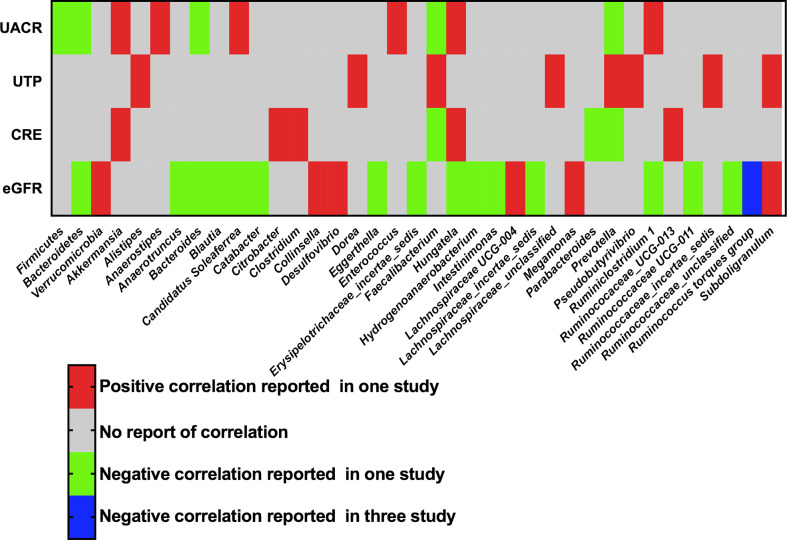
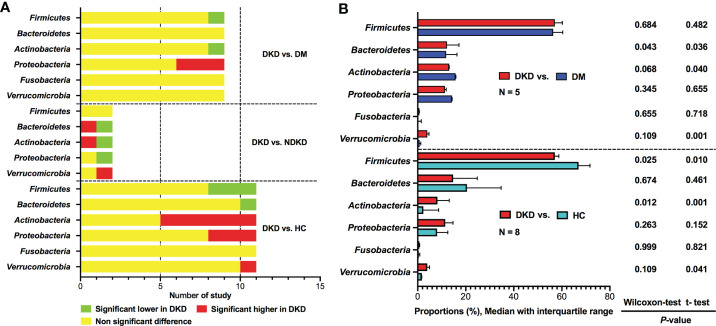
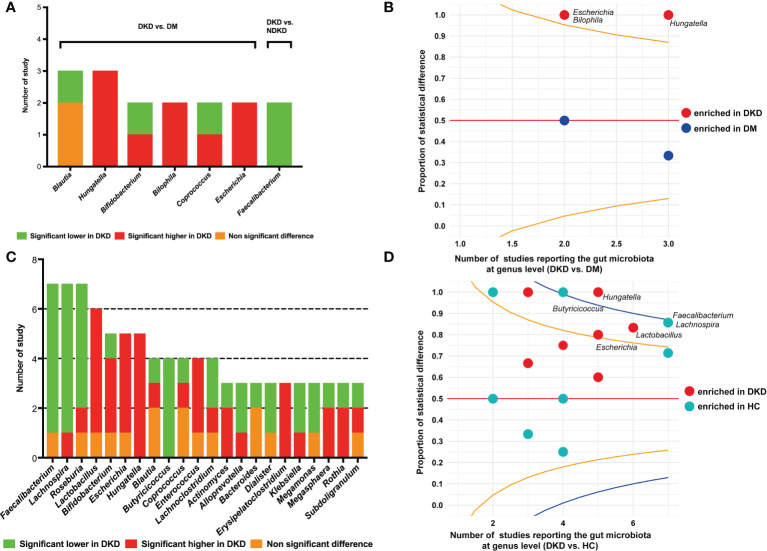
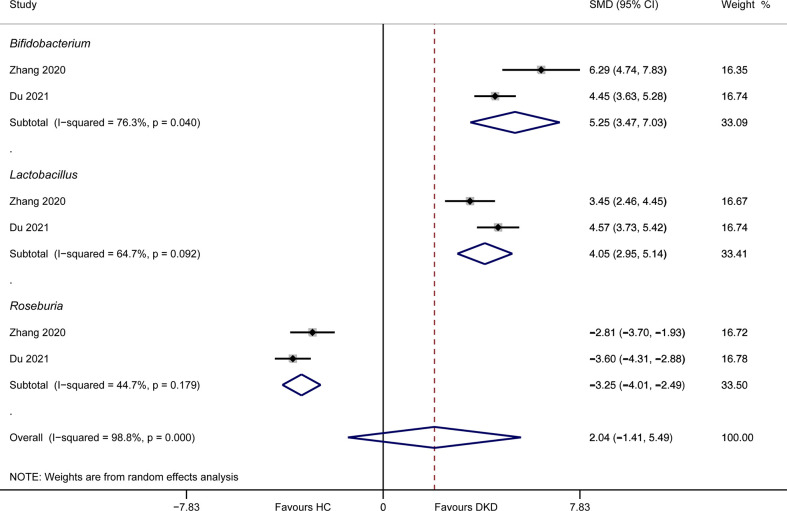
A total of 15 studies and 1640 participants were included, the comparisons were conducted between DKD, diabetes mellitus (DM), non-diabetic kidney disease (NDKD), and healthy controls. There were no significant differences of α-diversity between DKD and DM, and between DKD and NDKD, however, significant lower microbial richness was found in DKD compared to healthy controls. Different bacterial compositions were found between DKD and non-DKD subjects. The phylum were found to be enriched in DKD compared to healthy controls. At the genus level, we found the enrichment of , , and in DKD compared to DM, patients with DKD showed lower abundances of compared to those with NDKD. The genera , , and were depleted in DKD compared to healthy controls, whereas , , and were significantly enriched. The genus was demonstrated to be inversely correlated with estimated glomerular filtration rate of DKD.
Gut bacterial alterations was demonstrated in DKD, characterized by the enrichment of the genera and , and the depletion of butyrate-producing bacteria, which might be associated with the occurrence and development of DKD. Further studies are still needed to validate these findings, due to substantial heterogeneity.
https://www.crd.york.ac.uk/prospero/, identifier CRD42022340870.
肠道微生物群已被报道在糖尿病肾病(DKD)中发挥重要作用,但肠道细菌的变化尚未确定。
系统检索并综述了使用高通量测序技术比较 DKD 患者与非 DKD 个体肠道微生物组差异的研究。结果设定为肠道细菌多样性、微生物组成以及与 DKD 临床参数的相关性。通过漏斗 R 脚本对定性数据进行总结和比较,对定量数据进行荟萃分析。
共纳入 15 项研究和 1640 名参与者,比较了 DKD、糖尿病(DM)、非糖尿病肾病(NDKD)和健康对照组。DKD 与 DM 之间、DKD 与 NDKD 之间的α多样性无显著差异,但 DKD 患者的微生物丰富度明显低于健康对照组。DKD 患者与非 DKD 患者的肠道细菌组成存在差异。与健康对照组相比,发现 DKD 患者中 门的细菌丰富度增加。在属水平上,与 DM 相比,我们发现 DKD 患者中 、 和 的丰度增加,与 NDKD 患者相比,DKD 患者的 丰度降低。与健康对照组相比,DKD 患者中 、 和 的丰度减少,而 、 和 的丰度显著增加。 菌属与 DKD 的估计肾小球滤过率呈负相关。
DKD 患者存在肠道细菌改变,表现为 和 等属的富集,以及丁酸产生菌的减少,这可能与 DKD 的发生和发展有关。由于存在很大的异质性,仍需要进一步的研究来验证这些发现。
https://www.crd.york.ac.uk/prospero/,标识符 CRD42022340870。