University Medical Center Groningen, Department Biomedical Engineering, Groningen University, Antonius Deusinglaan 1, 9713 AV Groningen, The Netherlands.
Laboratory of Genomic of Germ Cells, Biomedical Sciences Institute, Faculty of Medicine, University of Chile, Independencia, 1027 Independencia Santiago, Chile.
ACS Sens. 2022 Nov 25;7(11):3326-3334. doi: 10.1021/acssensors.2c01272. Epub 2022 Nov 10.
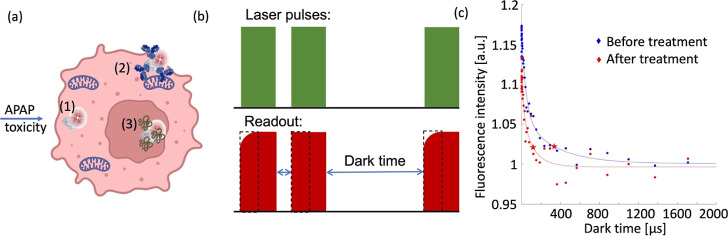
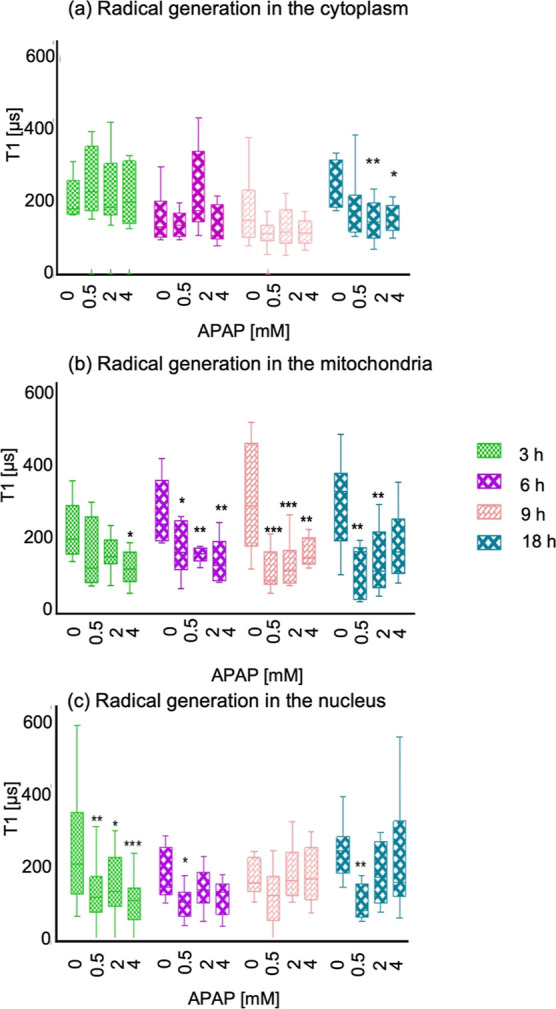
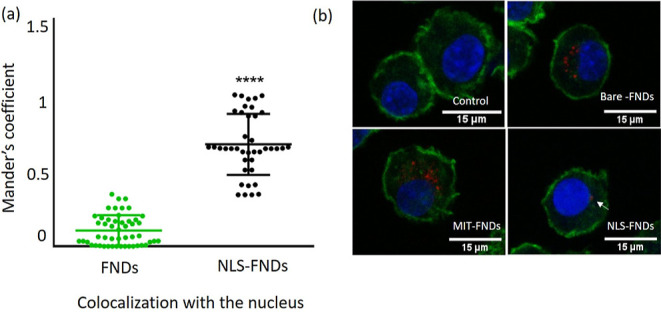
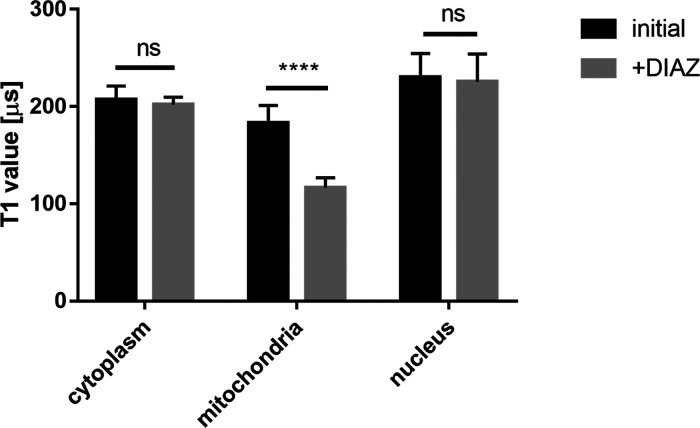
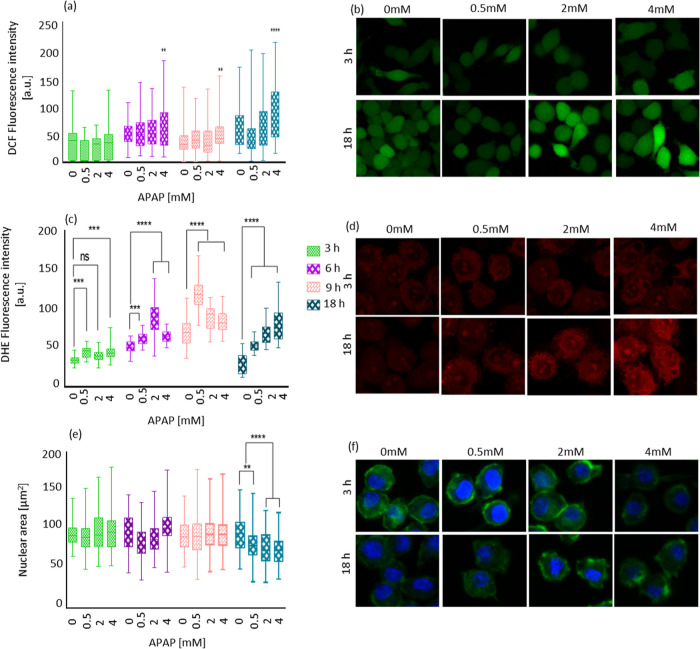
Acetaminophen overdoses cause cell injury in the liver. It is widely accepted that liver toxicity is initiated by the reactive -acetyl--aminophenol (APAP) metabolite -acetyl--benzoquinone imine (NAPQI), which first depletes glutathione and then irreversibly binds to mitochondrial proteins and nuclear DNA. As a consequence, mitochondrial respiration is inhibited, and DNA strands break. NAPQI also promotes the oxidative stress since glutathione is one of the main free-radical scavengers in the cell. However, so far it is unknown where exactly free radicals are generated. In this study, we used relaxometry, a novel technique that allows nanoscale magnetic resonance imaging detection of free radicals. The method is based on fluorescent nanodiamonds, which change their optical properties based on their magnetic surrounding. To achieve subcellular resolution, these nanodiamonds were targeted to cellular locations, that is, the cytoplasm, mitochondria, and the nucleus. Since relaxometry is sensitive to spin noise from radicals, we were able to measure the radical load in these different organelles. For the first time, we measured APAP-induced free-radical production in an organelle-specific manner, which helps predict and better understand cellular toxicity.
对乙酰氨基酚过量会导致肝脏细胞损伤。人们普遍认为,肝毒性是由活性 -乙酰氨基酚(APAP)代谢物 -乙酰苯醌亚胺(NAPQI)引发的,NAPQI 首先耗尽谷胱甘肽,然后不可逆地与线粒体蛋白和核 DNA 结合。因此,线粒体呼吸受到抑制,DNA 链断裂。NAPQI 还会促进氧化应激,因为谷胱甘肽是细胞内主要的自由基清除剂之一。然而,到目前为止,还不清楚自由基究竟是在哪里产生的。在这项研究中,我们使用了弛豫率测定法,这是一种允许纳米级磁共振成像检测自由基的新技术。该方法基于荧光纳米金刚石,其光学性质基于其磁场环境发生变化。为了实现亚细胞分辨率,这些纳米金刚石被靶向到细胞的不同位置,即细胞质、线粒体和细胞核。由于弛豫率测定法对自由基的自旋噪声很敏感,因此我们能够测量这些不同细胞器中的自由基负荷。我们首次以特定于细胞器的方式测量了对乙酰氨基酚诱导的自由基产生,这有助于预测和更好地理解细胞毒性。