Machado Adriana R, Silva Pedro M P, Vicente António A, Souza-Soares Leonor A, Pinheiro Ana C, Cerqueira Miguel A
School of Chemistry and Food, Federal University of Rio Grande, Rio Grande 96203-900, Brazil.
Centre of Biological Engineering (CEB), Campus de Gualtar, University of Minho, 4710-057 Braga, Portugal.
Polymers (Basel). 2022 Nov 6;14(21):4759. doi: 10.3390/polym14214759.
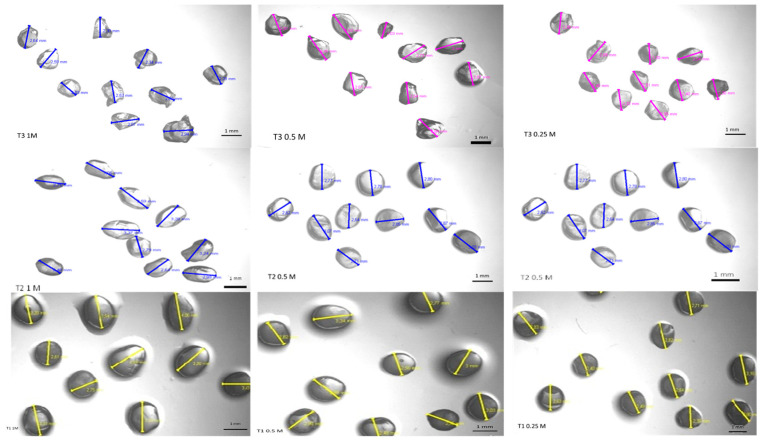
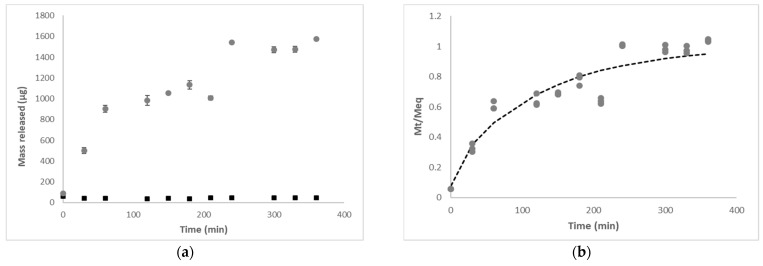
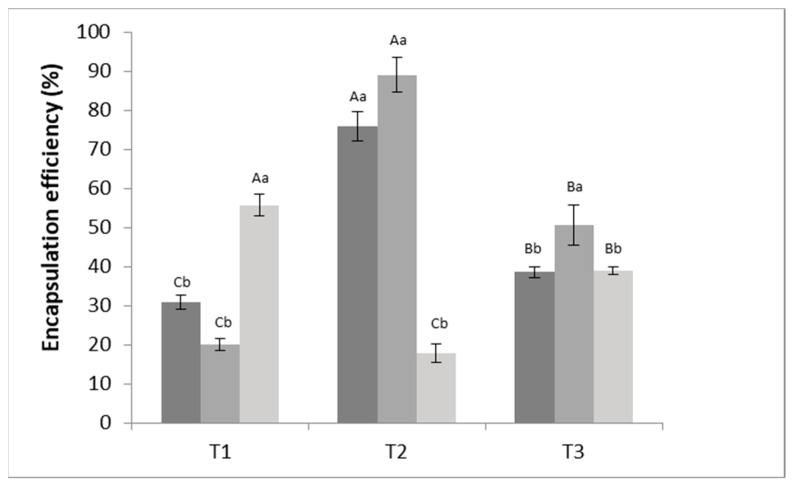
Encapsulation can be used as a strategy to protect and control the release of bioactive extracts. In this work, an extract from sp. LEB-18, rich in phenolic compounds, was encapsulated in biopolymeric particles (i.e., composed of alginate) and characterized concerning their thermal behavior using differential scanning calorimetry (DSC), size, morphology, swelling index (S), and encapsulation efficiency (EE%); the release profile of the phenolic compounds at different pHs and the particle behavior under in vitro gastrointestinal digestion were also evaluated. It was shown that it is possible to encapsulate the phenolic extract from sp. LEB-18 in alginate particles with high encapsulation efficiency (88.97%). It was also observed that the particles are amorphous and that the encapsulated phenolic compounds were released at a pH 7.2 but not at pH 1.5, which means that the alginate particles are able to protect the phenolic compounds from the harsh stomach conditions but lose their integrity under intestinal pH conditions. Regarding bioaccessibility, it was observed that the encapsulated phenolic compounds showed higher bioaccessibility compared to phenolic compounds in free form. This work increases the knowledge about the behavior of alginate particles encapsulating phenolic compounds during in vitro gastrointestinal digestion. It also provides essential information for designing biopolymeric particle formulations encapsulating phenolic compounds for application in pharmaceutical and food products.
包封可作为一种保护和控制生物活性提取物释放的策略。在本研究中,将富含酚类化合物的 sp. LEB-18 提取物包封在生物聚合物颗粒(即由海藻酸盐组成)中,并使用差示扫描量热法(DSC)对其热行为、尺寸、形态、溶胀指数(S)和包封效率(EE%)进行了表征;还评估了酚类化合物在不同pH值下的释放曲线以及体外胃肠道消化过程中颗粒的行为。结果表明,有可能以高包封效率(88.97%)将 sp. LEB-18 的酚类提取物包封在海藻酸盐颗粒中。还观察到颗粒是无定形的,并且包封的酚类化合物在pH 7.2时释放,但在pH 1.5时不释放,这意味着海藻酸盐颗粒能够保护酚类化合物免受胃部恶劣条件的影响,但在肠道pH条件下会失去其完整性。关于生物可及性,观察到与游离形式的酚类化合物相比,包封的酚类化合物具有更高的生物可及性。这项工作增加了对海藻酸盐颗粒在体外胃肠道消化过程中包封酚类化合物行为的了解。它还为设计用于制药和食品产品的包封酚类化合物的生物聚合物颗粒制剂提供了重要信息。