Kippnich Maximilian, Kippnich Uwe, Erhard Harald, Meybohm Patrick, Wurmb Thomas
Klinik und Poliklinik für Anästhesiologie, Intensivmedizin, Notfallmedizin und Schmerztherapie, Sektion für Notfall- und Katastrophenmedizin, Universitätsklinikum Würzburg, Oberdürrbacher Str. 6, 97080 Würzburg, Deutschland.
Landesgeschäftsstelle, Bayerisches Rotes Kreuz, München, Deutschland.
Notf Rett Med. 2022 Nov 11:1-10. doi: 10.1007/s10049-022-01089-7.
In July 2021, the Medical Task Force 47 was deployed to the flood disaster in western Germany as part of the cross-regional disaster relief system. With the aim of deriving possible improvements in disaster management, it was scientifically evaluated. The focus of this study was the strategy to build up and to maintain a responsive and efficient rescue system.
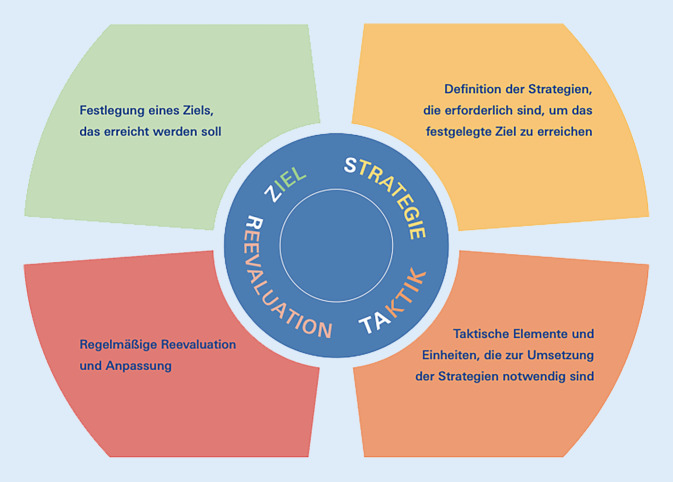
After defining an evaluation process, an interdisciplinary panel of experts reviewed operational documents and relevant concepts of the Bavarian Red Cross. Based on these, strategies and tactics were developed to achieve predefined goals.
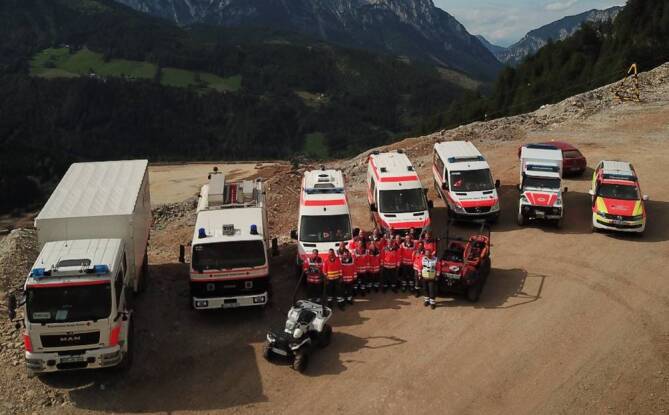
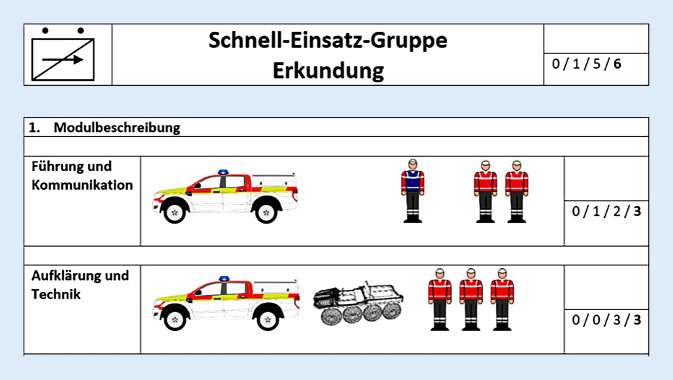
The performance of the emergency units could be increased by modern vehicles and equipment (eBikes, drones, all-terrain vehicles). To improve the response capability, new rapid response groups could be required that can take over the function of an advance command and can process mission assignments in impassable terrain autonomously. These could be integrated and synchronized into regional and cross-regional disaster relief.
In future, it could be difficult for Germany's largely volunteer-organised disaster management to safely deploy the multitude of possible state-of-the-art resources in the highly complex environment of a disaster. Partial professionalization by full-time command and control staff could be one solution for this problem.
2021年7月,医疗特遣部队47作为跨区域救灾系统的一部分被部署到德国西部的洪灾地区。为了得出灾害管理方面可能的改进措施,对其进行了科学评估。本研究的重点是建立和维持一个响应迅速且高效的救援系统的策略。
在确定评估流程后,一个跨学科专家小组审查了巴伐利亚红十字会的行动文件和相关概念。在此基础上,制定了实现预定目标的战略和战术。
现代化车辆和设备(电动自行车、无人机、全地形车)可以提高应急单位的性能。为了提高响应能力,可能需要新的快速反应小组,它们可以承担预先指挥的职能,并能在无法通行的地形中自主处理任务分配。这些小组可以整合并同步到区域和跨区域救灾中。
未来,德国主要由志愿者组织的灾害管理在灾害高度复杂的环境中安全部署众多可能的先进资源可能会很困难。由全职指挥和控制人员进行部分专业化可能是解决这个问题的一个办法。