National Disaster Management Research Institute, Ulsan 44538, Republic of Korea.
Int J Environ Res Public Health. 2022 Dec 1;19(23):16070. doi: 10.3390/ijerph192316070.
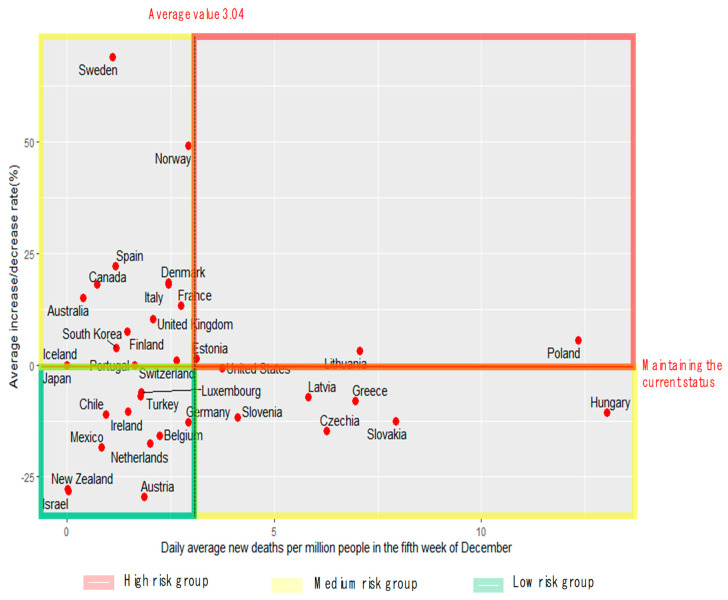
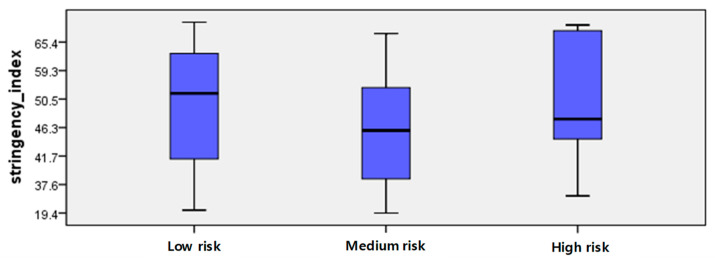
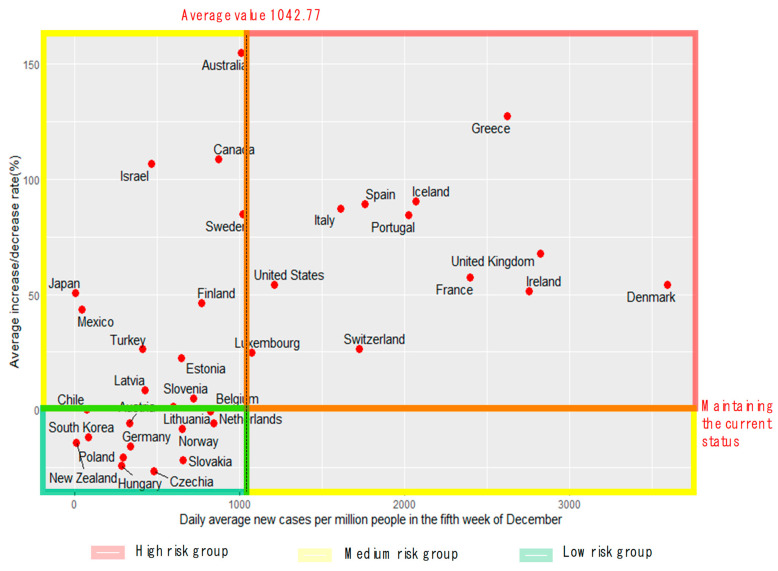
Coronavirus disease 2019 (COVID-19) led to the loss of lives and had serious social and economic effects. Countries implemented various quarantine policies to reduce the effects. The countries were divided into low- and high-risk groups based on the differences in quarantine policies and their levels of infection. Quarantine policies that significantly contributed to risk reduction were determined by analyzing 11 quarantine indicators for reducing the spread of COVID-19. The cross-tabulation and Chi-square tests were used to compare the quarantine policies by the groups. Multivariate logistic regression was used to determine the useful quarantine policies implemented by the low-risk group to verify quarantine policies for minimizing the negative effects. The analysis showed that the low- and medium-risk groups showed significant differences for 9 of the 11 indicators, and 4 of these differentiated the low- from the medium-risk group. Countries with strict quarantine policies related to workplace closure and staying at home were more likely to be included in the low-risk group. These policies had a significant impact in the low-risk countries and could contribute to reducing the spread and effects of COVID-19 in countries included in the high-risk group.
2019 年冠状病毒病(COVID-19)导致了生命的丧失,并产生了严重的社会和经济影响。各国实施了各种检疫政策以减轻其影响。根据检疫政策和感染程度的差异,将各国分为低风险和高风险组。通过分析 11 项可降低 COVID-19 传播风险的检疫指标,确定了对降低风险有显著贡献的检疫政策。采用交叉列表和卡方检验比较了不同组别的检疫政策。采用多变量逻辑回归确定了低风险组实施的有用检疫政策,以验证将负面影响降至最低的检疫政策。分析表明,11 项指标中有 9 项在低风险和中等风险组之间存在显著差异,其中 4 项将低风险和中风险组区分开来。与关闭工作场所和居家相关的严格检疫政策的国家更有可能被纳入低风险组。这些政策在低风险国家中产生了重大影响,有助于减少高风险组国家 COVID-19 的传播和影响。