Bioinformatics Team, Department of Molecular Biology, Institute of Genetics and Animal Biotechnology of the Polish Academy of Sciences, ul. Postępu 36A, Jastrzębiec, 05-552 Magdalenka, Poland.
Int J Mol Sci. 2022 Nov 29;23(23):14957. doi: 10.3390/ijms232314957.
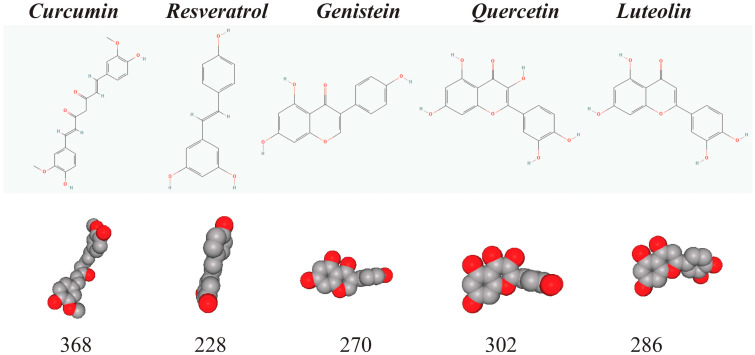
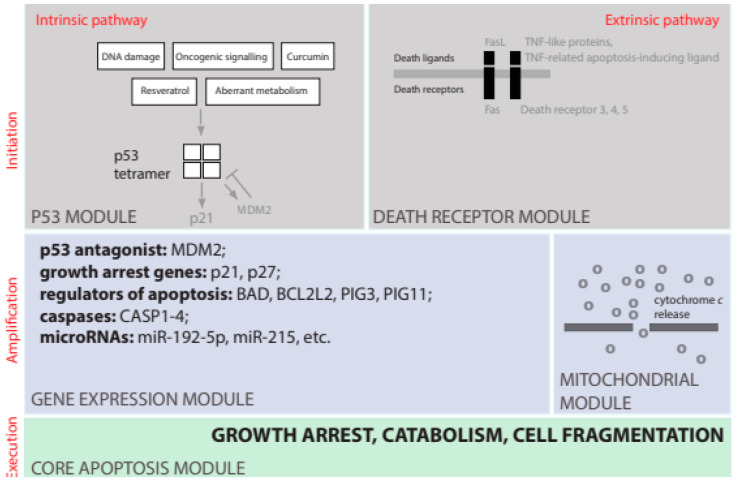
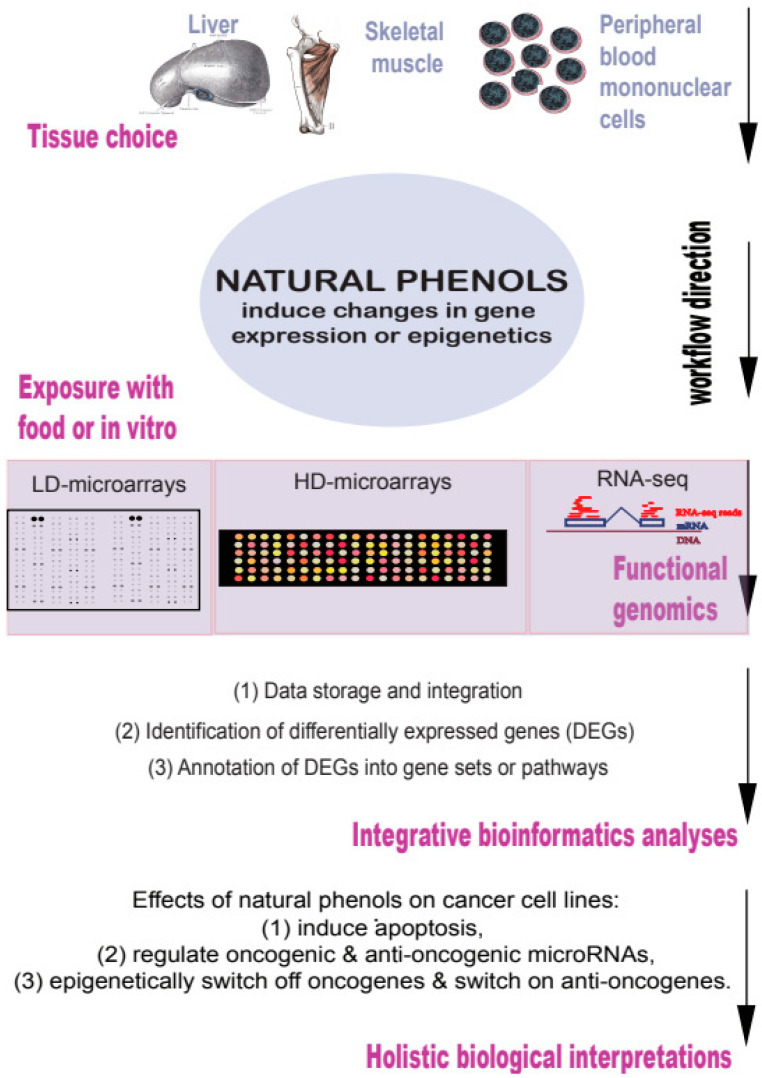
Herein, I present an updated and contextualized literature review of functional genomic studies of natural phenols in the context of cancer. I suggest multilevel chemopreventive and anticancer mechanisms of action, which are shared by multiple dietary natural phenols. Specifically, I cite evidence that curcumin and resveratrol have multilevel anti-cancer effects through: (1) inducing either p53-dependent or p53-independent apoptosis in cancer cell lines, (2) acting as potent regulators of expression of oncogenic and anti-oncogenic microRNAs, and (3) inducing complex epigenetic changes that can switch off oncogenes/switch on anti-oncogenes. There is no simple reductionist explanation for anti-cancer effects of curcumin and resveratrol. More generally, multilevel models of chemoprevention are suggested for related natural phenols and flavonoids such as genistein, quercetin, or luteolin.
在此,我对癌症相关的天然酚类的功能基因组研究进行了更新和背景化的文献综述。我提出了多种多层次的化学预防和抗癌作用机制,这些机制被多种膳食天然酚类所共有。具体来说,我引用了证据表明姜黄素和白藜芦醇通过以下方式具有多层次的抗癌作用:(1)在癌细胞系中诱导要么依赖 p53 要么不依赖 p53 的细胞凋亡,(2)作为致癌和抗致癌 microRNAs 表达的有效调节剂,以及(3)诱导可以关闭癌基因/开启抑癌基因的复杂表观遗传变化。对于姜黄素和白藜芦醇的抗癌作用,没有简单的还原论解释。更一般地,建议对相关的天然酚类和类黄酮,如染料木黄酮、槲皮素或木犀草素,采用多层次的化学预防模型。