Department of Gastroenterology and Hepatology, Yokohama City University School of Medicine Graduate school of Medicine, Yokohama, Japan.
Department of Gastroenterology, National Hospital Organization Yokohama Medical Center, Yokohama, Japan.
Clin Mol Hepatol. 2023 Feb;29(Suppl):S123-S135. doi: 10.3350/cmh.2022.0357. Epub 2022 Dec 12.
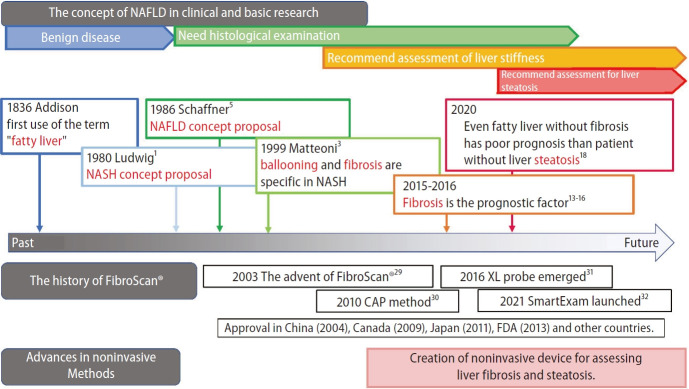
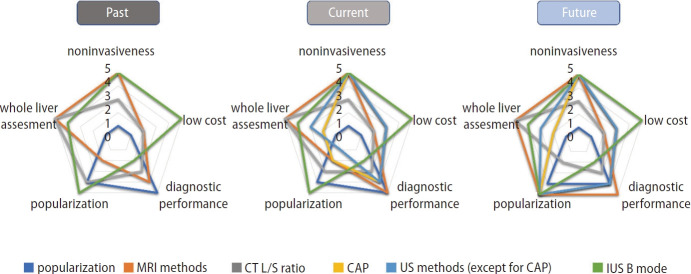
Non-alcoholic fatty liver disease is currently the most common chronic liver disease, affecting up to 25% of the global population. Simple fatty liver, in which fat is deposited in the liver without fibrosis, has been regarded as a benign disease in the past, but it is now known to be prognostic. In the future, more emphasis should be placed on the quantification of liver fat. Traditionally, fatty liver has been assessed by histological evaluation, which requires an invasive examination; however, technological innovations have made it possible to evaluate fatty liver by non-invasive imaging methods, such as ultrasonography, computed tomography, and magnetic resonance imaging. In addition, quantitative as well as qualitative measurements for the detection of fatty liver have become available. In this review, we summarize the currently used qualitative evaluations of fatty liver and discuss quantitative evaluations that are expected to further develop in the future.
非酒精性脂肪性肝病是目前最常见的慢性肝病,影响全球多达 25%的人口。单纯性脂肪肝,即肝内脂肪沉积而无纤维化,过去被认为是一种良性疾病,但现在已知与预后相关。未来应更注重肝脂肪的定量。传统上,脂肪肝通过组织学评估进行评估,这需要进行有创检查;然而,技术创新使得通过非侵入性成像方法(如超声、计算机断层扫描和磁共振成像)评估脂肪肝成为可能。此外,还可进行定量和定性测量以检测脂肪肝。在这篇综述中,我们总结了目前用于脂肪肝的定性评估,并讨论了未来有望进一步发展的定量评估。