
肠道菌群通过介导大脑皮层基因表达失调和调节中风患者的代谢来诱发抑郁症。
Intestinal flora induces depression by mediating the dysregulation of cerebral cortex gene expression and regulating the metabolism of stroke patients.
作者信息
Li Xuebin, Han Guangshun, Zhao Jingjie, Huang Xiaohua, Feng Yun, Huang Junfang, Lan Xuequn, Huang Xiaorui, Wang Zechen, Shen Jiajia, He Siyuan, Li Qiuhao, Song Jian, Wang Jie, Meng Lingzhang
机构信息
Center for Systemic Inflammation Research (CSIR), School of Preclinical Medicine, Youjiang Medical University for Nationalities, Baise, Guangxi, China.
Department of Neurology, The Affiliated Hospital of Youjiang Medical University for Nationalities, Baise, Guangxi, China.
出版信息
Front Mol Biosci. 2022 Nov 30;9:865788. doi: 10.3389/fmolb.2022.865788. eCollection 2022.
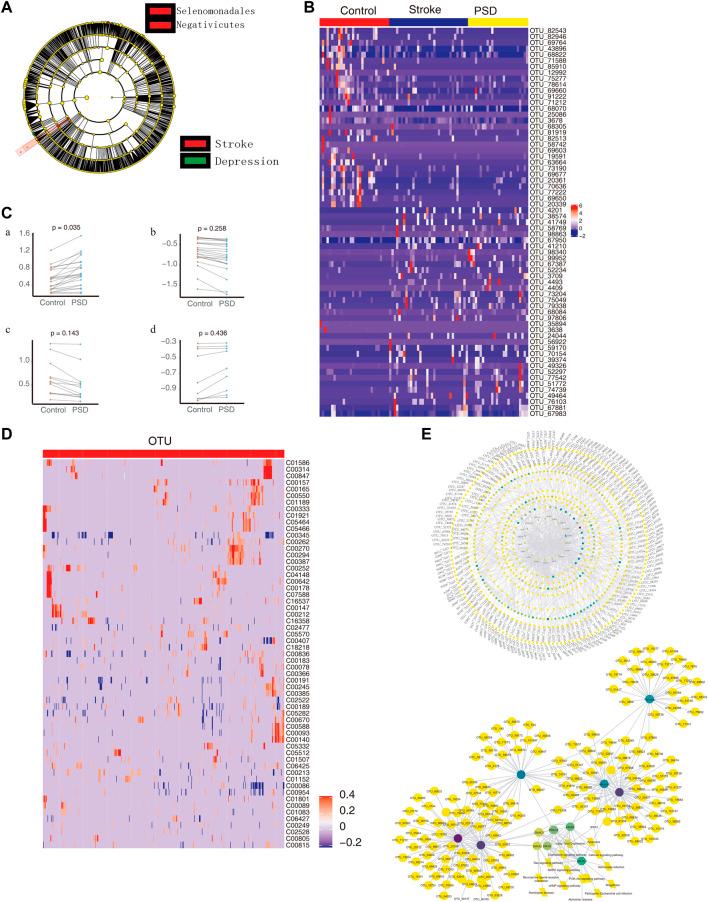
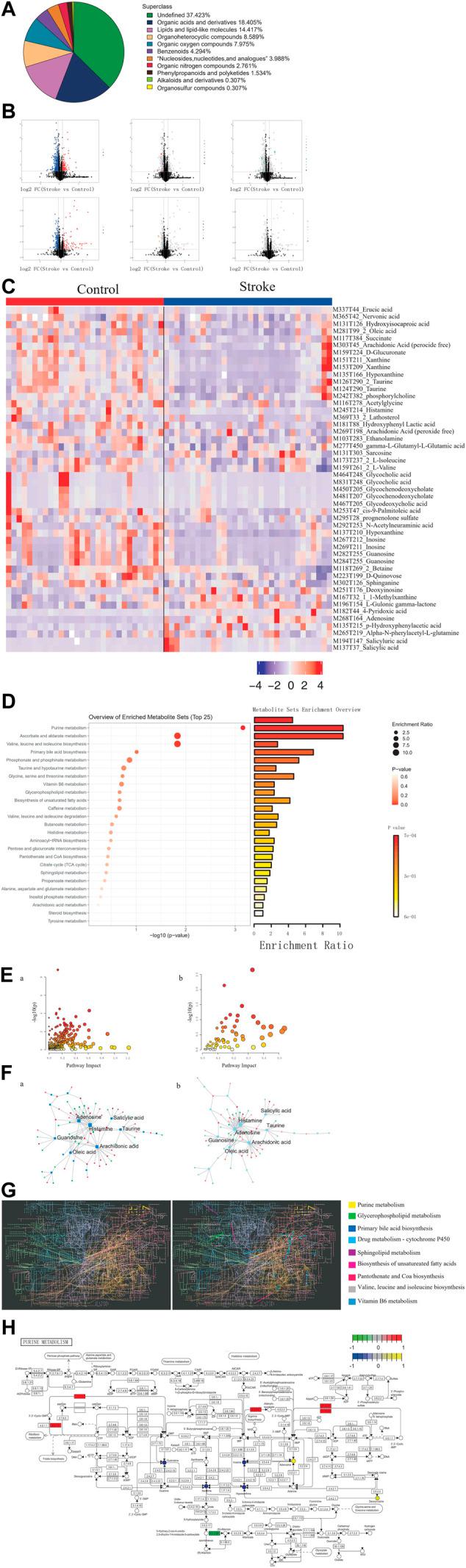
Post-stroke depression (PSD) is a common cerebrovascular complication characterized by complex pathogenesis and poor treatment effects. Here, we tested the influence of differentially expressed genes (DEGs), non-targeted metabolites, and intestinal microbes on the occurrence and development of PSD. We acquired gene expression profiles for stroke patients, depression patients, and healthy controls from the Gene Expression Omnibus database. After screening for DEGs using differential expression analysis, we identified common DEGs in stroke and depression patients that were considered to form the molecular basis of PSD. Functional enrichment analysis of DEGs also revealed that the majority of biological functions were closely related to metabolism, immunity, the nervous system, and microorganisms, and we also collected blood and stool samples from healthy controls, stroke patients, and PSD patients and performed 16S rDNA sequencing and untargeted metabolomics. After evaluating the quality of the sequencing data, we compared the diversity of the metabolites and intestinal flora within and between groups. Metabolic pathway enrichment analysis was used to identify metabolic pathways that were significantly involved in stroke and PSD, and a global metabolic network was constructed to explore the pathogenesis of PSD. Additionally, we constructed a global regulatory network based on 16S rDNA sequencing, non-targeted metabolomics, and transcriptomics to explore the pathogenesis of PSD through correlation analysis. Our results suggest that intestinal flora associates the dysregulation of cerebral cortex gene expression and could potentially promote the occurrence of depression by affecting the metabolism of stroke patients. Our findings may be helpful in identifying new targets for the prevention and treatment of PSD.
中风后抑郁症(PSD)是一种常见的脑血管并发症,其发病机制复杂,治疗效果不佳。在此,我们测试了差异表达基因(DEGs)、非靶向代谢物和肠道微生物对PSD发生发展的影响。我们从基因表达综合数据库中获取了中风患者、抑郁症患者和健康对照的基因表达谱。通过差异表达分析筛选出DEGs后,我们确定了中风患者和抑郁症患者中的共同DEGs,这些DEGs被认为构成了PSD的分子基础。对DEGs的功能富集分析还表明,大多数生物学功能与代谢、免疫、神经系统和微生物密切相关,我们还收集了健康对照、中风患者和PSD患者的血液和粪便样本,并进行了16S rDNA测序和非靶向代谢组学分析。在评估测序数据质量后,我们比较了组内和组间代谢物和肠道菌群的多样性。代谢途径富集分析用于确定与中风和PSD显著相关的代谢途径,并构建了一个全局代谢网络以探索PSD的发病机制。此外,我们基于16S rDNA测序、非靶向代谢组学和转录组学构建了一个全局调控网络,通过相关性分析来探索PSD的发病机制。我们的结果表明,肠道菌群与大脑皮层基因表达失调相关,并可能通过影响中风患者的代谢来促进抑郁症的发生。我们的发现可能有助于确定预防和治疗PSD的新靶点。




 Zotero 插件