Gavinho Sílvia R, Pádua Ana Sofia, Sá-Nogueira Isabel, Silva Jorge C, Borges João P, Costa Luis C, Graça Manuel Pedro F
I3N and Physics Department, Aveiro University, 3810-193 Aveiro, Portugal.
I3N-CENIMAT, New University of Lisbon, 2825-097 Caparica, Portugal.
Nanomaterials (Basel). 2022 Dec 18;12(24):4479. doi: 10.3390/nano12244479.
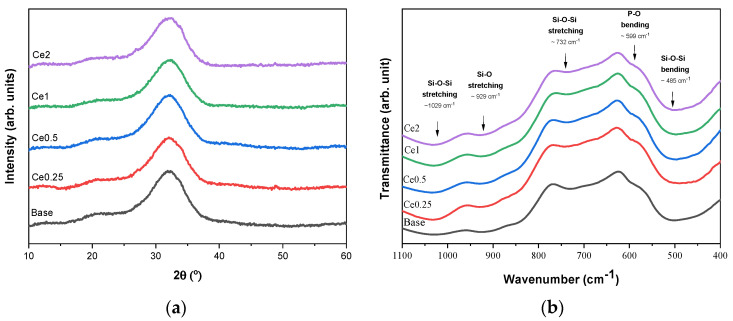
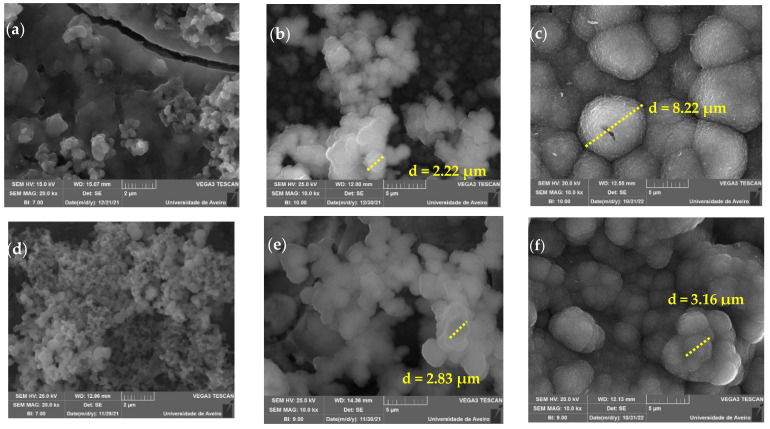
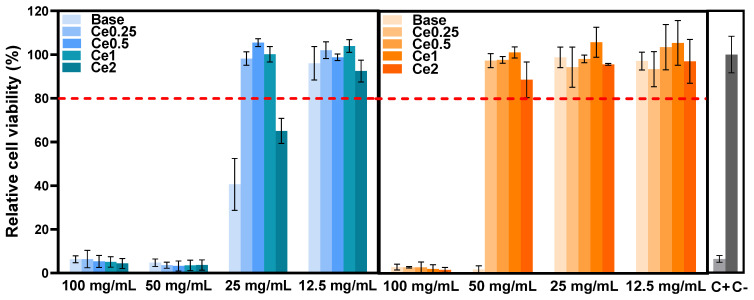
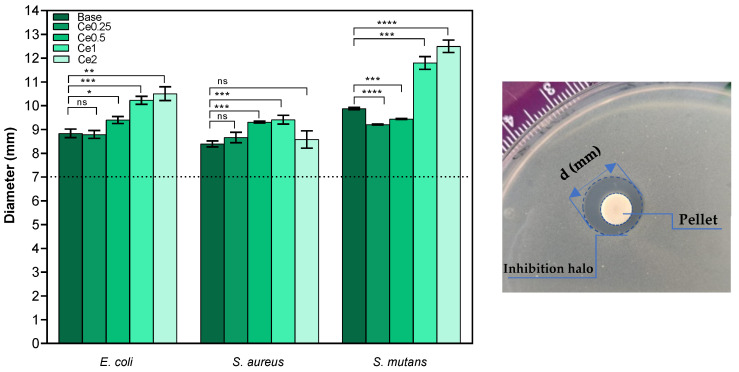
The main reason for the increased use of dental implants in clinical practice is associated with aesthetic parameters. Implants are also presented as the only technique that conserves and stimulates natural bone. However, there are several problems associated with infections, such as peri-implantitis. This disease reveals a progressive inflammatory action that affects the hard and soft tissues surrounding the implant, leading to implant loss. To prevent the onset of this disease, coating the implant with bioactive glasses has been suggested. In addition to its intrinsic function of promoting bone regeneration, it is also possible to insert therapeutic ions, such as cerium. Cerium has several advantages when the aim is to improve osseointegration and prevent infectious problems with dental implant placement. It promotes increased growth and the differentiation of osteoblasts, improves the mechanical properties of bone, and prevents bacterial adhesion and proliferation that may occur on the implant surface. This antibacterial effect is due to its ability to disrupt the cell wall and membrane of bacteria, thus interfering with vital metabolic functions such as respiration. In addition, its antioxidant effect reverses oxidative stress after implantation in bone. In this work, Bioglass 45S5 with CeO with different percentages (0.25, 0.5, 1, and 2 mol%) was developed by the melt-quenching method. The materials were analyzed in terms of morphological, structural, and biological (cytotoxicity, bioactivity, and antibacterial activity) properties. The addition of cerium did not promote structural changes to the bioactive glass, which shows no cytotoxicity for the Saos-2 cell line up to 25 mg/mL of extract concentration for all cerium contents. For the maximum cerium concentration (2 mol%) the bioactive glass shows an evident inhibitory effect for and bacteria. Furthermore, all samples showed the beginning of the deposition of a CaP-rich layer on the surface of the material after 24 h.
临床实践中种植牙使用增加的主要原因与美学参数有关。种植牙也被视为唯一一种能够保留并刺激天然骨的技术。然而,种植牙存在一些与感染相关的问题,比如种植体周围炎。这种疾病表现为一种渐进性的炎症反应,会影响种植体周围的软硬组织,最终导致种植体脱落。为预防这种疾病的发生,有人建议在种植体表面涂覆生物活性玻璃。除了其促进骨再生的固有功能外,还可以掺入治疗性离子,如铈。当旨在改善骨整合并预防种植牙植入过程中的感染问题时,铈具有若干优势。它能促进成骨细胞的生长和分化,改善骨的力学性能,并防止可能在种植体表面发生的细菌黏附和增殖。这种抗菌作用归因于其破坏细菌细胞壁和细胞膜的能力,从而干扰诸如呼吸等重要的代谢功能。此外,其抗氧化作用可逆转骨植入后的氧化应激。在这项研究中,采用熔融淬火法制备了含有不同百分比(0.25、0.5、1和2摩尔%)CeO的生物活性玻璃45S5。对这些材料的形态、结构和生物学(细胞毒性、生物活性和抗菌活性)特性进行了分析。铈的添加并未促使生物活性玻璃发生结构变化,在所有铈含量下,提取物浓度高达25mg/mL时,该生物活性玻璃对Saos-2细胞系均无细胞毒性。对于最高铈浓度(2摩尔%),该生物活性玻璃对 和 细菌显示出明显的抑制作用。此外,所有样品在24小时后均显示材料表面开始沉积富含CaP的层。