Department of Radiology, Affiliated Hospital of Shaanxi University of Chinese Medicine, Weiyang West Rd, Xianyang, 712000, China.
School of Information Science & Technology, Northwest University, Xi'an, 710127, Shaanxi, China.
Radiol Med. 2023 Jan;128(1):68-80. doi: 10.1007/s11547-022-01580-8. Epub 2022 Dec 27.
To develop and validate a 3D-convolutional neural network (3D-CNN) model based on chest CT for differentiating active pulmonary tuberculosis (APTB) from community-acquired pneumonia (CAP).
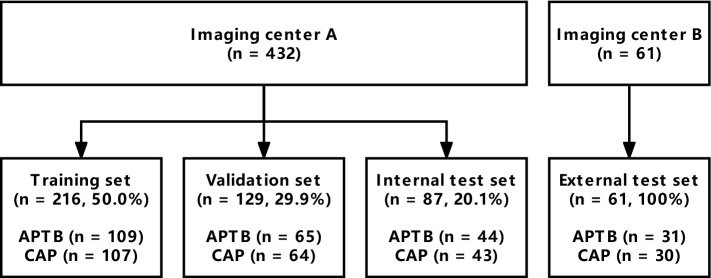
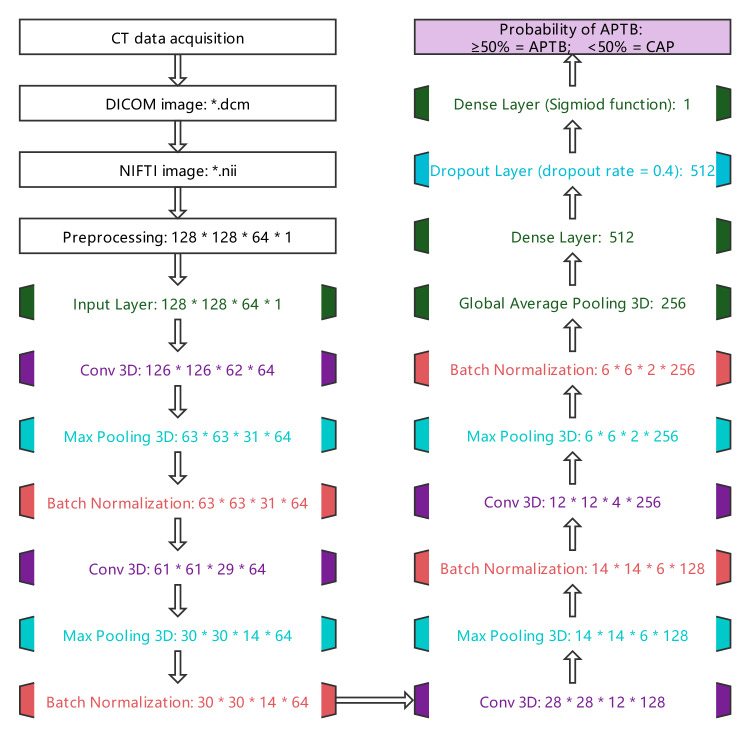
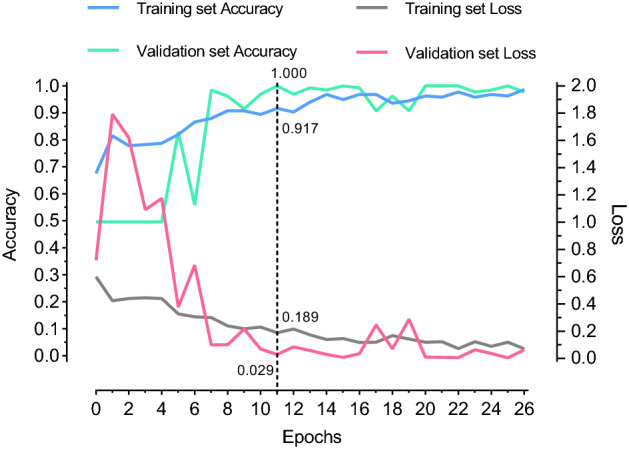
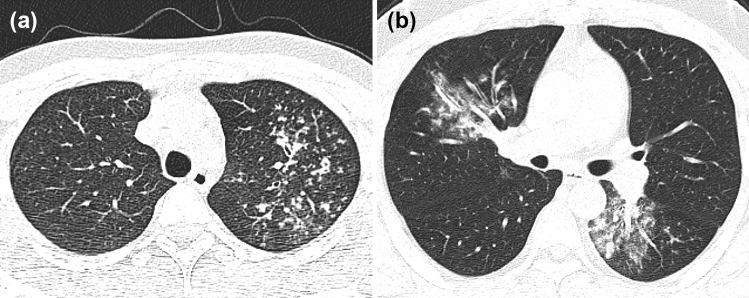
Chest CT images of APTB and CAP patients diagnosed in two imaging centers (n = 432 in center A and n = 61 in center B) were collected retrospectively. The data in center A were divided into training, validation and internal test sets, and the data in center B were used as an external test set. A 3D-CNN was built using Keras deep learning framework. After the training, the 3D-CNN selected the model with the highest accuracy in the validation set as the optimal model, which was applied to the two test sets in centers A and B. In addition, the two test sets were independently diagnosed by two radiologists. The 3D-CNN optimal model was compared with the discrimination, calibration and net benefit of the two radiologists in differentiating APTB from CAP using chest CT images.
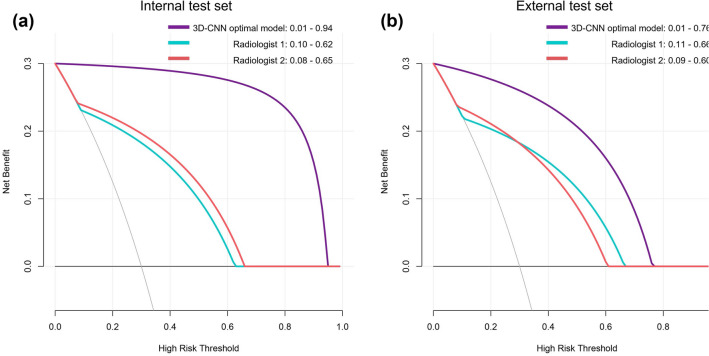
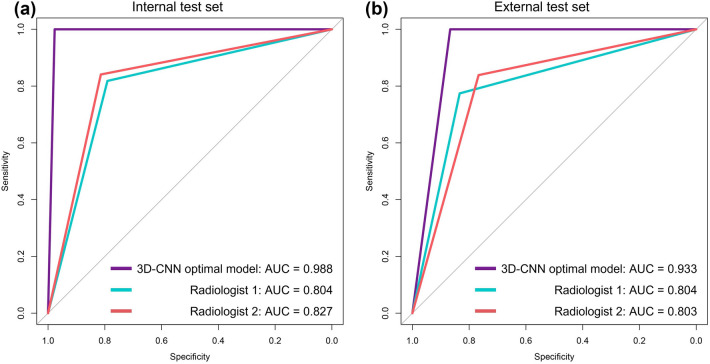
The accuracy of the 3D-CNN optimal model was 0.989 and 0.934 with the internal and external test set, respectively. The area-under-the-curve values with the 3D-CNN model in the two test sets were statistically higher than that of the two radiologists (all P < 0.05), and there was a high calibration degree. The decision curve analysis showed that the 3D-CNN optimal model had significantly higher net benefit for patients than the two radiologists.
3D-CNN has high classification performance in differentiating APTB from CAP using chest CT images. The application of 3D-CNN provides a new automatic and rapid diagnosis method for identifying patients with APTB from CAP using chest CT images.
开发并验证一种基于胸部 CT 的三维卷积神经网络(3D-CNN)模型,用于区分活动性肺结核(APTB)和社区获得性肺炎(CAP)。
回顾性收集两家影像中心(A 中心 n=432 例,B 中心 n=61 例)诊断为 APTB 和 CAP 的患者胸部 CT 图像。A 中心的数据分为训练集、验证集和内部测试集,B 中心的数据作为外部测试集。使用 Keras 深度学习框架构建 3D-CNN。训练完成后,选择验证集准确率最高的模型作为最优模型,并应用于 A 中心和 B 中心的两个测试集。此外,两名放射科医生对两个测试集进行独立诊断。使用胸部 CT 图像,比较 3D-CNN 最优模型与两名放射科医生在区分 APTB 和 CAP 方面的鉴别能力、校准度和净收益。
3D-CNN 最优模型的内部和外部测试集准确率分别为 0.989 和 0.934。两个测试集中,3D-CNN 模型的曲线下面积值均明显高于两名放射科医生(均 P<0.05),且校准度较高。决策曲线分析显示,3D-CNN 最优模型对患者的净收益明显高于两名放射科医生。
3D-CNN 对基于胸部 CT 的 APTB 和 CAP 鉴别具有较高的分类性能。3D-CNN 的应用为基于胸部 CT 图像识别 APTB 和 CAP 患者提供了一种新的自动快速诊断方法。