Shao Jun, Ma Jiechao, Yu Yizhou, Zhang Shu, Wang Wenyang, Li Weimin, Wang Chengdi
Department of Pulmonary and Critical Care Medicine, State Key Laboratory of Respiratory Health and Multimorbidity, West China Hospital, West China School of Medicine, Sichuan University, Chengdu 610041, China.
Targeted Tracer Research and Development Laboratory, Institute of Respiratory Health, Frontiers Science Center for Disease-related Molecular Network, West China Hospital, Sichuan University, Chengdu 610213, China.
Innovation (Camb). 2024 May 22;5(4):100648. doi: 10.1016/j.xinn.2024.100648. eCollection 2024 Jul 1.
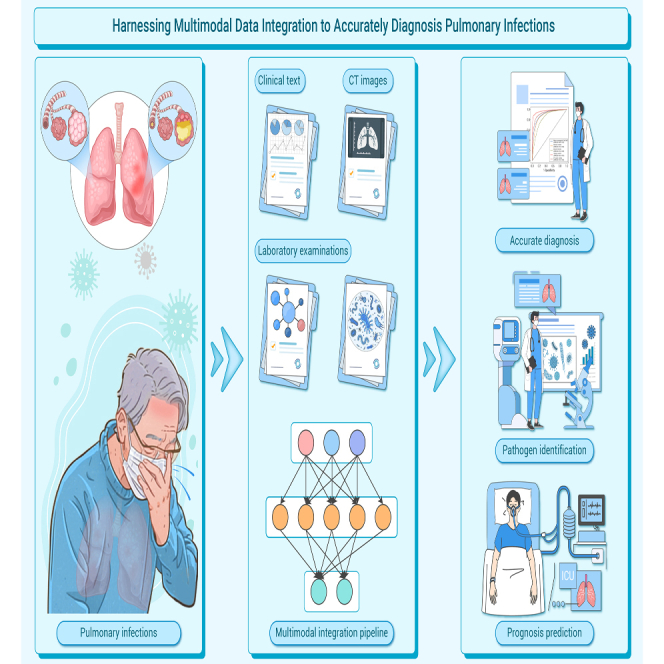
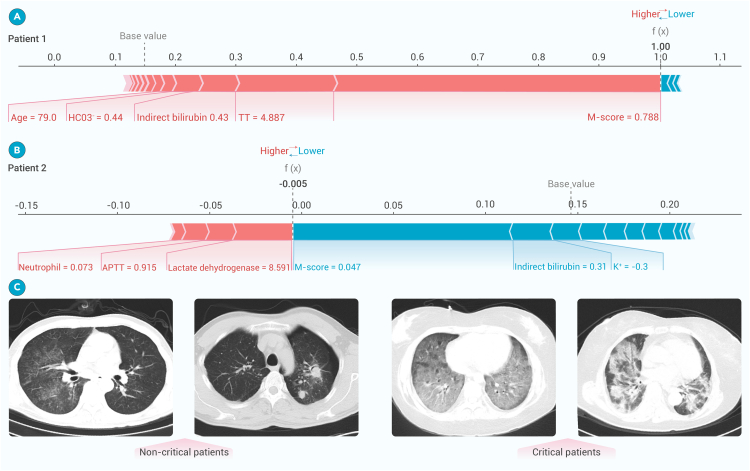
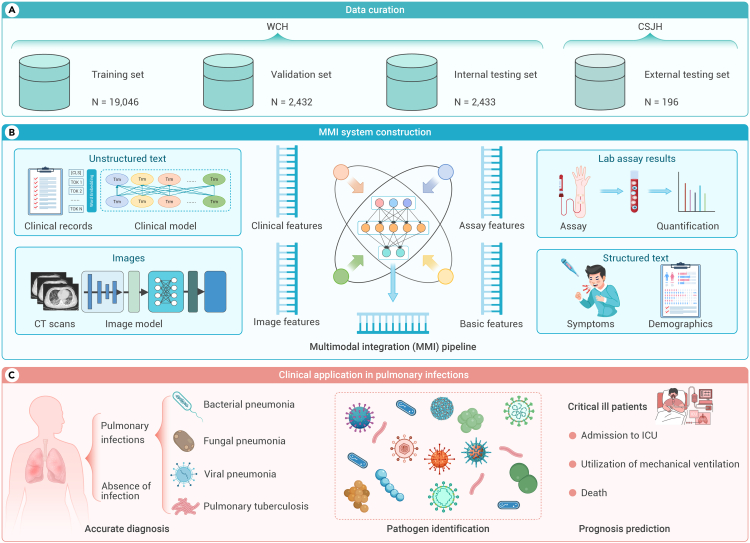
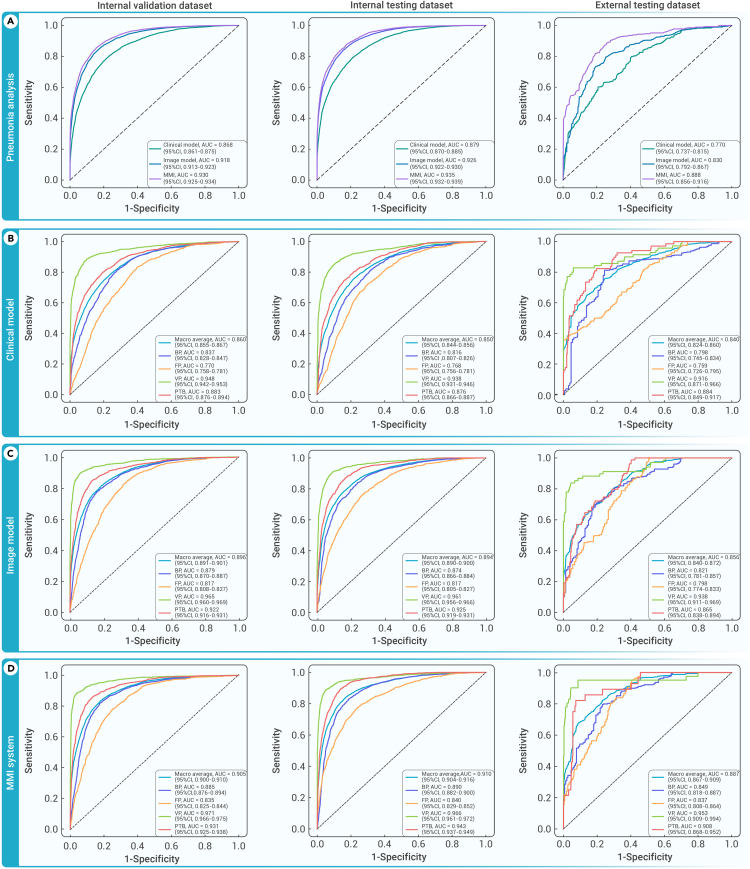
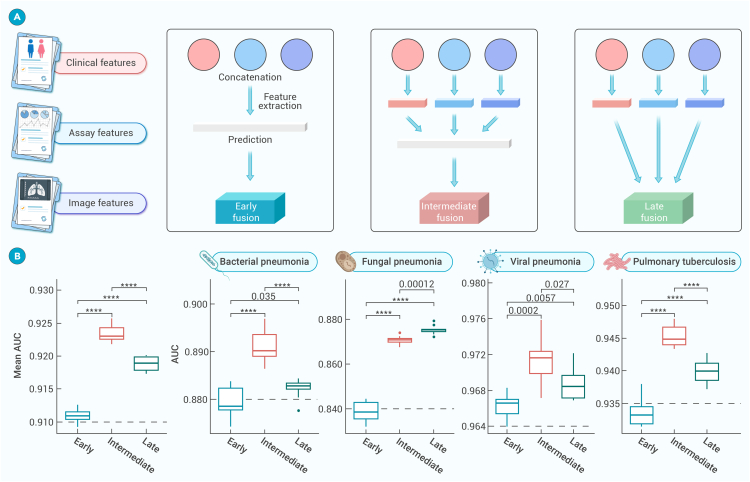
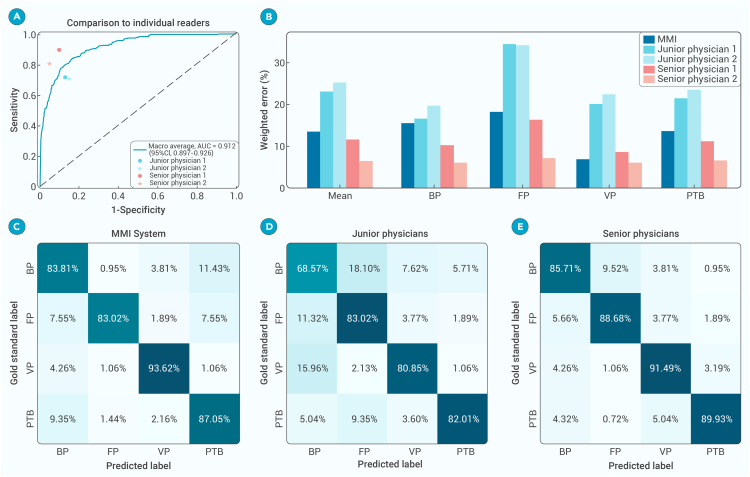
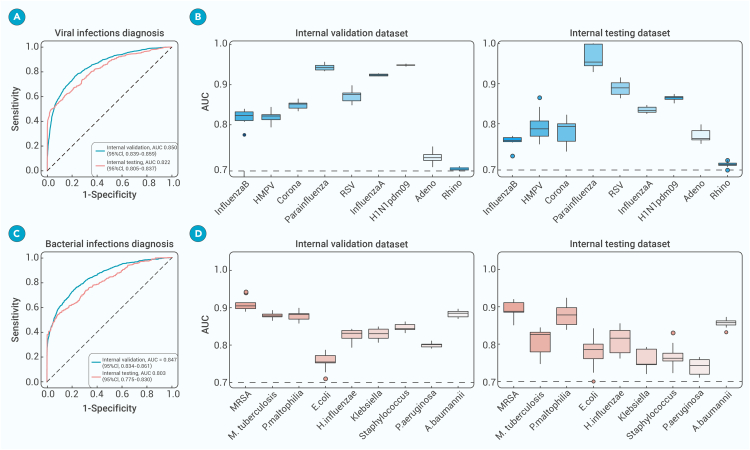
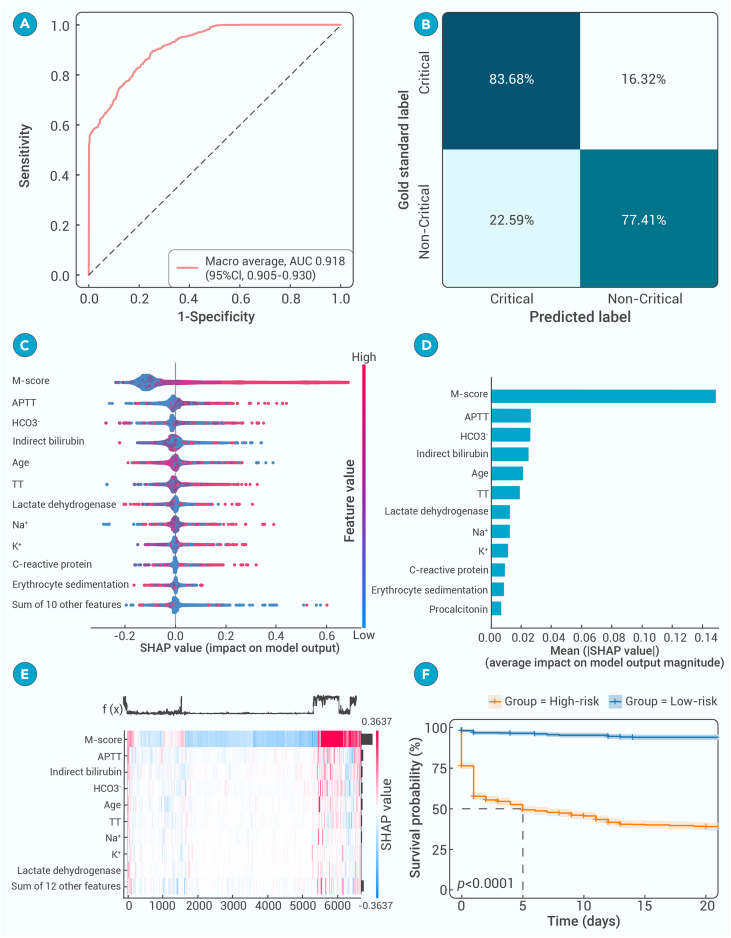
Pulmonary infections pose formidable challenges in clinical settings with high mortality rates across all age groups worldwide. Accurate diagnosis and early intervention are crucial to improve patient outcomes. Artificial intelligence (AI) has the capability to mine imaging features specific to different pathogens and fuse multimodal features to reach a synergistic diagnosis, enabling more precise investigation and individualized clinical management. In this study, we successfully developed a multimodal integration (MMI) pipeline to differentiate among bacterial, fungal, and viral pneumonia and pulmonary tuberculosis based on a real-world dataset of 24,107 patients. The area under the curve (AUC) of the MMI system comprising clinical text and computed tomography (CT) image scans yielded 0.910 (95% confidence interval [CI]: 0.904-0.916) and 0.887 (95% CI: 0.867-0.909) in the internal and external testing datasets respectively, which were comparable to those of experienced physicians. Furthermore, the MMI system was utilized to rapidly differentiate between viral subtypes with a mean AUC of 0.822 (95% CI: 0.805-0.837) and bacterial subtypes with a mean AUC of 0.803 (95% CI: 0.775-0.830). Here, the MMI system harbors the potential to guide tailored medication recommendations, thus mitigating the risk of antibiotic misuse. Additionally, the integration of multimodal factors in the AI-driven system also provided an evident advantage in predicting risks of developing critical illness, contributing to more informed clinical decision-making. To revolutionize medical care, embracing multimodal AI tools in pulmonary infections will pave the way to further facilitate early intervention and precise management in the foreseeable future.
肺部感染在全球所有年龄组的临床环境中都构成了严峻挑战,死亡率很高。准确诊断和早期干预对于改善患者预后至关重要。人工智能(AI)有能力挖掘不同病原体特有的影像特征,并融合多模态特征以达成协同诊断,从而实现更精确的检查和个性化临床管理。在本研究中,我们基于24107例患者的真实世界数据集,成功开发了一种多模态整合(MMI)流程,以区分细菌性、真菌性和病毒性肺炎及肺结核。包含临床文本和计算机断层扫描(CT)图像扫描的MMI系统在内部和外部测试数据集中的曲线下面积(AUC)分别为0.910(95%置信区间[CI]:0.904 - 0.916)和0.887(95%CI:0.867 - 0.909),与经验丰富的医生相当。此外,MMI系统被用于快速区分病毒亚型,平均AUC为0.822(95%CI:0.805 - 0.837),区分细菌亚型的平均AUC为0.803(95%CI:0.775 - 0.830)。在此,MMI系统有潜力指导针对性的用药建议,从而降低抗生素滥用的风险。此外,人工智能驱动系统中多模态因素的整合在预测危重病发生风险方面也具有明显优势,有助于做出更明智的临床决策。为了彻底改变医疗护理,在肺部感染中采用多模态人工智能工具将为在可预见的未来进一步促进早期干预和精准管理铺平道路。