Santos Cleber Vinicius Brito Dos, Noronha Tatiana Guimarães de, Werneck Guilherme Loureiro, Struchiner Claudio José, Villela Daniel Antunes Maciel
Departamento de Epidemiologia, Instituto de Medicina Social, Universidade do Estado do Rio de Janeiro (UERJ), RJ, Brazil.
Instituto de Tecnologia em Imunobiológicos Bio-Manguinhos, Fundação Oswaldo Cruz (FIOCRUZ), Rio de Janeiro, RJ, Brazil.
Lancet Reg Health Am. 2023 Jan;17:100418. doi: 10.1016/j.lana.2022.100418. Epub 2022 Dec 22.
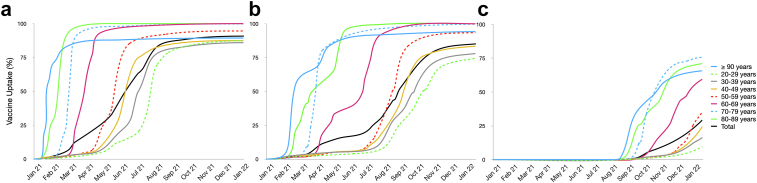
A nationwide Severe Respiratory Syndrome Coronavirus 2 (SARS-CoV-2) vaccination campaign was initiated in Brazil in January 2021 with CoronaVac (Sinovac Biotech) and ChAdOx1 nCoV-19 (AstraZeneca) followed by BNT162b2 mRNA (Pfizer-BioNTech) and Ad26.COV2.S (Johnson & Johnson-Janssen) vaccines. Here we provide estimates of the number of severe cases and deaths due to coronavirus disease (COVID-19) averted during the first year of the mass vaccination campaign in Brazil.
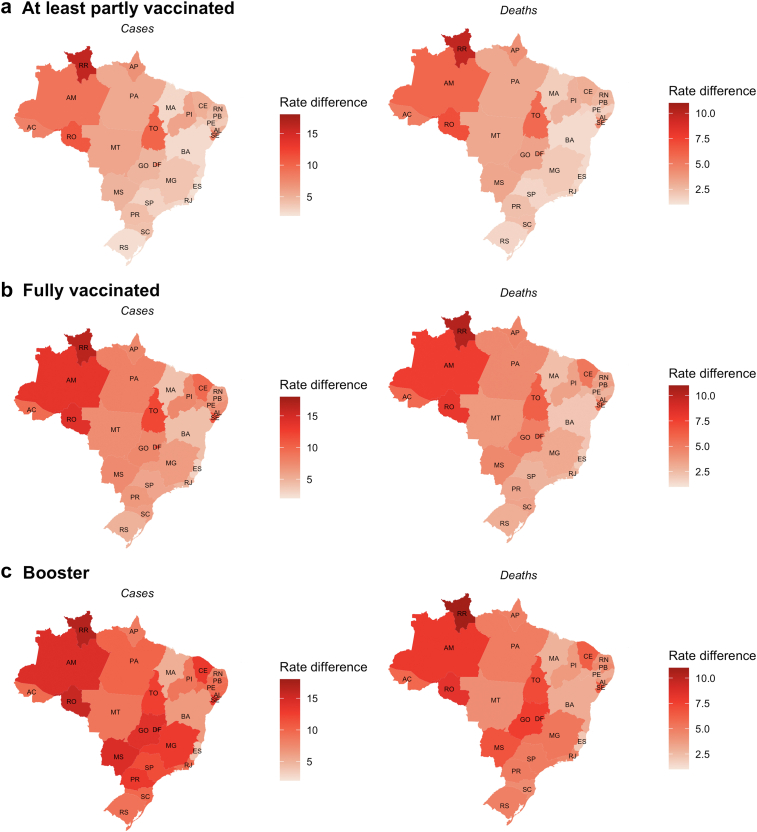
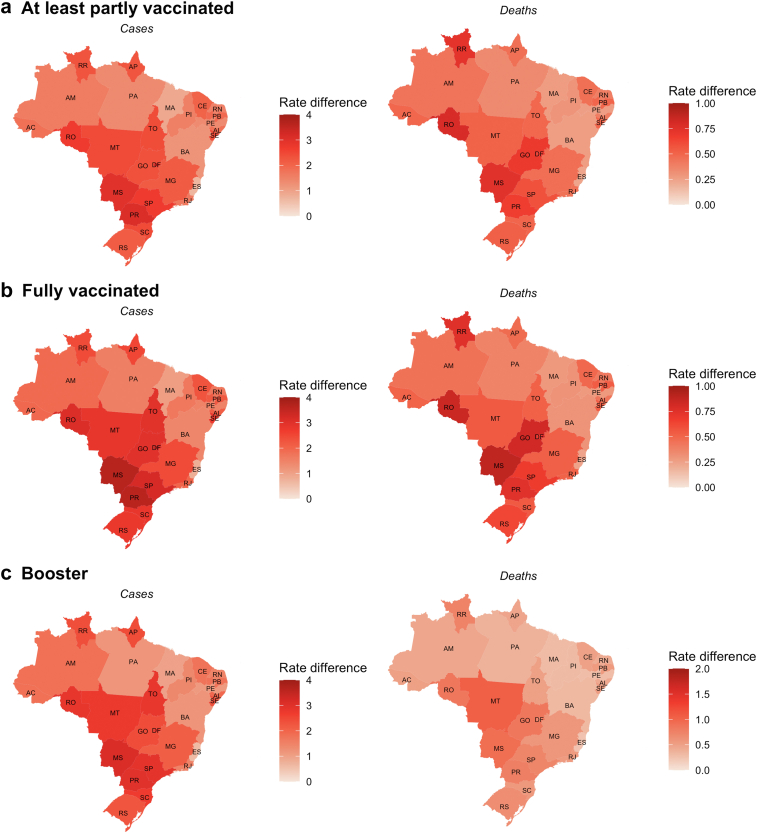
Data on COVID-19 vaccination and COVID-19-related illness and death were obtained from the Brazilian Ministry of Health and used to estimate the direct effects of the vaccination campaign on the number of severe cases and deaths due to COVID-19 occurring between January 17, 2021 and January 31, 2022. To this end, we compared the daily age-specific rates between the unvaccinated population and the "at least partly vaccinated" population (received at least one dose of a two-dose vaccine), as well as other two vaccination subgroups, "fully vaccinated" (completed the one- or two-dose vaccine schedule), and "boosted-vaccinated" (fully vaccinated and recipients of booster dose) populations.
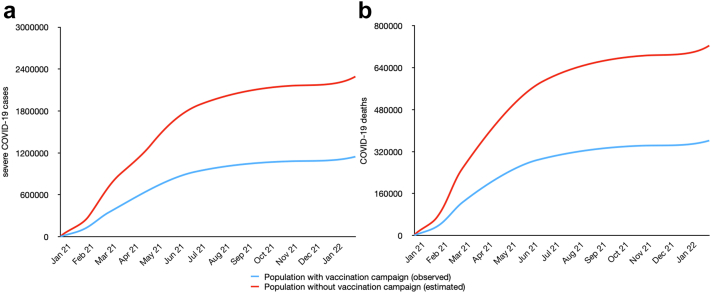
We estimated that 74% (n = 875,846; 95% confidence interval, CI 843,383-915,709) of total expected cases of severe COVID-19 and 82% (n = 303,129; 95% CI 284,019-321,681) of total expected deaths due to COVID-19 were averted in the first year of the national vaccination campaign. The averted burden was heterogeneous between age groups and higher in the more populous states. However, outcome rate differences between vaccinated and unvaccinated groups were higher in the less populated states.
The first year of the COVID-19 vaccination program in Brazil saved the lives of at least 303,129 adults. The results highlight the need for future vaccination campaigns, including those required in the current pandemic, to rapidly achieve high uptake, particularly among the elderly and residents of the least populous regions.
Ministry of Health (Brazil).
2021年1月,巴西启动了全国性的严重急性呼吸综合征冠状病毒2(SARS-CoV-2)疫苗接种运动,使用了科兴疫苗(Sinovac Biotech)和牛津-阿斯利康新冠疫苗(ChAdOx1 nCoV-19),随后接种了辉瑞-BioNTech的BNT162b2 mRNA疫苗和强生-杨森的Ad26.COV2.S疫苗。在此,我们提供了巴西大规模疫苗接种运动第一年期间避免的冠状病毒病(COVID-19)重症病例和死亡人数的估计值。
从巴西卫生部获取了COVID-19疫苗接种以及与COVID-19相关的疾病和死亡数据,并用于估计疫苗接种运动对2021年1月17日至2022年1月31日期间发生的COVID-19重症病例和死亡人数的直接影响。为此,我们比较了未接种疫苗人群与“至少部分接种疫苗”人群(接受了至少一剂两剂疫苗)以及其他两个疫苗接种亚组“完全接种疫苗”(完成了一剂或两剂疫苗接种计划)和“加强接种疫苗”(完全接种疫苗且接受了加强剂量)人群的每日年龄特异性发病率。
我们估计,在全国疫苗接种运动的第一年,避免了74%(n = 875,846;95%置信区间,CI 843,383 - 915,709)的COVID-19重症预期病例总数和82%(n = 303,129;95% CI 284,019 - 321,681)的COVID-19预期死亡总数。避免的负担在各年龄组之间存在差异,且在人口较多的州更高。然而,在人口较少的州,接种疫苗组和未接种疫苗组之间的结局率差异更大。
巴西COVID-19疫苗接种计划的第一年挽救了至少303,129名成年人的生命。结果突出表明,未来的疫苗接种运动,包括当前大流行所需的运动,需要迅速实现高接种率,特别是在老年人和人口最少地区的居民中。
巴西卫生部。