Department of Industrial and Environmental Engineering, Graduate School of Environment, Gachon University, 1342 Seongnam-daero, Seongnam-si 13120, Republic of Korea.
Korea Railroad Research Institute (KRRI), 176 Cheoldobakmulkwan-ro, Uiwang-si 16105, Republic of Korea.
Int J Environ Res Public Health. 2022 Dec 21;20(1):97. doi: 10.3390/ijerph20010097.
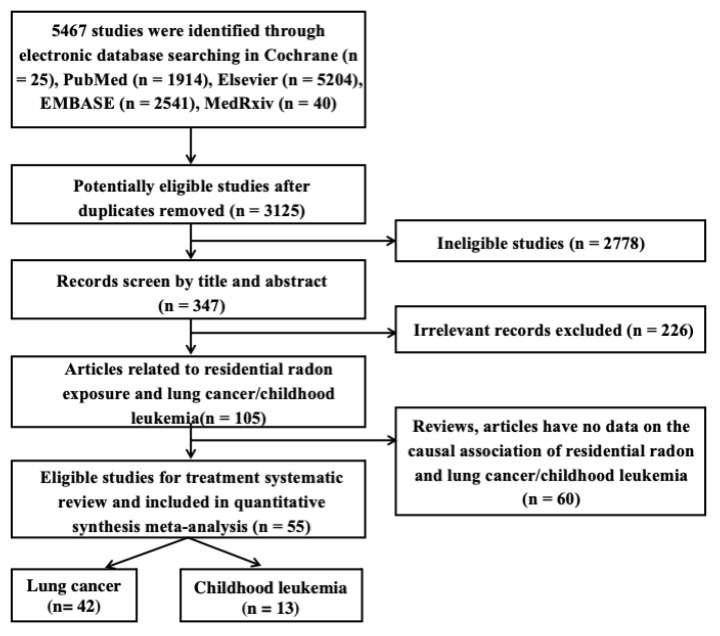
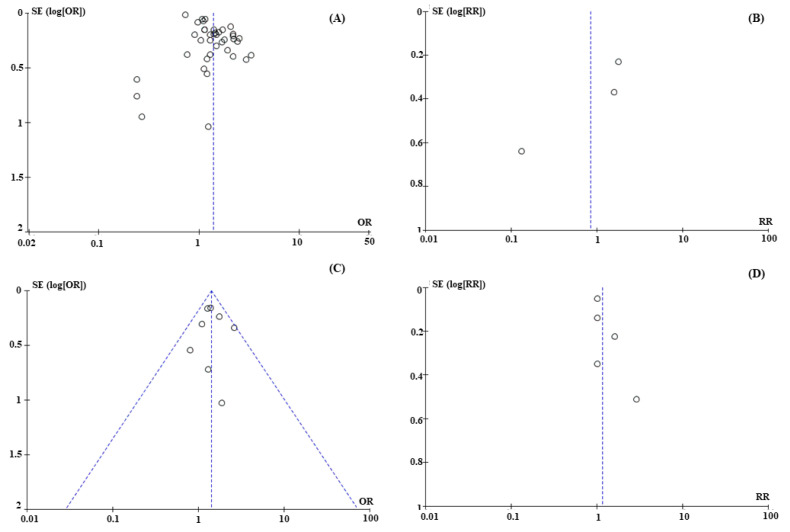
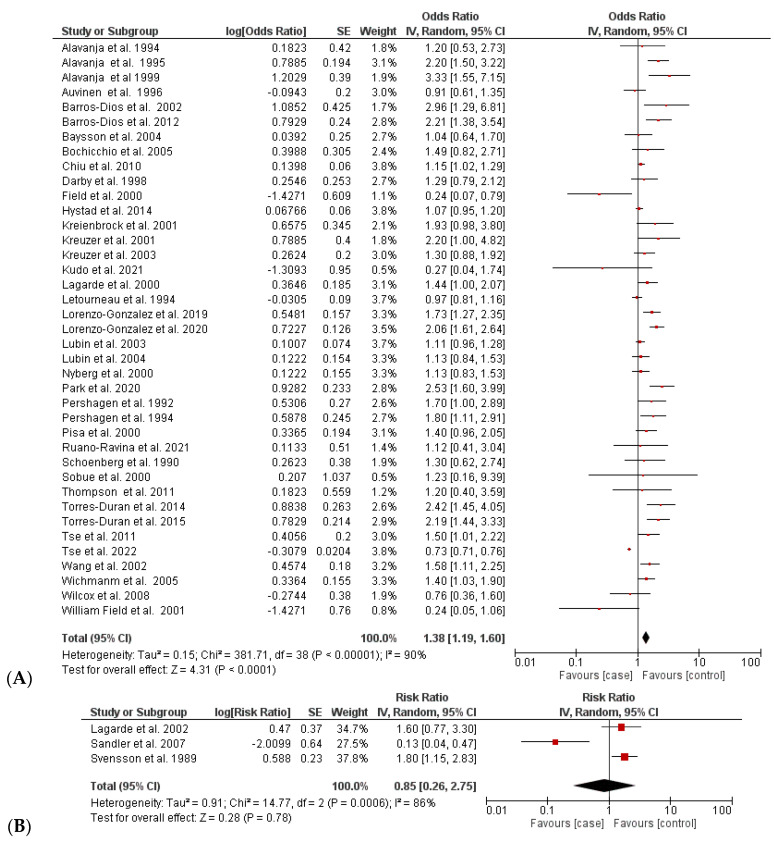
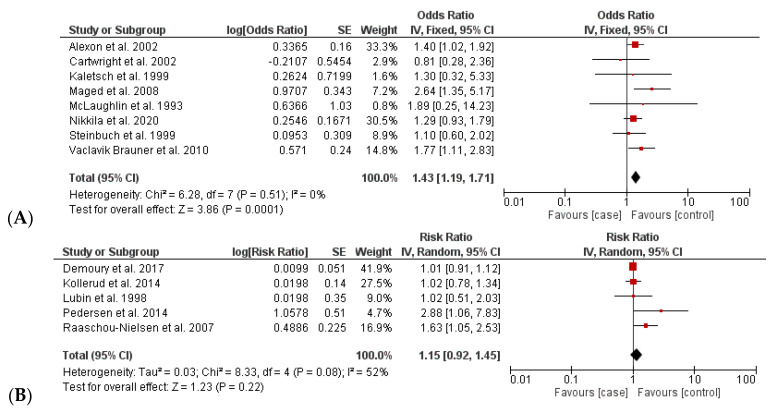
This study investigated the impact of residential radon exposure on human cancers (i.e., lung cancer and childhood leukemia) through a systematic review and meta-analysis of case−control studies. A total of 9724 articles obtained from electronic databases were assessed; however, only 55 case−control studies were eligible after manually screening and eliminating unnecessary studies. The causal associations were addressed by determining the meta-analysis’s estimated size effects (i.e., ORs/RRs) of the meta-analysis. Residential radon was revealed to significantly increase the incidence of lung cancer and childhood leukemia with pooled ORs of 1.38 [1.19; 1.60] (I2 = 90%; p < 0.00001) and 1.43 [1.19; 1.72] (I2 = 0% and p = 0.51), respectively. In addition, subgroup analyses were performed to reduce the heterogeneity of the initial meta-analyses. The results provided strong evidence that inhaling radon in the indoor environments is closely associated with the development of lung cancer and childhood leukemia in patients living in Europe and areas with high radon levels (≥100 Bq/m3).
本研究通过对病例对照研究的系统评价和荟萃分析,探讨了住宅氡暴露对人类癌症(即肺癌和儿童白血病)的影响。从电子数据库中获得了总计 9724 篇文章,但经过手动筛选和排除不必要的研究后,只有 55 篇病例对照研究符合入选标准。通过确定荟萃分析的估计效应大小(即比值比/相对风险)来探讨因果关系。研究表明,住宅氡暴露与肺癌和儿童白血病的发病率显著相关,荟萃分析的合并比值比分别为 1.38 [1.19; 1.60](I2 = 90%;p < 0.00001)和 1.43 [1.19; 1.72](I2 = 0%和 p = 0.51)。此外,还进行了亚组分析以减少初始荟萃分析的异质性。研究结果提供了有力的证据表明,在欧洲和氡含量较高的地区(≥100 Bq/m3),室内环境中吸入氡与肺癌和儿童白血病患者的发病密切相关。