Halberg Hospital and Research Institute, Moradabad 244001, India.
Department of Cardiology, Emirates Hospital, Dubai 999041, United Arab Emirates.
Nutrients. 2022 Dec 22;15(1):46. doi: 10.3390/nu15010046.
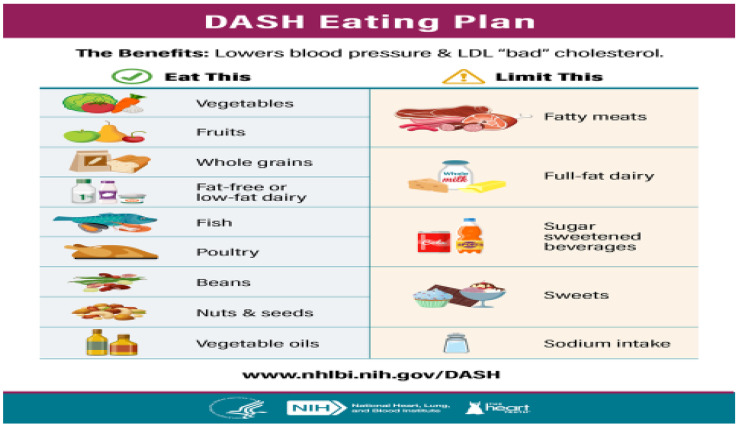
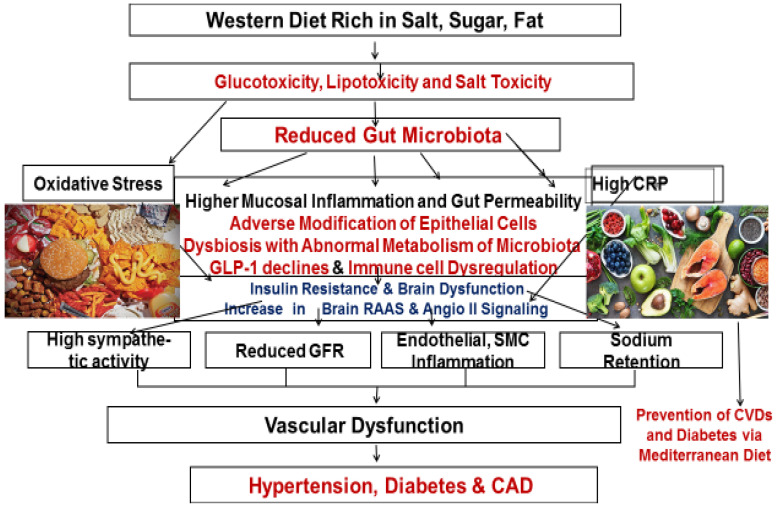
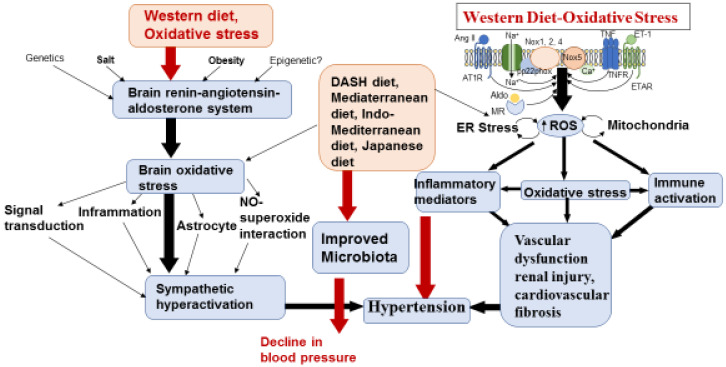
Western-type diet with high salt and sugar, sedentary behavior, obesity, tobacco and alcoholism are important risk factors for hypertension. This review aims to highlight the role of western diet-induced oxidative stress and inflammation in the pathogenesis of hypertension and the role of various types of diets in its prevention with reference to dietary approaches to stop hypertension (DASH) diet. It seems that it is crucial to alter the western type of diet because such diets can also predispose all CVDs. Western diet-induced oxidative stress is characterized by excessive production of reactive oxygen species (ROS) with an altered oxidation-reduction (redox) state, leading to a marked increase in inflammation and vascular dysfunction. Apart from genetic and environmental factors, one important cause for differences in the prevalence of hypertension in various countries may be diet quality, deficiency in functional foods, and salt consumption. The role of the DASH diet has been established. However, there are gaps in knowledge about the role of some Indo-Mediterranean foods and Japanese foods, which have been found to decrease blood pressure (BP) by improving vascular function. The notable Indo-Mediterranean foods are pulses, porridge, spices, and millets; fruits such as guava and blackberry and vegetables, which may also decrease BPs. The Japanese diet consists of soya tofu, whole rice, in particular medical rice, vegetables and plenty of fish rich in fish oil, fish peptides and taurine that are known to decrease BPs. Epidemiological studies and randomized, controlled trials have demonstrated the role of these diets in the prevention of hypertension and metabolic diseases. Such evidence is still meager from Japan, although the prevalence of hypertension is lower (15-21%) compared to other developed countries, which may be due to the high quality of the Japanese diet. Interestingly, some foods, such as berries, guava, pumpkin seeds, carrots, soya beans, and spices, have been found to cause a decrease in BPs. Omega-3 fatty acids, fish peptide, taurine, dietary vitamin D, vitamin C, potassium, magnesium, flavonoids, nitrate and l-arginine are potential nutrients that can also decrease BPs. Larger cohort studies and controlled trials are necessary to confirm our views.
高盐高糖的西方饮食、久坐行为、肥胖、烟草和酗酒是高血压的重要危险因素。本综述旨在强调西方饮食诱导的氧化应激和炎症在高血压发病机制中的作用,并参考膳食方法停止高血压(DASH)饮食,探讨各种类型的饮食在预防高血压中的作用。改变西方饮食类型似乎至关重要,因为这种饮食也会使所有心血管疾病的易感性增加。西方饮食诱导的氧化应激的特征是活性氧(ROS)的产生过多,氧化还原(redox)状态发生改变,导致炎症和血管功能障碍明显增加。除了遗传和环境因素外,不同国家高血压患病率差异的一个重要原因可能是饮食质量、功能性食品缺乏和盐摄入量。DASH 饮食的作用已经确立。然而,关于一些印度地中海食物和日本食物在降低血压方面的作用,我们的认识还存在差距,这些食物通过改善血管功能来降低血压。值得注意的印度地中海食物有豆类、粥、香料和小米;番石榴和黑莓等水果以及蔬菜也可能降低血压。日本饮食包括豆腐、全米,特别是医疗米、蔬菜和大量富含鱼油、鱼肽和牛磺酸的鱼类,这些都已知可以降低血压。流行病学研究和随机对照试验已经证明了这些饮食在预防高血压和代谢性疾病方面的作用。尽管日本的高血压患病率较低(15-21%),但来自日本的此类证据仍然很少,这可能是由于日本饮食的高质量。有趣的是,一些食物,如浆果、番石榴、南瓜籽、胡萝卜、大豆和香料,已被发现可降低血压。ω-3 脂肪酸、鱼肽、牛磺酸、膳食维生素 D、维生素 C、钾、镁、类黄酮、硝酸盐和 l-精氨酸是潜在的可以降低血压的营养素。需要进行更大规模的队列研究和对照试验来证实我们的观点。