Environmental Studies, University of California Santa Barbara, Santa Barbara, CA 93106.
Evolved Energy Research, Denver, CO 80211.
Proc Natl Acad Sci U S A. 2023 Jan 24;120(4):e2204098120. doi: 10.1073/pnas.2204098120. Epub 2023 Jan 19.
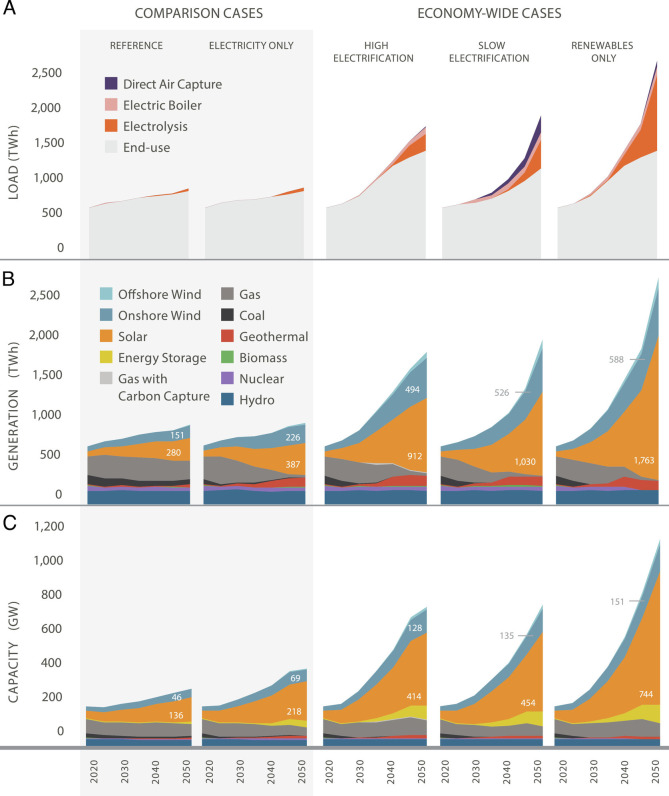
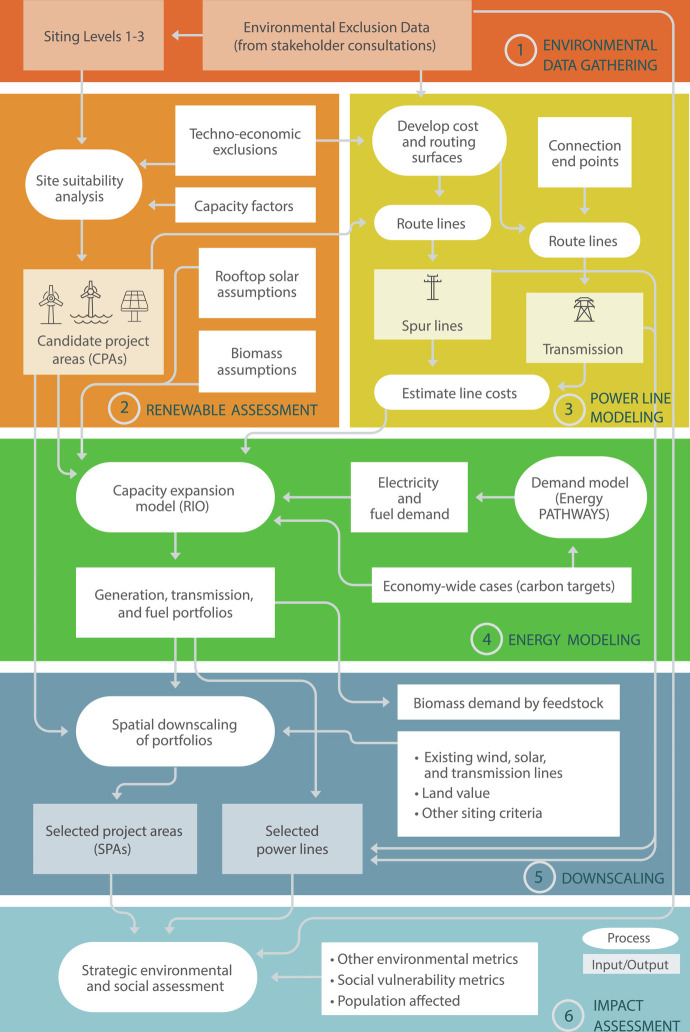
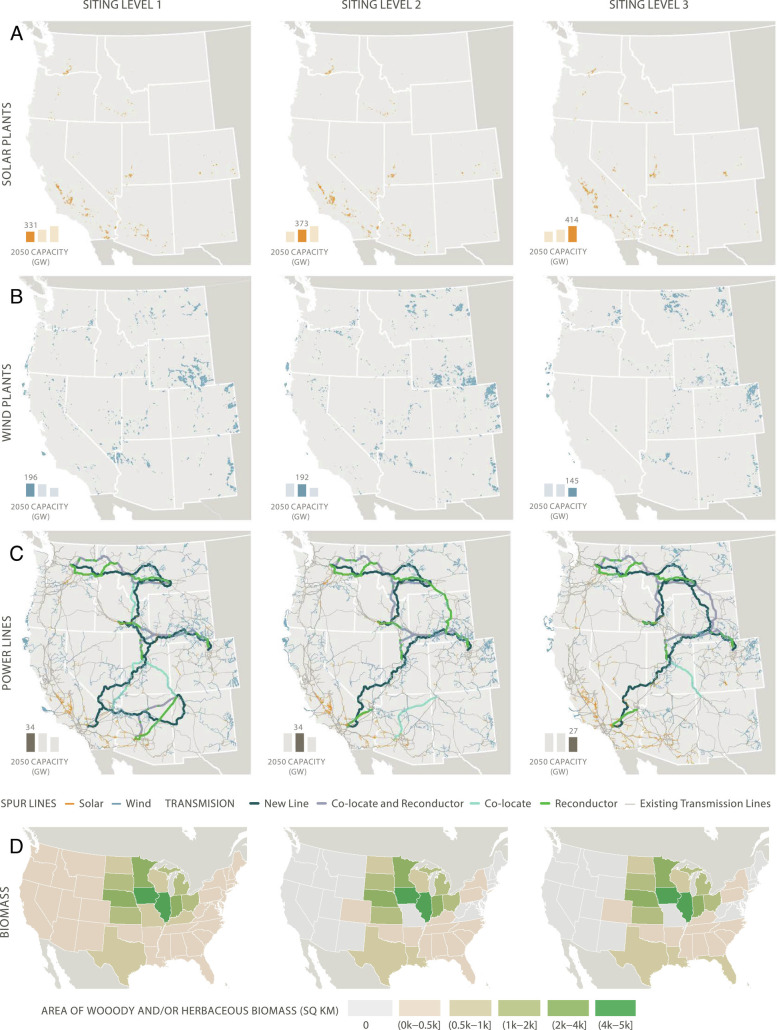
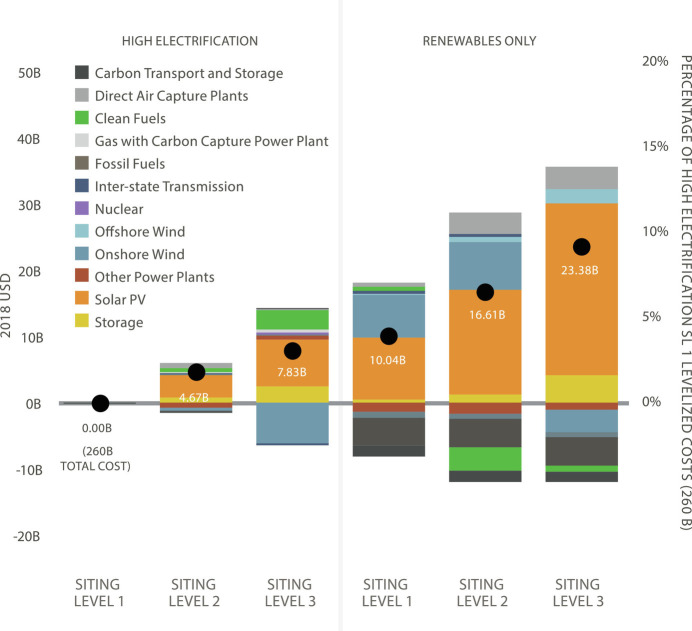
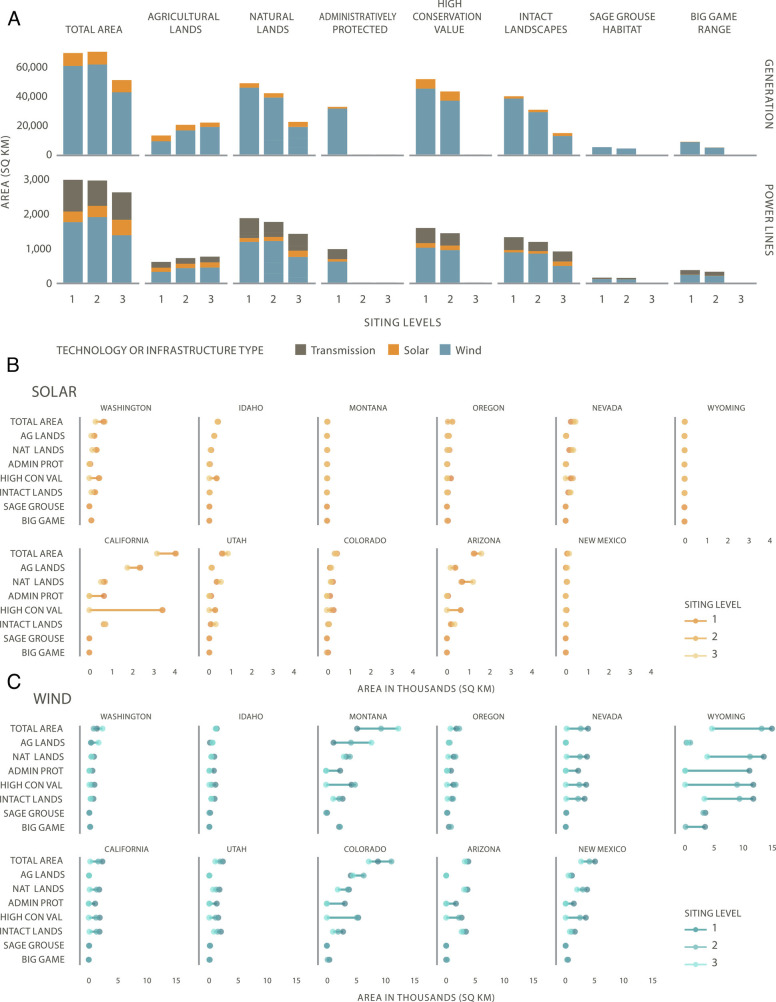
The scale and pace of energy infrastructure development required to achieve net-zero greenhouse gas (GHG) emissions are unprecedented, yet our understanding of how to minimize its potential impacts on land and ocean use and natural resources is inadequate. Using high-resolution energy and land-use modeling, we developed spatially explicit scenarios for reaching an economy-wide net-zero GHG target in the western United States by 2050. We found that among net-zero policy cases that vary the rate of transportation and building electrification and use of fossil fuels, nuclear generation, and biomass, the "High Electrification" case, which utilizes electricity generation the most efficiently, had the lowest total land and ocean area requirements (84,000 to 105,000 km vs. 88,100 to 158,000 km across all other cases). Different levels of land and ocean use protections were applied to determine their effect on siting, environmental and social impacts, and energy costs. Meeting the net-zero target with stronger land and ocean use protections did not significantly alter the share of different energy generation technologies and only increased system costs by 3%, but decreased additional interstate transmission capacity by 20%. Yet, failure to avoid development in areas with high conservation value is likely to result in substantial habitat loss.
实现温室气体(GHG)净零排放所需的能源基础设施的规模和速度是前所未有的,但我们对如何最大限度地减少其对土地和海洋利用以及自然资源的潜在影响的理解还不够充分。我们使用高分辨率的能源和土地利用建模,为美国西部到 2050 年实现全经济范围的温室气体净零目标制定了具有空间明确性的情景方案。我们发现,在各种净零政策案例中,包括不同的交通和建筑电气化率以及化石燃料、核能和生物质能的使用情况,“高电气化”案例(即最有效地利用电力)所需的总土地和海洋面积要求最低(84000 到 105000 公里,而所有其他案例为 88100 到 158000 公里)。我们应用了不同级别的土地和海洋使用保护措施,以确定其对选址、环境和社会影响以及能源成本的影响。通过更严格的土地和海洋使用保护来实现净零目标,并不会显著改变不同能源发电技术的份额,只会使系统成本增加 3%,但会减少 20%的额外州际输电容量。然而,如果不能避免在具有高保护价值的地区进行开发,就很可能导致大量的栖息地丧失。