Ozkara Burak B, Chen Melissa M, Federau Christian, Karabacak Mert, Briere Tina M, Li Jing, Wintermark Max
Department of Neuroradiology, MD Anderson Cancer Center, 1400 Pressler Street, Houston, TX 77030, USA.
Faculty of Medicine, University of Zurich, Pestalozzistrasse 3, CH-8032 Zurich, Switzerland.
Cancers (Basel). 2023 Jan 4;15(2):334. doi: 10.3390/cancers15020334.
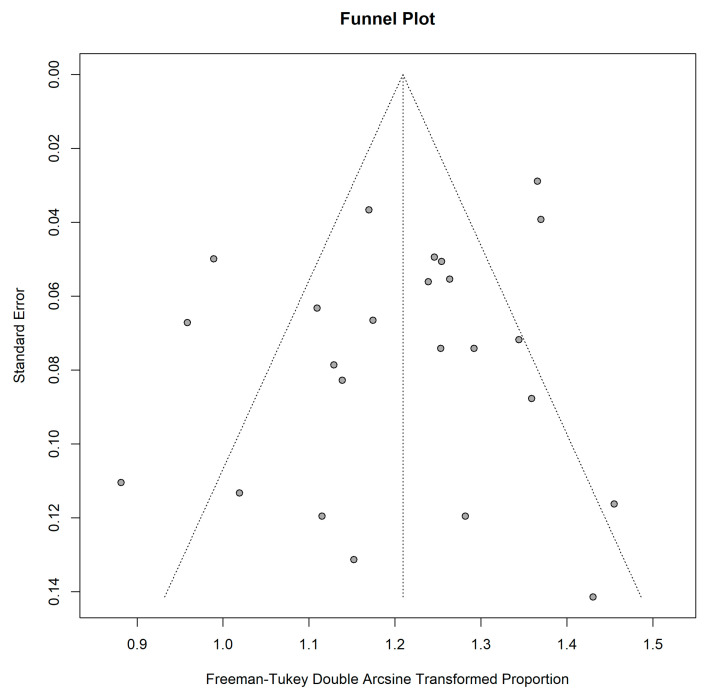
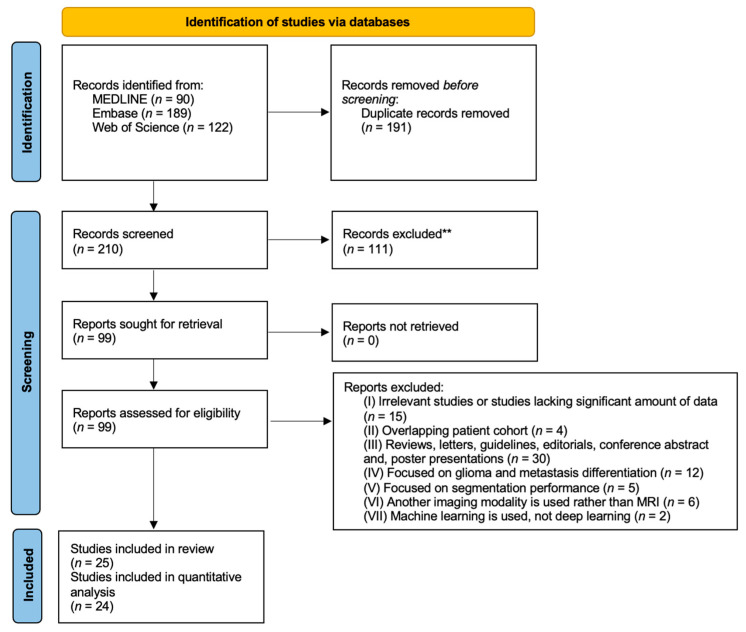
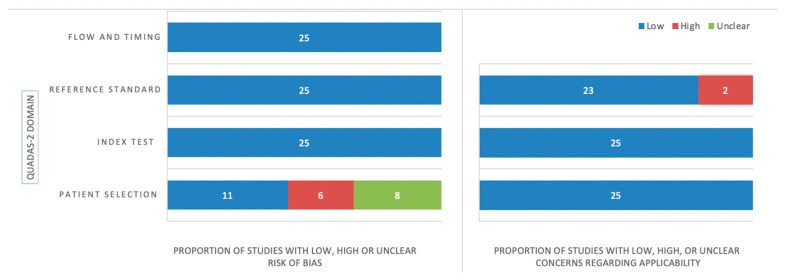
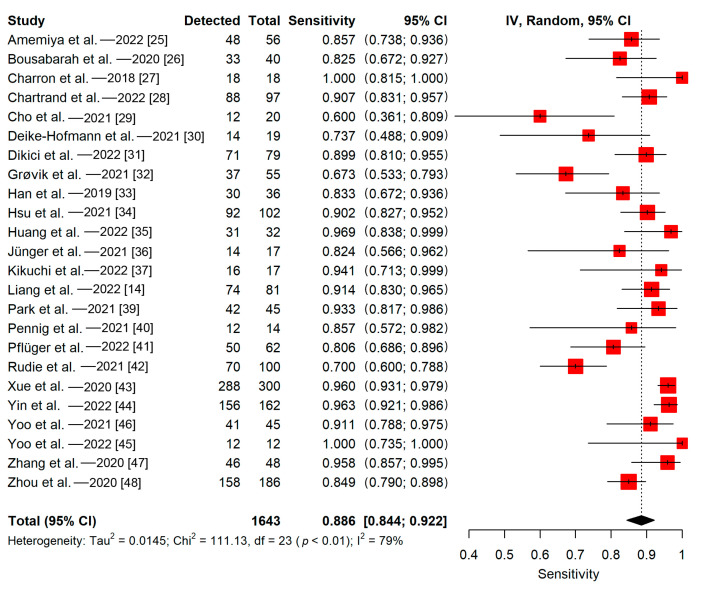
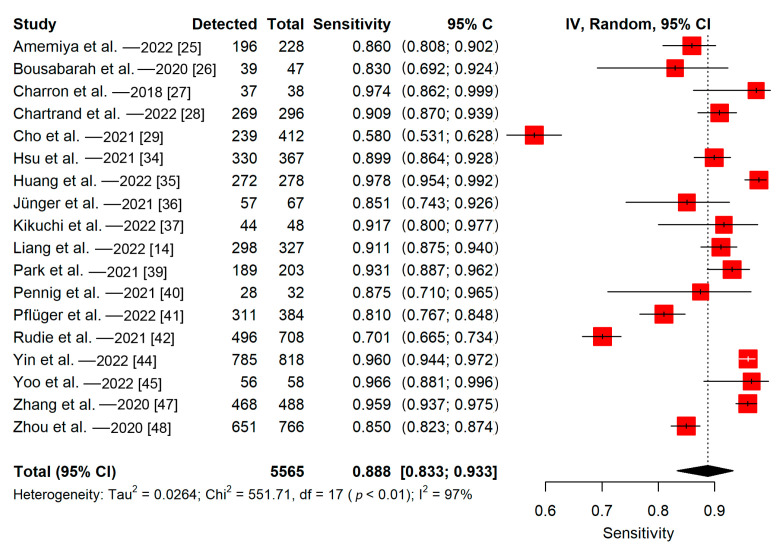
Since manual detection of brain metastases (BMs) is time consuming, studies have been conducted to automate this process using deep learning. The purpose of this study was to conduct a systematic review and meta-analysis of the performance of deep learning models that use magnetic resonance imaging (MRI) to detect BMs in cancer patients. A systematic search of MEDLINE, EMBASE, and Web of Science was conducted until 30 September 2022. Inclusion criteria were: patients with BMs; deep learning using MRI images was applied to detect the BMs; sufficient data were present in terms of detective performance; original research articles. Exclusion criteria were: reviews, letters, guidelines, editorials, or errata; case reports or series with less than 20 patients; studies with overlapping cohorts; insufficient data in terms of detective performance; machine learning was used to detect BMs; articles not written in English. Quality Assessment of Diagnostic Accuracy Studies-2 and Checklist for Artificial Intelligence in Medical Imaging was used to assess the quality. Finally, 24 eligible studies were identified for the quantitative analysis. The pooled proportion of patient-wise and lesion-wise detectability was 89%. Articles should adhere to the checklists more strictly. Deep learning algorithms effectively detect BMs. Pooled analysis of false positive rates could not be estimated due to reporting differences.
由于手动检测脑转移瘤(BMs)耗时较长,因此已开展相关研究,旨在利用深度学习实现这一过程的自动化。本研究的目的是对使用磁共振成像(MRI)检测癌症患者脑转移瘤的深度学习模型的性能进行系统评价和荟萃分析。截至2022年9月30日,对MEDLINE、EMBASE和科学网进行了系统检索。纳入标准为:患有脑转移瘤的患者;应用基于MRI图像的深度学习来检测脑转移瘤;在检测性能方面有足够的数据;原始研究文章。排除标准为:综述、信函、指南、社论或勘误;病例报告或患者少于20例的系列研究;队列重叠的研究;检测性能方面数据不足;使用机器学习检测脑转移瘤;非英文撰写的文章。采用诊断准确性研究质量评估-2和医学影像人工智能检查表来评估质量。最终,确定了24项符合条件的研究进行定量分析。患者层面和病灶层面可检测性的合并比例为89%。文章应更严格地遵守检查表。深度学习算法能有效检测脑转移瘤。由于报告差异,无法估计假阳性率的合并分析结果。