Yang Zhao, Yue Shi-Jun, Gao Huan, Zhang Qiao, Xu Ding-Qiao, Zhou Jing, Li Jia-Jia, Tang Yu-Ping
Key Laboratory of Shaanxi Administration of Traditional Chinese Medicine for TCM Compatibility, State Key Laboratory of Research and Development of Characteristic Qin Medicine Resources (Cultivation), Shaanxi Key Laboratory of Chinese Medicine Fundamentals and New Drugs Research, Shaanxi Collaborative Innovation Center of Chinese Medicinal Resources Industrialization, Shaanxi University of Chinese Medicine, Xi'an, Shaanxi, China.
Front Nutr. 2023 Jan 9;9:1079767. doi: 10.3389/fnut.2022.1079767. eCollection 2022.
In China and other Asian nations, (GJ) is used as functional vegetables or as a type of folk medicine. Ellagic acid (EA) is one of the main active ingredients in GJ and has been utilized in food, cosmetics, and medicinal goods worldwide. Natural deep eutectic solvents (NADESs) have gradually replaced organic solvents for efficient extraction of plant-derived active compounds due to its environmental protection, low toxicity, low solubility, reusability, etc.
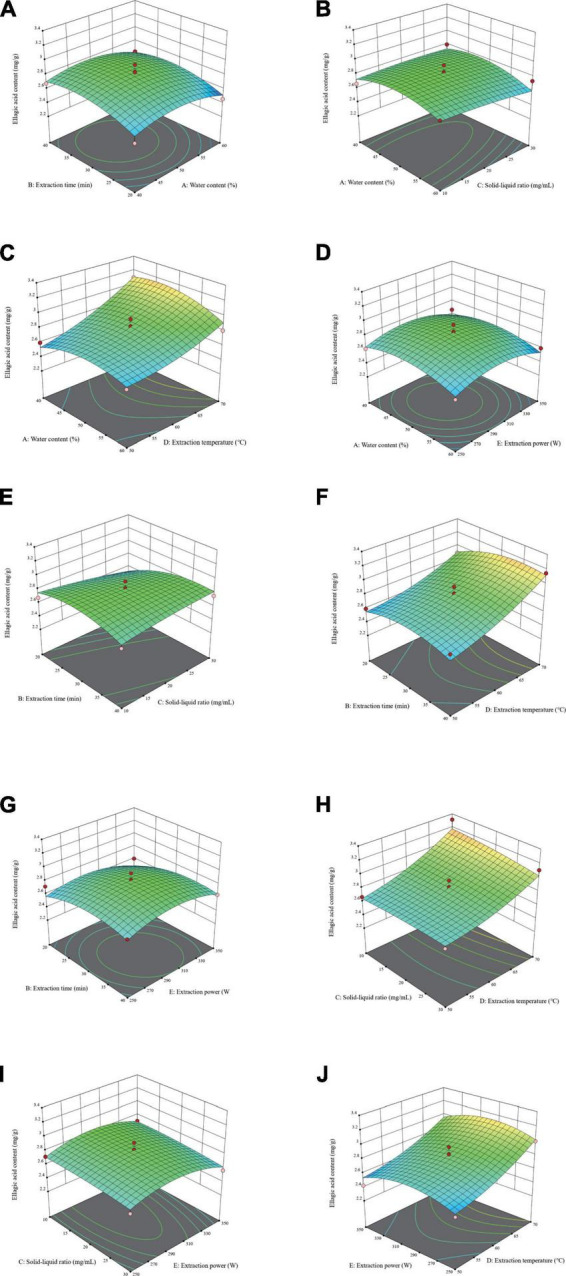
NADES with the highest EA yield was selected and the extraction conditions were optimized by response surface methodology (RSM), the antioxidant activity of NADES extract was determined, and finally Fourier transform infrared (FT-IR) and scanning electron microscopy (SEM) were used to explain the mechanism for the increase of EA yield in GJ.
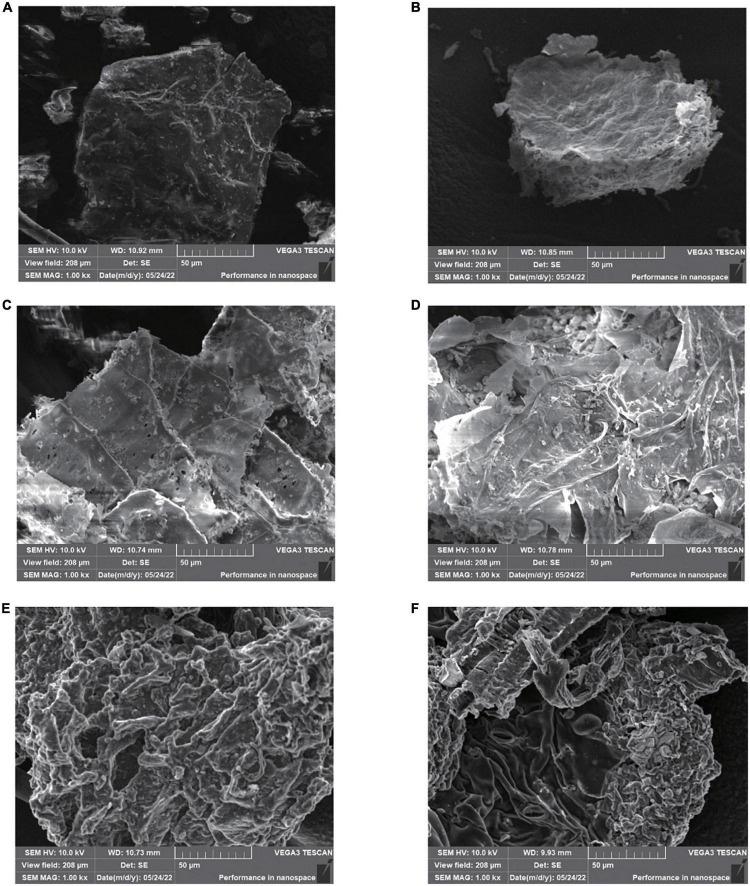
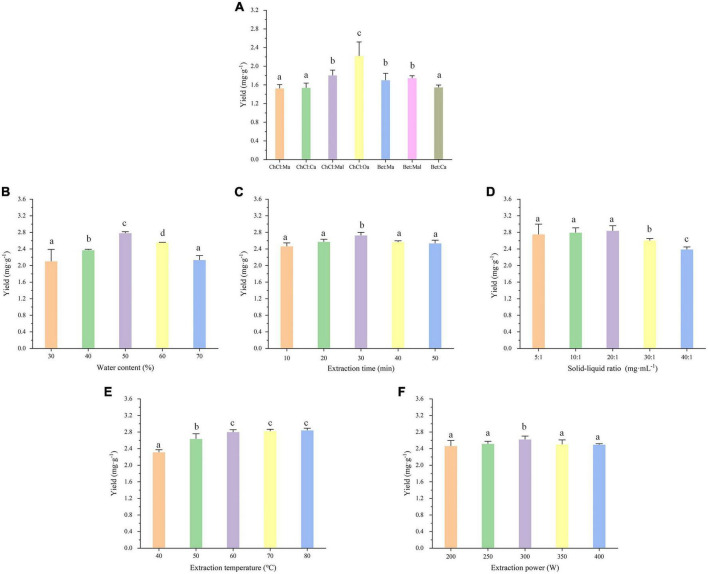
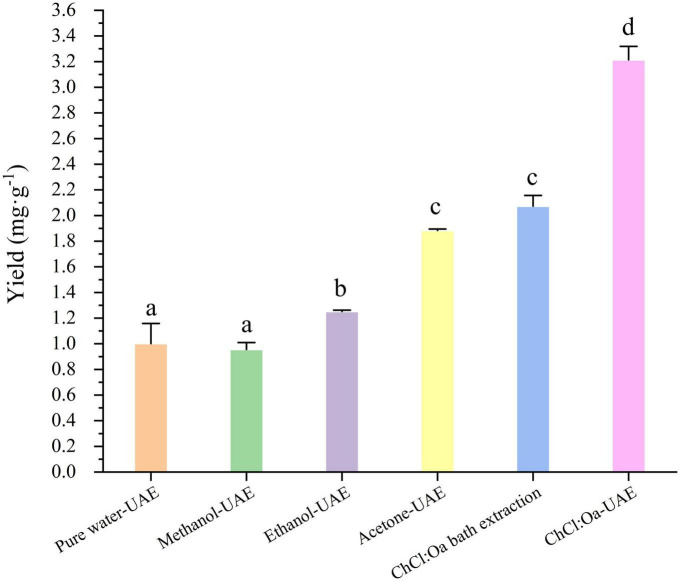
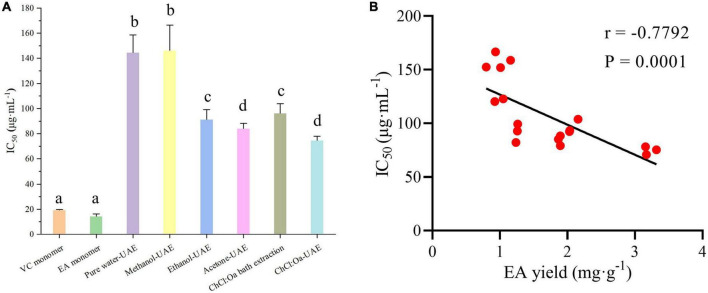
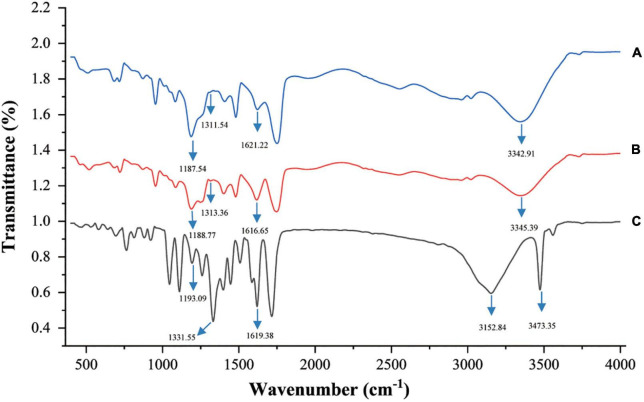
In this work, several NADESs were tailored for the ultrasound assisted extraction (UAE) of EA from GJ, among which choline chloride-oxalic acid (ChCl:Oa) was the most effective. In optimal conditions, ChCl:Oa extract produced higher EA yields than common organic solvents including methanol, ethanol, and acetone. antioxidant experiments showed that ChCl:Oa extract had stronger DPPH radical scavenging ability than other solvent extracts. Mechanically, FT-IR results indicated that ChCl:Oa could form a hydrogen bonding with EA, which enhanced the stability of EA. Meanwhile, ChCl:Oa-UAE treatment could destroy the tissue structure of GJ, thereby improving EA yield.
In conclusion, these results imply that the ChCl:Oa-UAE method might be an environmentally friendly approach for extracting EA from GJ.
在中国和其他亚洲国家,(GJ)被用作功能性蔬菜或一种民间药物。鞣花酸(EA)是GJ中的主要活性成分之一,已在全球范围内用于食品、化妆品和药品中。天然深共熔溶剂(NADESs)由于其环保、低毒、低溶解性、可重复使用等特点,已逐渐取代有机溶剂用于高效提取植物源活性化合物。
选择EA产率最高的NADES,并通过响应面法(RSM)优化提取条件,测定NADES提取物的抗氧化活性,最后利用傅里叶变换红外光谱(FT-IR)和扫描电子显微镜(SEM)解释GJ中EA产率增加的机制。
在本研究中,针对超声辅助提取(UAE)从GJ中提取EA定制了几种NADES,其中氯化胆碱-草酸(ChCl:Oa)最为有效。在最佳条件下,ChCl:Oa提取物的EA产率高于包括甲醇、乙醇和丙酮在内的常见有机溶剂。抗氧化实验表明,ChCl:Oa提取物比其他溶剂提取物具有更强的DPPH自由基清除能力。从机械角度来看,FT-IR结果表明ChCl:Oa可以与EA形成氢键,从而增强了EA的稳定性。同时,ChCl:Oa-UAE处理可以破坏GJ的组织结构,从而提高EA产率。
总之,这些结果表明ChCl:Oa-UAE方法可能是一种从GJ中提取EA的环保方法。