
CXCR4中内部水通道的形成对于被CXCL12激活后与G蛋白偶联至关重要。
Internal water channel formation in CXCR4 is crucial for G-protein coupling upon activation by CXCL12.
作者信息
Chang Chun-Chun, Liou Je-Wen, Dass Kingsley Theras Primus, Li Ya-Tzu, Jiang Shinn-Jong, Pan Sheng-Feng, Yeh Yu-Chen, Hsu Hao-Jen
机构信息
Department of Laboratory Medicine, Hualien Tzu Chi Hospital, Buddhist Tzu Chi Medical Foundation, Hualien, 97004, Taiwan.
Department of Laboratory Medicine and Biotechnology, College of Medicine, Tzu Chi University, Hualien, 97004, Taiwan.
出版信息
Commun Chem. 2020 Oct 8;3(1):133. doi: 10.1038/s42004-020-00383-0.
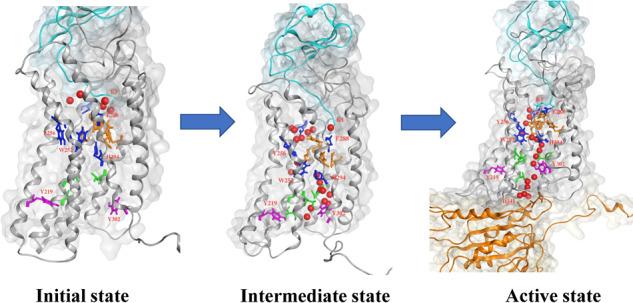
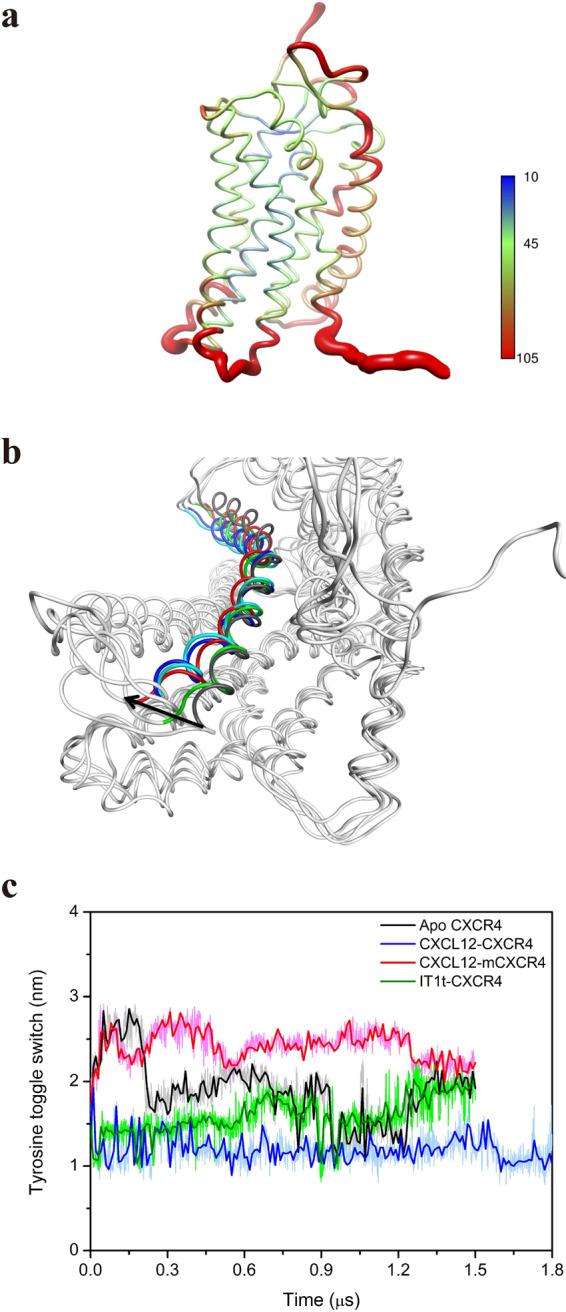
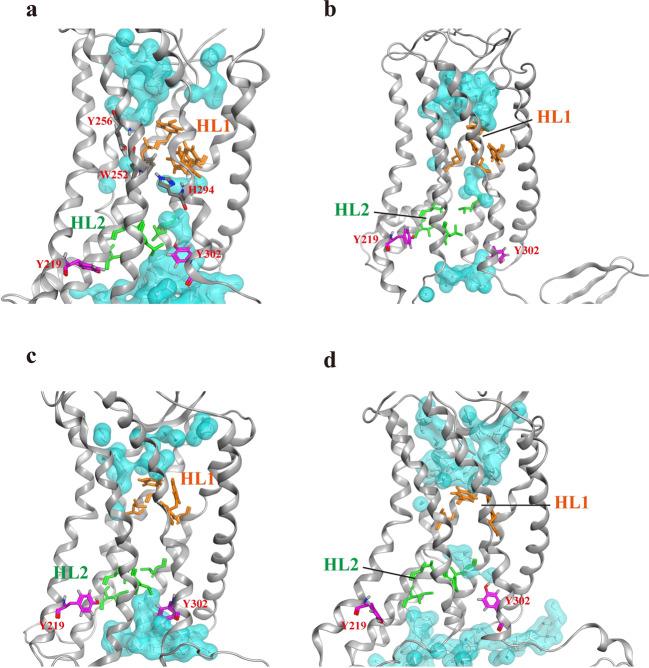
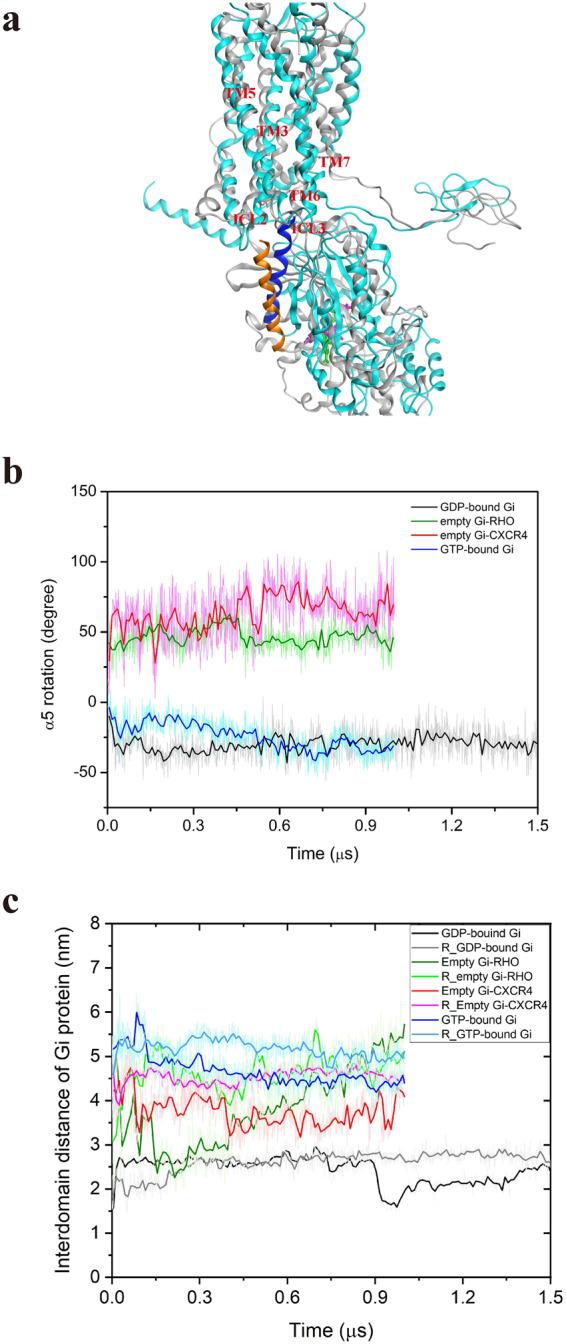
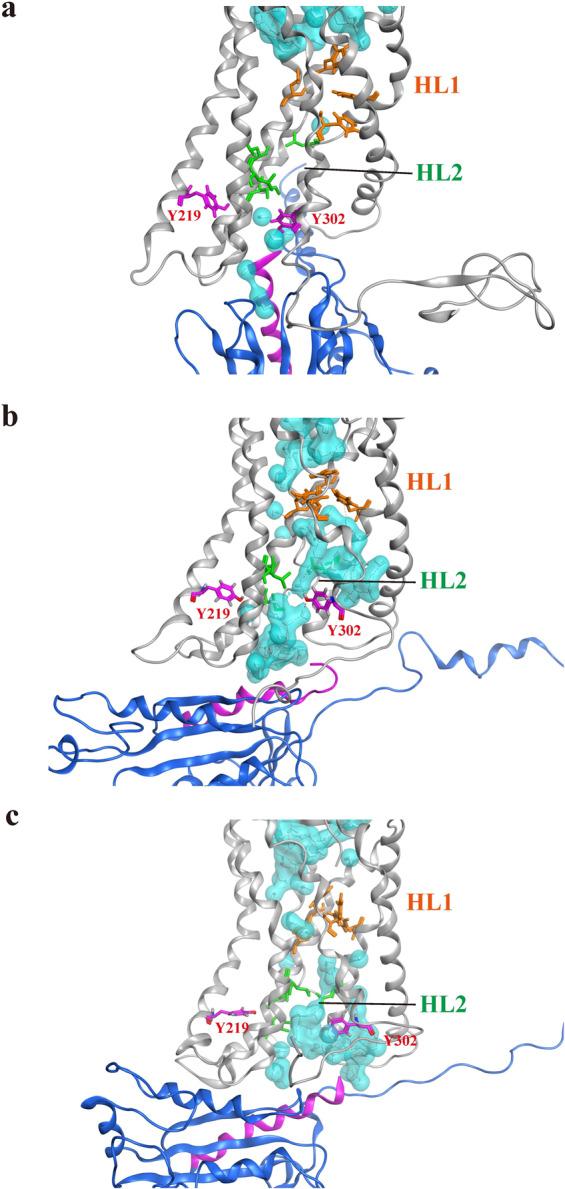
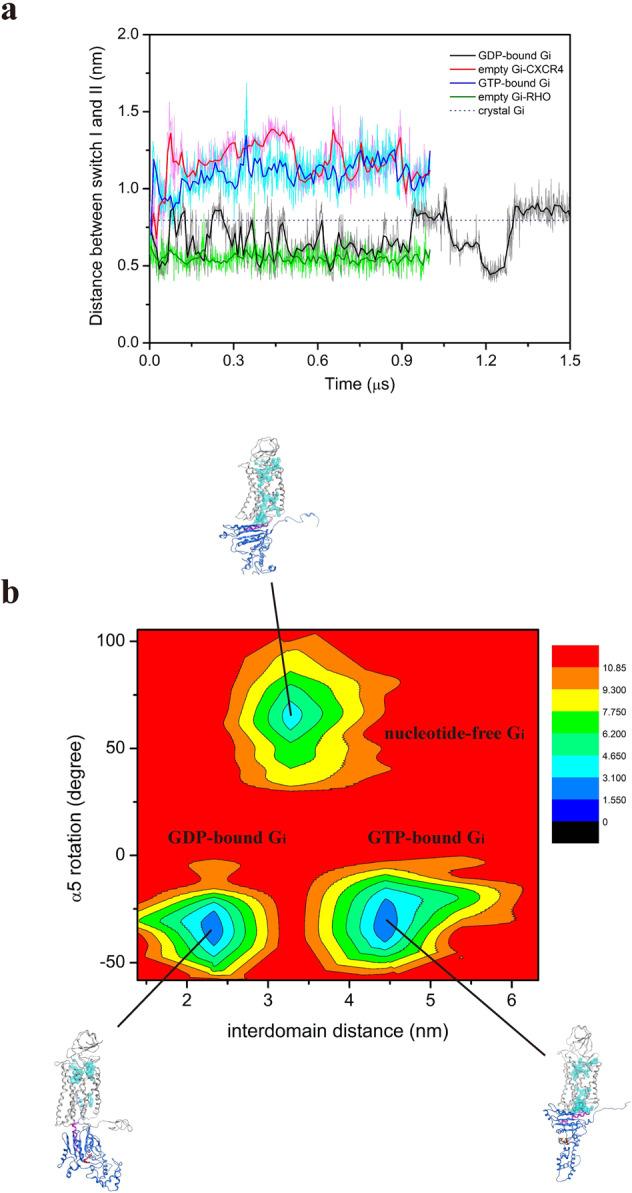
Chemokine receptor CXCR4 is a major drug target for numerous diseases because of its involvement in the regulation of cell migration and the developmental process. In this study, atomic-level molecular dynamics simulations were used to determine the activation mechanism and internal water formation of CXCR4 in complex with chemokine CXCL12 and G-protein. The results indicated that CXCL12-bound CXCR4 underwent transmembrane 6 (TM6) outward movement and a decrease in tyrosine toggle switch by eliciting the breakage of hydrophobic layer to form a continuous internal water channel. In the GDP-bound G-protein state, the rotation and translation of the α5-helix of G-protein toward the cytoplasmic pocket of CXCR4 induced an increase in interdomain distance for GDP leaving. Finally, an internal water channel formation model was proposed based on our simulations for CXCL12-bound CXCR4 in complex with G-protein upon activation for downstream signaling. This model could be useful in anticancer drug development.
趋化因子受体CXCR4由于参与细胞迁移调控和发育过程,是众多疾病的主要药物靶点。在本研究中,利用原子水平的分子动力学模拟来确定与趋化因子CXCL12和G蛋白复合物中CXCR4的激活机制和内部水形成。结果表明,结合CXCL12的CXCR4通过引发疏水层断裂以形成连续的内部水通道,经历跨膜6(TM6)向外移动和酪氨酸切换开关减少。在结合GDP的G蛋白状态下,G蛋白α5螺旋向CXCR4胞质口袋的旋转和平移导致GDP离开的结构域间距离增加。最后,基于我们对激活后与G蛋白复合的结合CXCL12的CXCR4的模拟,提出了一个内部水通道形成模型用于下游信号传导。该模型可能有助于抗癌药物开发。
 Zotero 插件