Kaihara Toshiki, Scherrenberg Martijn, Intan-Goey Valent, Falter Maarten, Kindermans Hanne, Frederix Ines, Dendale Paul
Department of Cardiology, Heart Centre Hasselt, Jessa Hospital, Hasselt, Belgium.
UHasselt, Faculty of Medicine and Life Sciences/Human-Computer Interaction and eHealth, Diepenbeek, Belgium.
Eur Heart J Digit Health. 2022 Jul 21;3(3):445-454. doi: 10.1093/ehjdh/ztac037. eCollection 2022 Sep.
Depression and anxiety have a detrimental effect on the health outcomes of patients with heart disease. Digital health interventions (DHIs) could offer a solution to treat depression and anxiety in patients with heart disease, but evidence of its efficacy remains scarce. This review summarizes the latest data about the impact of DHIs on depression/anxiety in patients with cardiac disease.
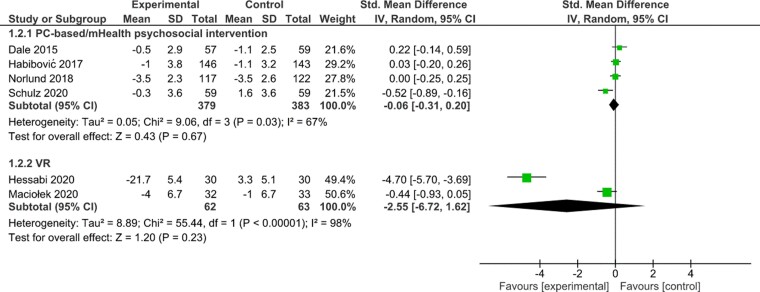
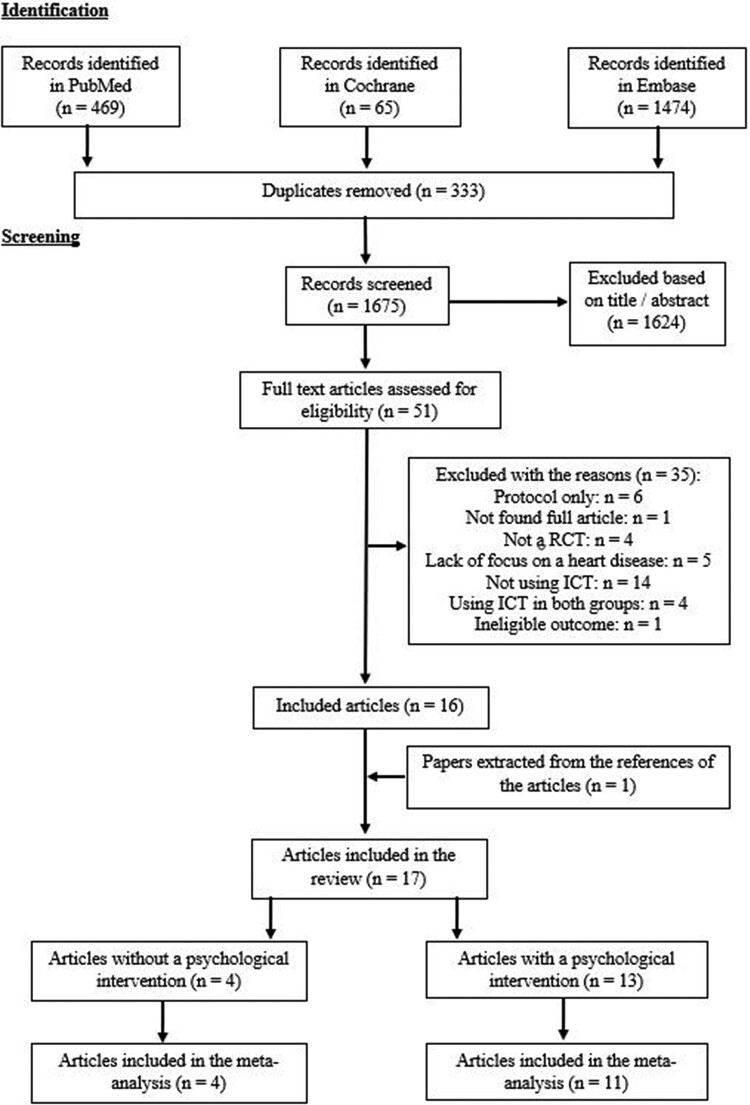
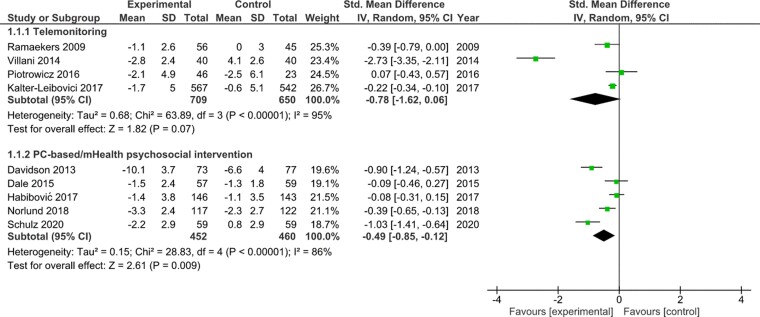
Articles from 2000 to 2021 in English were searched through electronic databases (PubMed, Cochrane Library, and Embase). Articles were included if they incorporated a randomized controlled trial design for patients with cardiac disease and used DHIs in which depression or anxiety was set as outcomes. A systematic review and meta-analysis were performed. A total of 1675 articles were included and the screening identified a total of 17 articles. Results indicated that telemonitoring systems have a beneficial effect on depression [standardized mean difference for depression questionnaire score -0.78 ( = 0.07), -0.55 ( < 0.001), for with and without involving a psychological intervention, respectively]. Results on PC or cell phone-based psychosocial education and training have also a beneficial influence on depression [standardized mean difference for depression questionnaire score -0.49 ( = 0.009)].
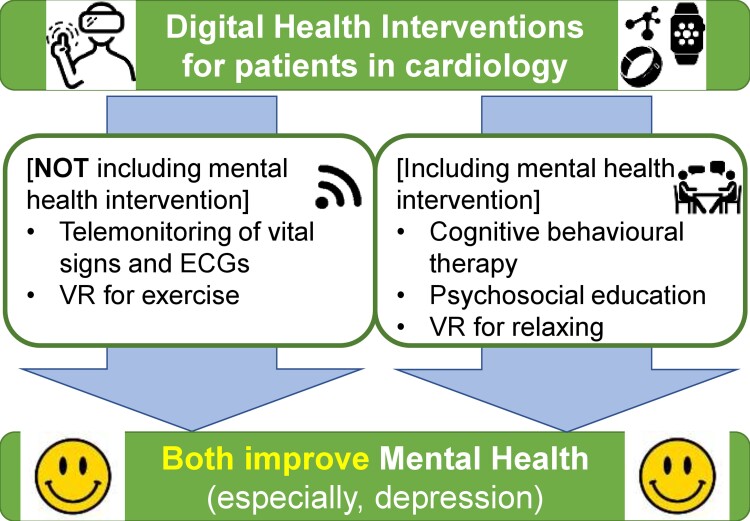
Telemonitoring systems for heart failure and PC/cell phone-based psychosocial education and training for patients with heart failure or coronary heart disease had a beneficial effect especially on depression. Regarding telemonitoring for heart failure, this effect was reached even without incorporating a specific psychological intervention. These results illustrate the future potential of DHIs for mental health in cardiology.
抑郁和焦虑对心脏病患者的健康结局有不利影响。数字健康干预措施(DHIs)可为治疗心脏病患者的抑郁和焦虑提供一种解决方案,但其疗效证据仍然稀缺。本综述总结了关于DHIs对心脏病患者抑郁/焦虑影响的最新数据。
通过电子数据库(PubMed、Cochrane图书馆和Embase)检索了2000年至2021年的英文文章。如果文章纳入了针对心脏病患者的随机对照试验设计,并使用将抑郁或焦虑作为结局的DHIs,则予以纳入。进行了系统评价和荟萃分析。共纳入1675篇文章,筛选后共确定17篇文章。结果表明,远程监测系统对抑郁有有益影响[抑郁问卷评分的标准化平均差分别为-0.78(=0.07)、-0.55(<0.001),分别针对有和没有心理干预的情况]。基于个人电脑或手机的心理社会教育和培训对抑郁也有有益影响[抑郁问卷评分的标准化平均差为-0.49(=0.009)]。
心力衰竭的远程监测系统以及针对心力衰竭或冠心病患者的基于个人电脑/手机的心理社会教育和培训尤其对抑郁有有益影响。关于心力衰竭的远程监测,即使不纳入特定的心理干预也能达到这种效果。这些结果说明了DHIs在心脏病学心理健康方面的未来潜力。