Department of Health Promotion, Mother and Child Care, Internal Medicine and Medical Specialties, University of Palermo, 90127, Palermo, Italy.
Pediatric Infectious Disease Unit, ARNAS Civico-Di Cristina-Benfratelli Hospital, 90127, Palermo, Italy.
Parasit Vectors. 2023 Jan 30;16(1):41. doi: 10.1186/s13071-022-05646-4.
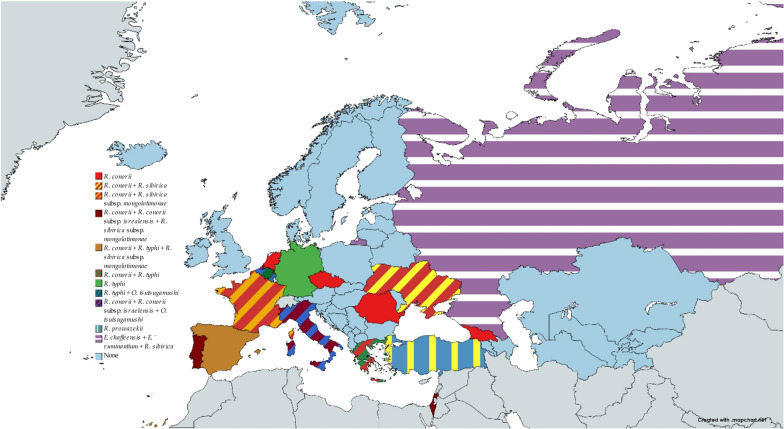
The availability of molecular techniques has significantly increased our understanding of bacteria of the order Rickettsiales, allowing the identification of distinct species in both vector and host arthropods. However, the literature lacks studies that comprehensively summarize the vast amount of knowledge generated on this topic in recent years. The purpose of this study was to conduct a comprehensive analysis of the distribution of Rickettsiales in arthropod vectors, animals and humans in the WHO European Region in order to provide useful information to predict the emergence of certain diseases in specific geographical areas and to formulate hypotheses regarding the possible pathogenetic role of some rickettsial species in the etiology of human pathological conditions.
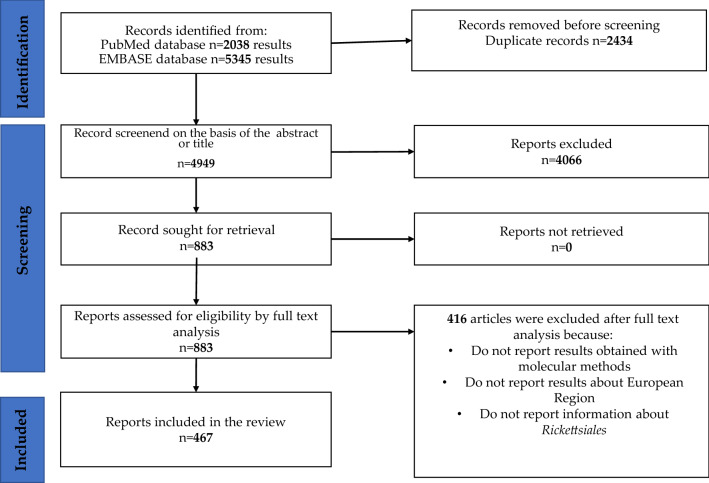
A systematic review of the literature in the PubMed and EMBASE databases was conducted following the PRISMA methodology using the search terms "Spotted fever" OR "rickettsiosis" OR "ricketts*" AND all the countries of the WHO European Region, from 1 January 2013 to 12 February 2022. Only studies that identified rickettsiae in human, animal or arthropod samples using molecular techniques were included in the review.
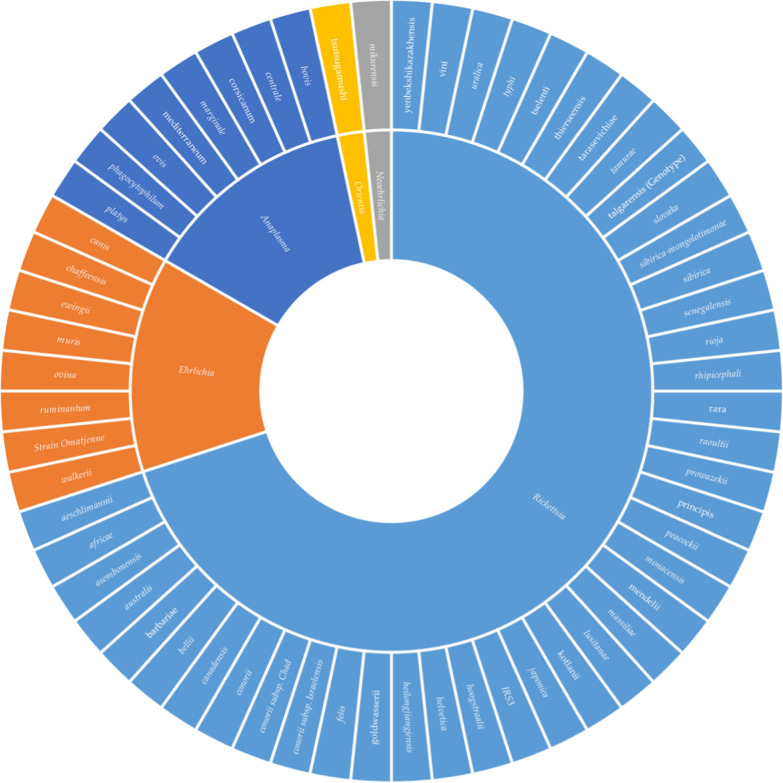
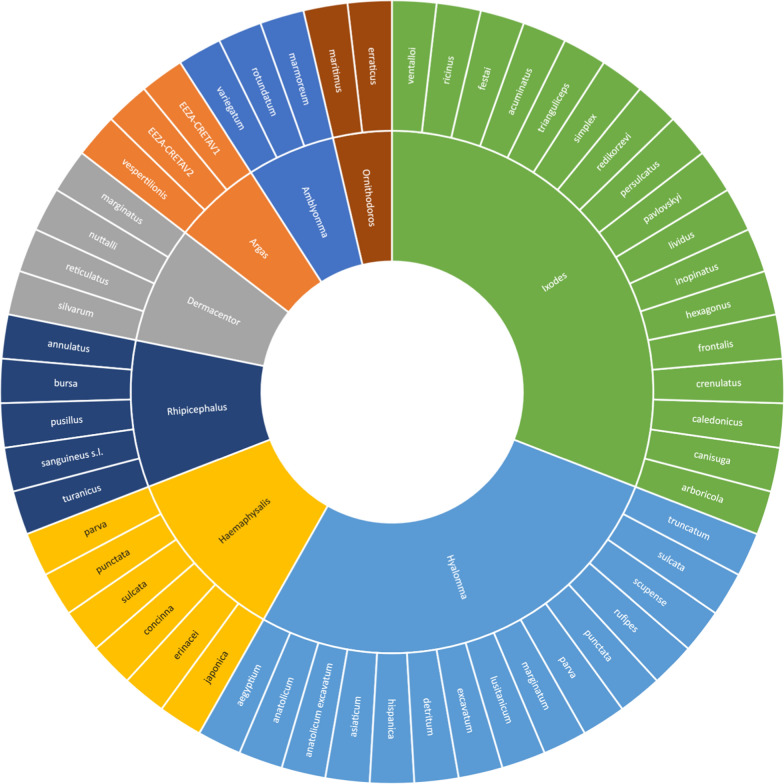
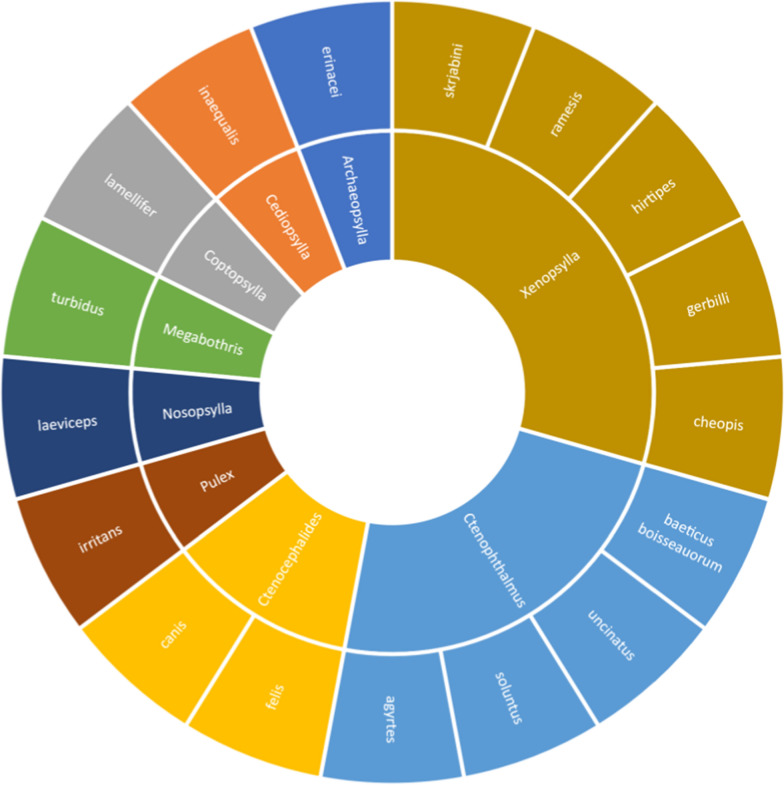
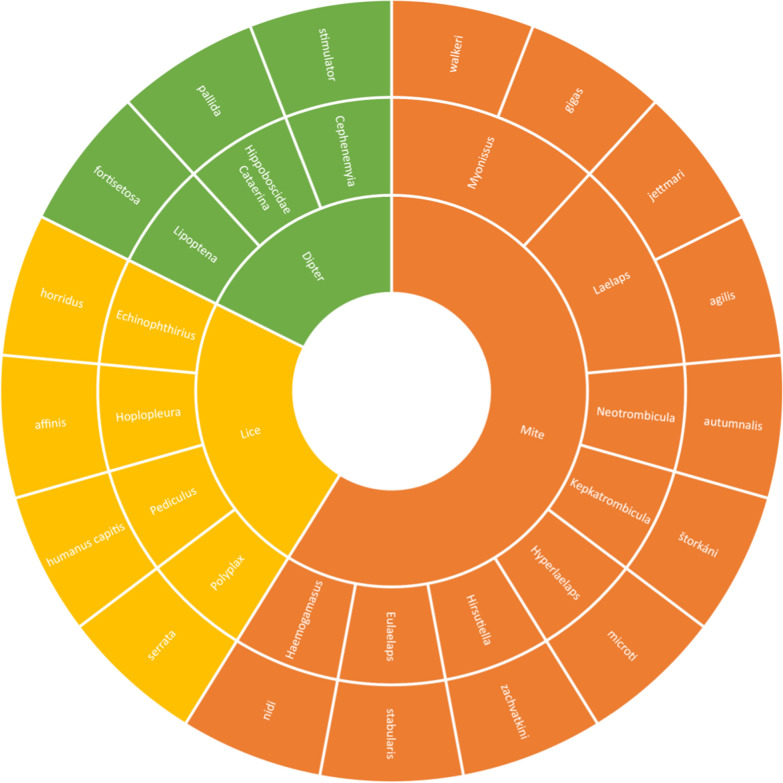
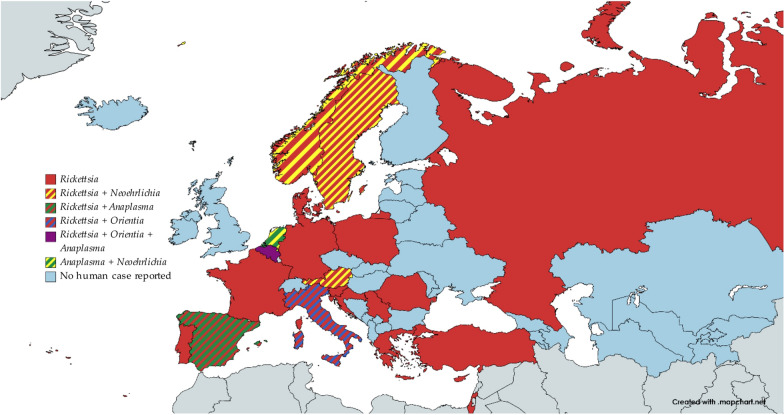
A total of 467 articles considering 61 different species of Rickettsiales with confirmed or suspected human pathogenicity were analyzed in the review. More than 566 identifications of Rickettsiales DNA in human samples were described, of which 89 cases were assessed as importation cases. A total of 55 species of ticks, 17 species of fleas, 10 species of mite and four species of lice were found infected. Twenty-three species of Rickettsiales were detected in wild and domestic animal samples.
The routine use of molecular methods to search for Rickettsiales DNA in questing ticks and other blood-sucking arthropods that commonly bite humans should be encouraged. Molecular methods specific for Rickettsiales should be used routinely in the diagnostics of fever of unknown origin and in all cases of human diseases secondary to an arthropod bite or animal contact.
分子技术的应用极大地提高了我们对立克次体目细菌的认识,使我们能够在媒介和宿主节肢动物中鉴定出不同的物种。然而,文献中缺乏对近年来在这一主题上产生的大量知识进行全面总结的研究。本研究的目的是对世界卫生组织欧洲区域节肢动物媒介、动物和人类中的立克次体目分布进行全面分析,以便为预测某些疾病在特定地理区域的出现提供有用信息,并对立克次体某些物种在人类病理状况病因学中的可能致病作用提出假说。
按照 PRISMA 方法,在 PubMed 和 EMBASE 数据库中进行了系统文献回顾,使用的检索词为“斑点热”或“立克次体病”或“立克次体*”以及世界卫生组织欧洲区域的所有国家,时间范围为 2013 年 1 月 1 日至 2022 年 2 月 12 日。只有使用分子技术在人体、动物或节肢动物样本中鉴定出立克次体的研究才被纳入综述。
本综述共分析了 467 篇文章,涉及 61 种不同的立克次体目物种,这些物种具有已确认或疑似的人类致病性。在人类样本中描述了超过 566 次立克次体目 DNA 的鉴定,其中 89 例被评估为输入性病例。共发现 55 种蜱、17 种跳蚤、10 种螨和 4 种虱子感染。在野生动物和家养动物样本中检测到 23 种立克次体目物种。
应鼓励常规使用分子方法在常见叮咬人类的游走的蜱和其他吸血节肢动物中搜索立克次体目 DNA。应常规使用针对立克次体的分子方法进行不明原因发热的诊断,并在所有因节肢动物叮咬或动物接触而引起的人类疾病病例中进行诊断。