Vision and Eye Research Institute (VERI), School of Medicine, Anglia Ruskin University, Cambridge, United Kingdom.
Department of Medicine, Gandaki Medical College Teaching Hospital, Pokhara, Nepal.
Front Endocrinol (Lausanne). 2023 Jan 19;14:1076253. doi: 10.3389/fendo.2023.1076253. eCollection 2023.
To examine the effectiveness of a culturally and linguistically appropriate, patient-centered, target-driven lifestyle intervention with video education training in improving clinical outcomes, health literacy, and diabetic self-care practices in newly diagnosed patients in Nepal.
A total of 110 participants with newly and consequently diagnosed Type 2 were randomly allocated into intervention (mean age = 45 ± 9.7 years) and control (mean age = 47 ± 12.5 years) groups. Intervention group participants were trained on a culturally and linguistically appropriate diabetic video education program and were given a customized dietary and physical activity plan with specific targets to practice at home. Participants' compliance was monitored weekly telephone calls. Both groups received the usual treatment from their doctor and were followed up after three months. Outcome measures included changes in: i. diabetic health literacy, diet, and physical activity measured using self-reported questionnaires; and ii. blood glucose (glycated hemoglobin, HbA1c), cholesterol, blood pressure, body mass index, and visual acuity. Clinical outcome measures were blinded from randomization and intervention allocation.
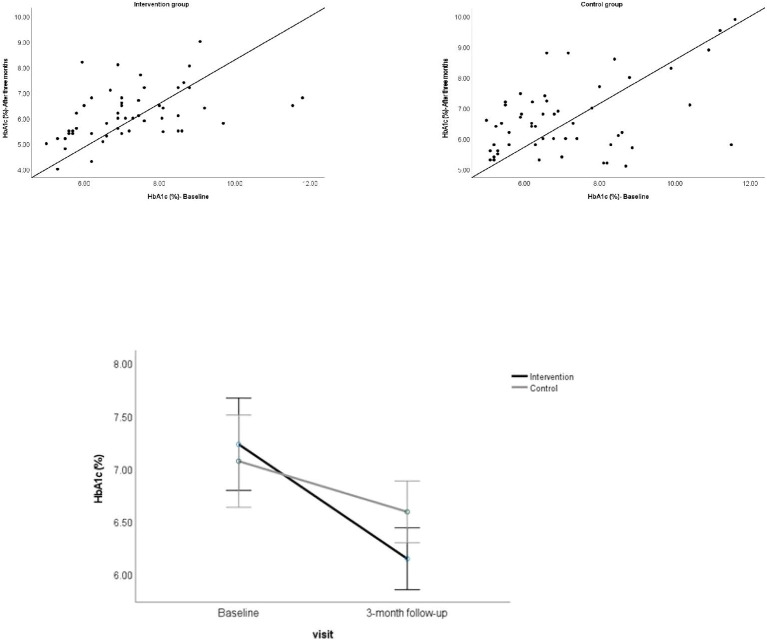
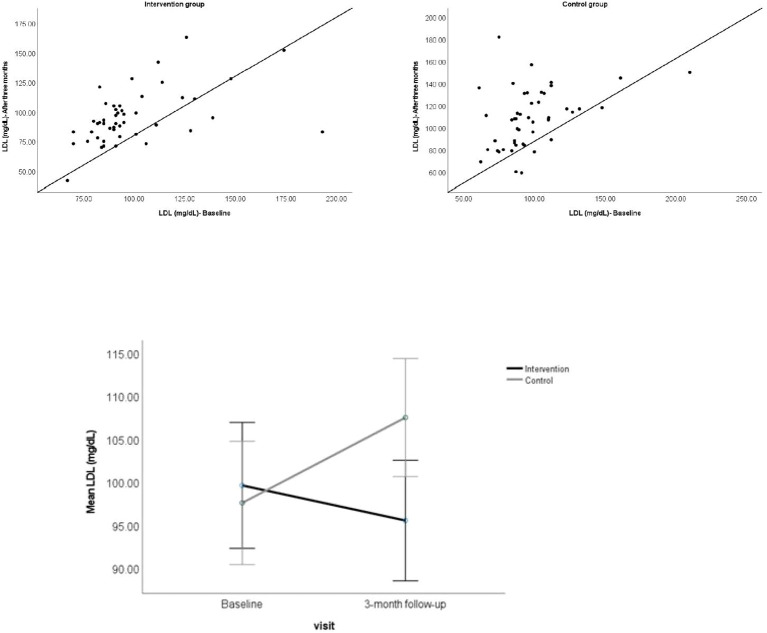
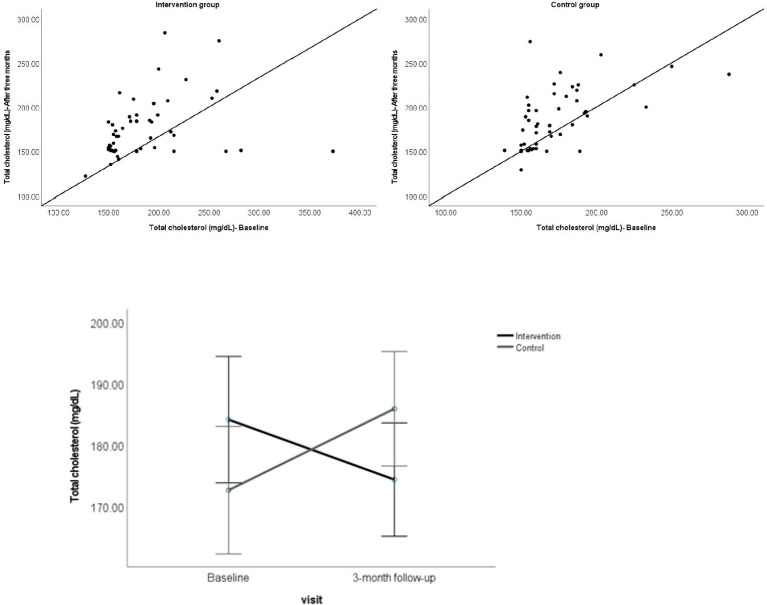
After three months, HbA1c decreased to 6.1% from the baseline value of 7.2% in the intervention group compared to 6.6% in the control group from the baseline value of 7.1% (p <0.05). The intervention group had mean total cholesterol and low-density lipoprotein of 174 and 95.5 mg/dL, which were significantly lower than 186 and 107.5 mg/dL in the control group. Daily white rice consumption decreased by 36.5% in the intervention vs. 4% in the control group (p <0.05). After three months, the intervention group participants exercised more than the control group (p <0.05). All intervention group participants self-initiated retinal screening checks since the baseline visit among which 13% showed early diabetic retinopathy signs compared to 0% in the control group. Health literacy improvement in the intervention group was found to be sustained after three months too.
A culturally appropriate, target-driven lifestyle intervention with video education training is effective in improving clinical outcomes, health literacy, and self-care practice in newly diagnosed diabetic patients in Nepal, i.e., at a time period when effective diabetes control is vital to prevent further complications. The training intervention could be rolled out nationwide in order to reduce the risk of diabetic-related complications and improve people's quality of life and productivity.
探讨一种文化和语言适宜、以患者为中心、以目标为导向的生活方式干预措施的有效性,该措施结合视频教育培训,以改善尼泊尔新诊断为 2 型糖尿病患者的临床结局、健康素养和糖尿病自我护理行为。
共有 110 名新诊断为 2 型糖尿病的患者被随机分配到干预组(平均年龄 45 ± 9.7 岁)和对照组(平均年龄 47 ± 12.5 岁)。干预组的患者接受了文化和语言适宜的糖尿病视频教育计划培训,并制定了个性化的饮食和体育活动计划,计划中包含了具体的家庭实践目标。每周通过电话对参与者的依从性进行监测。两组患者都接受了来自医生的常规治疗,并在三个月后进行随访。结果测量包括:i. 自我报告问卷测量的糖尿病健康素养、饮食和体育活动的变化;ii. 血糖(糖化血红蛋白,HbA1c)、胆固醇、血压、体重指数和视力的变化。临床结果测量在随机分组和干预分配中是盲法的。
三个月后,与对照组相比,干预组的 HbA1c 从基线的 7.2%下降到 6.1%,而对照组的 HbA1c 从基线的 7.1%增加到 6.6%(p <0.05)。干预组的总胆固醇和低密度脂蛋白分别为 174 和 95.5mg/dL,明显低于对照组的 186 和 107.5mg/dL。与对照组相比,干预组的参与者每天食用的白米饭减少了 36.5%,而对照组则减少了 4%(p <0.05)。三个月后,干预组的参与者锻炼的次数比对照组多(p <0.05)。所有干预组的参与者在基线就诊后都自行进行了视网膜筛查检查,其中 13%的人出现了早期糖尿病视网膜病变的迹象,而对照组中则没有。干预组的健康素养在三个月后也得到了持续提高。
一种文化适宜、以目标为导向的生活方式干预措施,结合视频教育培训,在改善尼泊尔新诊断为 2 型糖尿病患者的临床结局、健康素养和自我护理行为方面是有效的,即在有效控制糖尿病以预防进一步并发症的关键时期。该培训干预措施可以在全国范围内推广,以降低糖尿病相关并发症的风险,提高人们的生活质量和生产力。