Lanzoni Davide, Skřivanová Eva, Rebucci Raffaella, Crotti Antonio, Baldi Antonella, Marchetti Luca, Giromini Carlotta
Department of Veterinary and Animal Sciences (DIVAS), Università degli Studi di Milano, Via dell'Università 6, 29600 Lodi, Italy.
Department of Microbiology, Nutrition and Dietetics, Faculty of Agrobiology, Food and Natural Resources, Czech University of Life Sciences Prague, Kamycka 129, 165 00 Prague, Czech Republic.
Foods. 2023 Feb 1;12(3):601. doi: 10.3390/foods12030601.
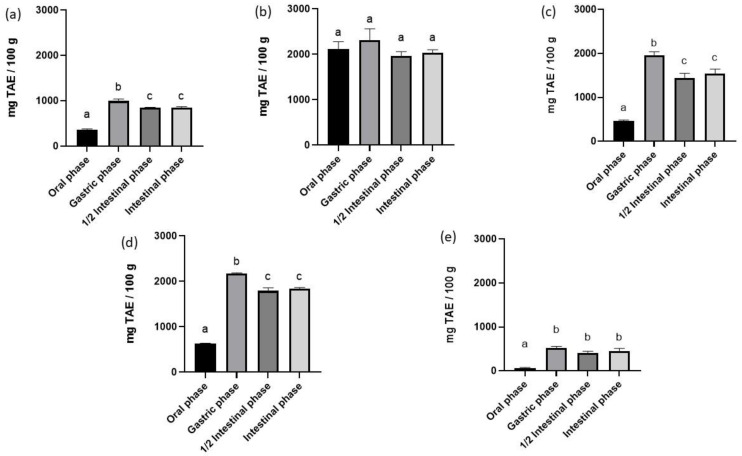
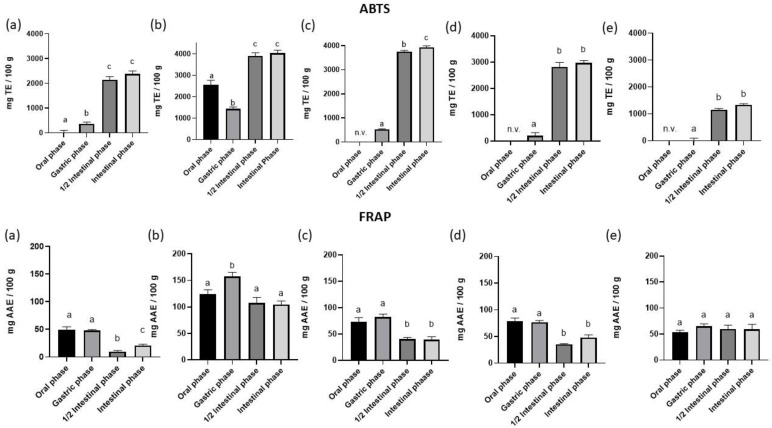
The growth of the world population has prompted research to investigate new food/feed alternatives. Hemp-based products can be considered excellent candidates. Hemp ( L.) is an environmentally sustainable plant widespread worldwide. Following the reintroduction of its cultivation, hemp is attracting interest, especially in the food/feed industry. To date, scientific research has mainly focused on its nutritional aspect. Therefore, the aim of the work was also to investigate the functional profile (total phenolic content (TPC) and antioxidant activity (Ferric- reducing antioxidant power (FRAP) and 2'-azinobis-(3-ethylbenzothiazoline-6-sulfonic acid (ABTS)) of hemp-based products (hempseeds (HSs), flowers, and HS protein extract), following methanol extraction and in vitro digestion, to study the behaviour of the molecules involved. The results show an interesting nutritional value, even when compared to matrices used in the food/feed industry, such as soy and flaxseeds. The functional profile revealed a very interesting TPC following methanol extraction for HSs, flowers, and HS protein extract, respectively, (550.3 ± 28.27; 2982.8 ± 167.78; and 568.9 ± 34.18 mg Tannic Acid Equivalent (TAE)/100 g). This trend was also confirmed for FRAP (50.9 ± 4.30; 123.6 ± 8.08; and 29.73 ± 1.32 mg Ascorbic Acid Equivalent (AAE)/100 g), recording values similar/higher than soy protein extract and flaxseeds (17.4 ± 1.55; and 10.4 ± 0.44 mg AAE/100 g). The results were also maintained following physiological digestion. These results, although promising, need further investigation, confirming what has been observed with different antioxidant activity assays and identifying individual molecules involved in functional pathways. This information will be necessary to gain a better understanding of the functional characteristics of these matrices for use in food/feed formulations.
世界人口的增长促使人们开展研究以探寻新的食品/饲料替代品。基于大麻的产品可被视为绝佳候选物。大麻( Cannabis L.)是一种在全球广泛分布且环境可持续的植物。随着其种植的重新引入,大麻正吸引着人们的关注,尤其是在食品/饲料行业。迄今为止,科学研究主要集中在其营养方面。因此,这项工作的目的还在于研究甲醇提取并经体外消化后基于大麻的产品(大麻籽、花以及大麻籽蛋白提取物)的功能特性(总酚含量(TPC)和抗氧化活性(铁还原抗氧化能力(FRAP)以及2'-联氮-双-(3-乙基苯并噻唑啉-6-磺酸)(ABTS)),以研究相关分子的行为。结果显示,即使与食品/饲料行业中使用的基质(如大豆和亚麻籽)相比,其营养价值也很可观。功能特性表明,甲醇提取后,大麻籽、花以及大麻籽蛋白提取物的总酚含量分别非常有趣(550.3 ± 28.27;2982.8 ± 167.78;以及568.9 ± 34.18毫克没食子酸当量(TAE)/100克)。铁还原抗氧化能力(FRAP)也呈现出这种趋势(50.9 ± 4.30;123.6 ± 8.08;以及29.73 ± 1.32毫克抗坏血酸当量(AAE)/100克),记录的值与大豆蛋白提取物和亚麻籽(17.4 ± 1.55;以及10.4 ± 0.44毫克AAE/100克)相似/更高。生理消化后结果依然保持。这些结果虽然很有前景,但还需要进一步研究,通过不同的抗氧化活性测定方法来证实所观察到的现象,并确定功能途径中涉及的单个分子。这些信息对于更好地理解这些基质在食品/饲料配方中的功能特性将是必要的。