Zhang Fanqing, Li Chunyang, Li Zhongyi, Dong Lixin, Zhao Jing
School of Mechatronical Engineering, Beijing Institute of Technology, 100081 Beijing, China.
Beijing Advanced Innovation Center for Intelligent Robots and Systems, Beijing Institute of Technology, 100081 Beijing, China.
Microsyst Nanoeng. 2023 Feb 17;9:16. doi: 10.1038/s41378-023-00487-2. eCollection 2023.
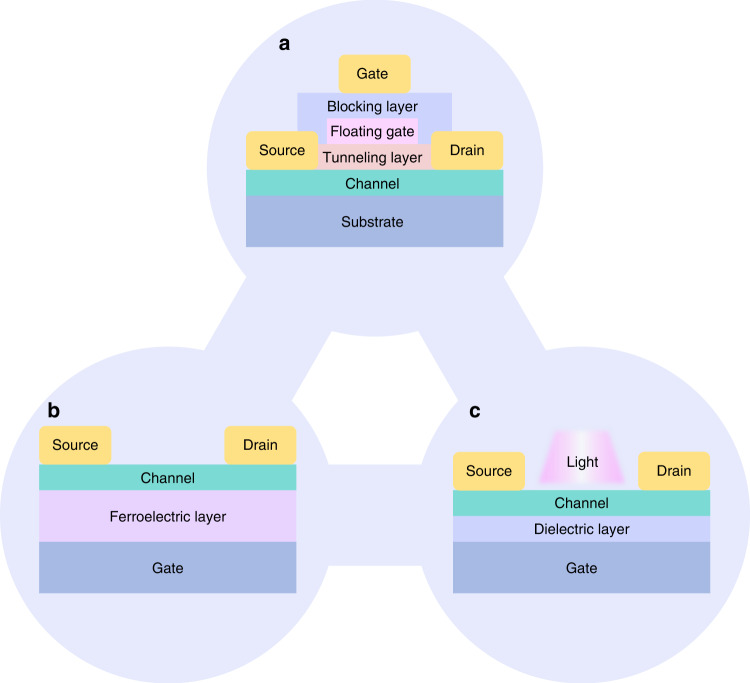
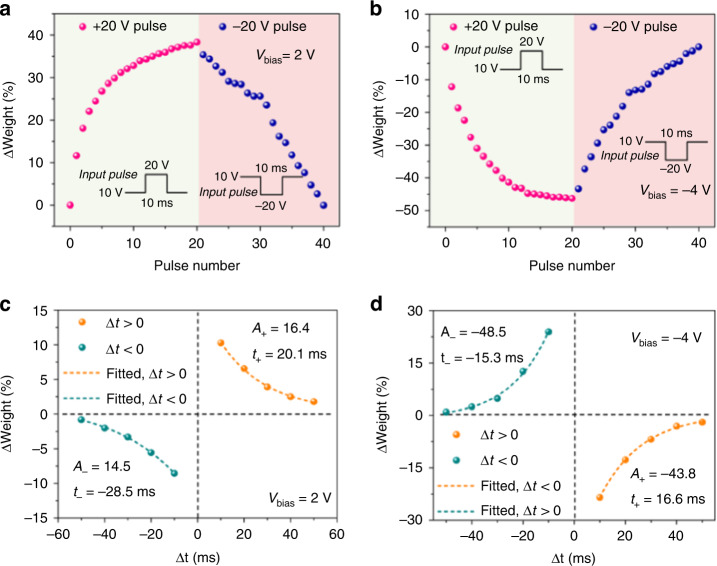
Synapses are essential for the transmission of neural signals. Synaptic plasticity allows for changes in synaptic strength, enabling the brain to learn from experience. With the rapid development of neuromorphic electronics, tremendous efforts have been devoted to designing and fabricating electronic devices that can mimic synapse operating modes. This growing interest in the field will provide unprecedented opportunities for new hardware architectures for artificial intelligence. In this review, we focus on research of three-terminal artificial synapses based on two-dimensional (2D) materials regulated by electrical, optical and mechanical stimulation. In addition, we systematically summarize artificial synapse applications in various sensory systems, including bioplastic bionics, logical transformation, associative learning, image recognition, and multimodal pattern recognition. Finally, the current challenges and future perspectives involving integration, power consumption and functionality are outlined.
突触对于神经信号的传递至关重要。突触可塑性允许突触强度发生变化,使大脑能够从经验中学习。随着神经形态电子学的迅速发展,人们已付出巨大努力来设计和制造能够模仿突触操作模式的电子器件。该领域日益增长的兴趣将为人工智能的新硬件架构提供前所未有的机遇。在本综述中,我们重点关注基于二维(2D)材料、受电、光和机械刺激调控的三端人工突触的研究。此外,我们系统地总结了人工突触在各种传感系统中的应用,包括生物塑料仿生学、逻辑转换、关联学习、图像识别和多模态模式识别。最后,概述了当前在集成、功耗和功能方面面临的挑战以及未来展望。