Shin Paul, Pian Qi, Ishikawa Hidehiro, Hamanaka Gen, Mandeville Emiri T, Shuzhen Guo, Buyin Fu, Alfadhel Mohammed, Allu Srinivasa Rao, Şencan-Eğilmez Ikbal, Li Baoqiang, Ran Chongzhao, Vinogradov Sergei A, Ayata Cenk, Lo Eng H, Arai Ken, Devor Anna, Sakadžić Sava
Athinoula A. Martinos Center for Biomedical Imaging, Massachusetts General Hospital, Harvard Medical School, Charlestown, MA, USA.
Neuroprotection Research Laboratory, Departments of Radiology and Neurology, Massachusetts General Hospital, Harvard Medical School, Charlestown, MA, USA.
bioRxiv. 2023 Feb 13:2023.02.12.528244. doi: 10.1101/2023.02.12.528244.
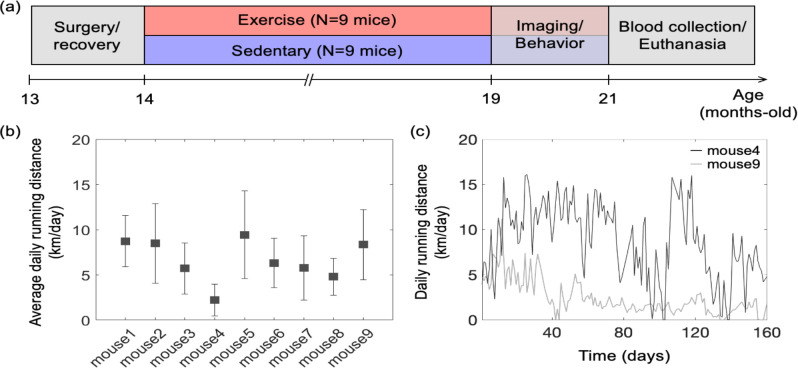
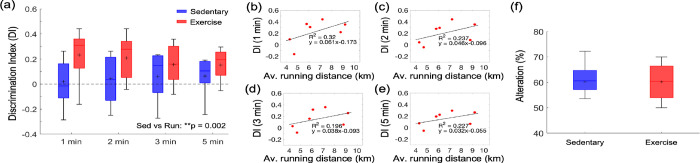
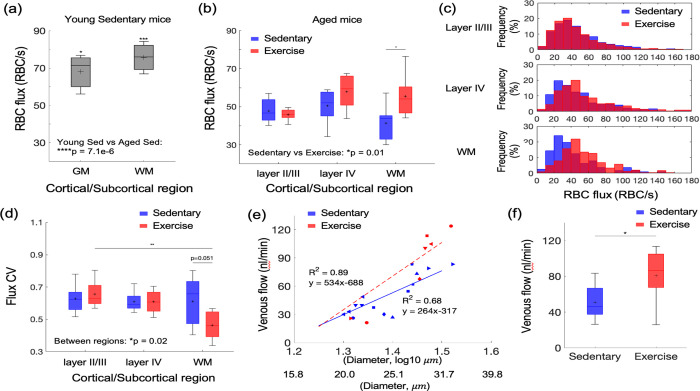
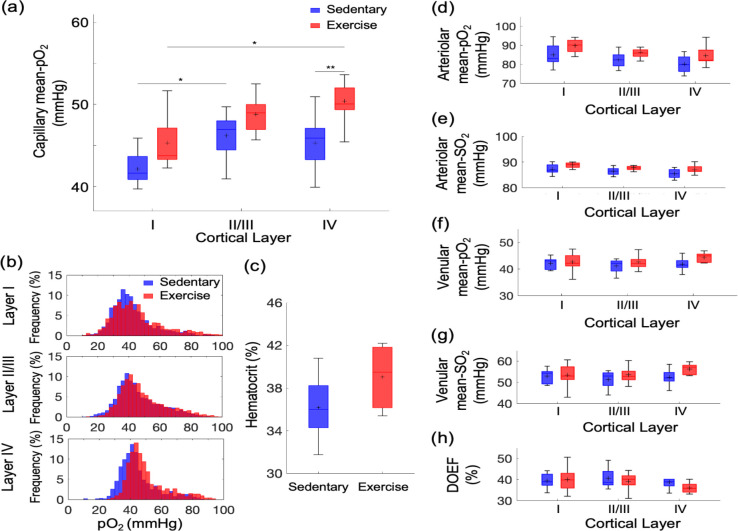
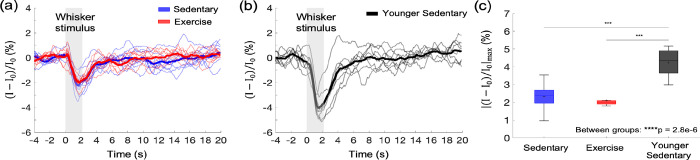
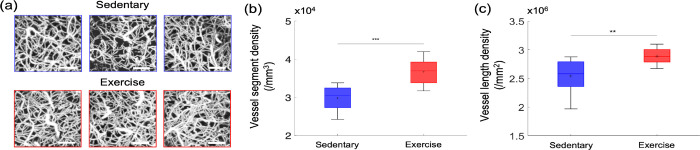
Aging is a major risk factor for cognitive impairment. Aerobic exercise benefits brain function and may promote cognitive health in older adults. However, underlying biological mechanisms across cerebral gray and white matter are poorly understood. Selective vulnerability of the white matter to small vessel disease and a link between white matter health and cognitive function suggests a potential role for responses in deep cerebral microcirculation. Here, we tested whether aerobic exercise modulates cerebral microcirculatory changes induced by aging. To this end, we carried out a comprehensive quantitative examination of changes in cerebral microvascular physiology in cortical gray and subcortical white matter in mice (3-6 vs. 19-21 months old), and asked whether and how exercise may rescue age-induced deficits. In the sedentary group, aging caused a more severe decline in cerebral microvascular perfusion and oxygenation in deep (infragranular) cortical layers and subcortical white matter compared with superficial (supragranular) cortical layers. Five months of voluntary aerobic exercise partly renormalized microvascular perfusion and oxygenation in aged mice in a depth-dependent manner, and brought these spatial distributions closer to those of young adult sedentary mice. These microcirculatory effects were accompanied by an improvement in cognitive function. Our work demonstrates the selective vulnerability of the deep cortex and subcortical white matter to aging-induced decline in microcirculation, as well as the responsiveness of these regions to aerobic exercise.
衰老 是认知障碍的主要风险因素。有氧运动有益于脑功能,并可能促进老年人的认知健康。然而,大脑灰质和白质的潜在生物学机制尚不清楚。白质对小血管疾病的选择性易损性以及白质健康与认知功能之间的联系表明,大脑深部微循环的反应可能发挥了潜在作用。在此,我们测试了有氧运动是否能调节衰老引起的脑微循环变化。为此,我们对小鼠(3 - 6个月大与19 - 21个月大)皮质灰质和皮质下白质的脑微血管生理学变化进行了全面的定量检查,并探究运动是否以及如何挽救年龄诱导的缺陷。在久坐不动的组中,与浅表层(颗粒上层)皮质相比,衰老导致深层(颗粒下层)皮质层和皮质下白质的脑微血管灌注和氧合下降更为严重。五个月的自愿有氧运动使老年小鼠的微血管灌注和氧合部分恢复正常,且呈现深度依赖性,并使这些空间分布更接近年轻成年久坐小鼠。这些微循环效应伴随着认知功能的改善。我们的研究表明,深部皮质和皮质下白质对衰老引起的微循环衰退具有选择性易损性,以及这些区域对有氧运动的反应性。