Gadewar Manoj M, G K Prashanth, Mishra Prabhu Chandra, Ashraf Ghulam Md, Almashjary Majed N, Harakeh Steve, Upadhye Vijay, Dey Abhijit, Singh Pallavi, Jha Niraj Kumar, Jha Saurabh Kumar
Department of Pharmacology, School of Medical and Allied Sciences, K.R. Mangalam University, Gurgaon 122103, India.
Department of Chemistry, Sir M. Visvesvaraya Institute of Technology, Visvesvaraya Technological University, Bengaluru 562157, India.
Curr Issues Mol Biol. 2023 Jan 19;45(2):903-917. doi: 10.3390/cimb45020058.
Globally, diabetes mellitus is the most common cause of premature mortality after cardiovascular diseases and tobacco chewing. It is a heterogeneous metabolic disorder characterised by the faulty metabolism of carbohydrates, fats and proteins as a result of defects in insulin secretion or resistance. It was estimated that approximately 463 million of the adult population are suffering from diabetes mellitus, which may grow up to 700 million by 2045. is distributed all over India and all of the tropical and subtropical regions of the world. The different parts of the plant such as the roots, leaves and fruits were used traditionally in the treatment of cough, asthma and rhinitis. However, the hypoglycaemic activity of the plant is not scientifically validated.
The present study aimed to evaluate the antioxidant, antidiabetic and anti-hyperlipidaemic activity of methanolic fruit extract of (SIE) in streptozotocin (STZ) induced diabetic rats.
Experimentally, type II diabetes was induced in rats by an i.p. injection of STZ at a dose of 60 mg/kg. The effect of the fruit extract was evaluated at doses of 100 and 200 mg/kg body weight in STZ-induced diabetic rats for 30 days.
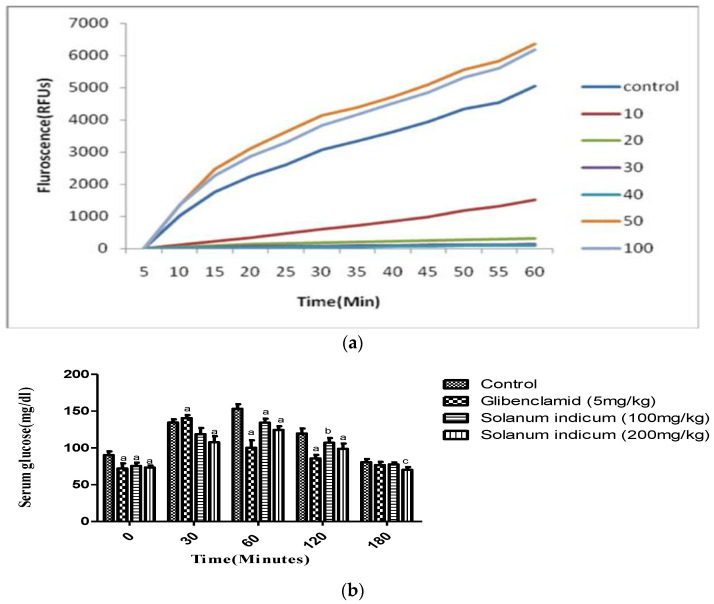
The oral administration of fruit extract caused a significant ( < 0.05) reduction in the blood glucose level with a more prominent effect at 200 mg/kg. The fruit extract showed dose-dependent α-amylase and α-glycosidase inhibitory activity. It reduced the serum cholesterol and triglyceride levels remarkably in diabetic rats compared to normal. The extract showed the reduced activity of endogenous antioxidants, superoxide dismutase, glutathione peroxidase and catalase in the liver of STZ diabetic rats.
The result confirmed that the fruit extract of showed a dose-dependent blood glucose lowering effect and significantly reduced elevated blood cholesterol and triglycerides. It prevented oxidative stress associated with type II diabetes in STZ rats.
在全球范围内,糖尿病是仅次于心血管疾病和咀嚼烟草之后导致过早死亡的最常见原因。它是一种异质性代谢紊乱疾病,其特征是由于胰岛素分泌缺陷或抵抗导致碳水化合物、脂肪和蛋白质代谢异常。据估计,全球约有4.63亿成年人患有糖尿病,到2045年这一数字可能增至7亿。糖尿病在印度及世界所有热带和亚热带地区均有分布。该植物的不同部位,如根、叶和果实,传统上用于治疗咳嗽、哮喘和鼻炎。然而,该植物的降血糖活性尚未得到科学验证。
本研究旨在评估毛瓣金花树(SIE)甲醇果实提取物对链脲佐菌素(STZ)诱导的糖尿病大鼠的抗氧化、抗糖尿病和抗高血脂活性。
实验中,通过腹腔注射60 mg/kg剂量的STZ诱导大鼠患II型糖尿病。在STZ诱导的糖尿病大鼠中,以100和200 mg/kg体重的剂量评估果实提取物的作用,持续30天。
口服果实提取物可显著(P<0.05)降低血糖水平,在200 mg/kg时效果更显著。果实提取物表现出剂量依赖性的α-淀粉酶和α-糖苷酶抑制活性。与正常大鼠相比,它能显著降低糖尿病大鼠的血清胆固醇和甘油三酯水平。提取物还降低了STZ糖尿病大鼠肝脏中内源性抗氧化剂超氧化物歧化酶、谷胱甘肽过氧化物酶和过氧化氢酶的活性。
结果证实,毛瓣金花树果实提取物具有剂量依赖性的降血糖作用,并能显著降低升高的血液胆固醇和甘油三酯水平。它可预防STZ大鼠中与II型糖尿病相关的氧化应激。