Simione Luca, Gnagnarella Camilla
Istituto di Scienze e Tecnologie della Cognizione, ISTC, CNR, 00185 Rome, Italy.
ASST Valtellina e Alto Lario, 23100 Sondrio, Italy.
Behav Sci (Basel). 2023 Feb 16;13(2):179. doi: 10.3390/bs13020179.
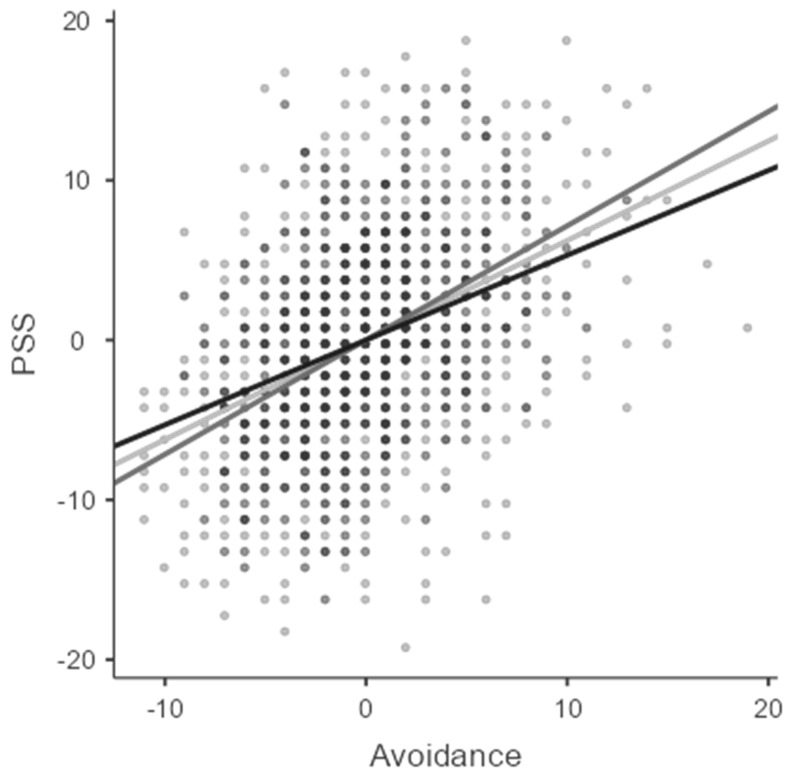
Humor is considered an adaptive coping strategy as it could reduce the burden of perceived stress and increase positive emotional states when dealing with stressful situations. Humor has been reported in several models as a rather independent strategy that can be correlated with both approach-based coping strategies and avoidance-based coping strategies. Humor can be defined as a hedonistic escapism strategy that would work better in the presence of unpredictable or uncontrollable stressors, such as the spread of the COVID-19 pandemic and its related confinement measures. Therefore, during such a stressful event, humor would have increased the positive effect of the approach coping style on mental health and reduced the negative effect of the avoidance coping style. Based on this hypothesis, we conducted a cross-sectional study with a moderation analysis in which we assessed the interaction of humor with both approach-based and avoidance-based coping styles on perceived stress in a large sample of Italian participants collected in April and May 2021. Despite some limitations related to sampling and study design, the results obtained partially support our hypothesis, as we observed that humor had a significant moderating effect on the relationship between avoidance coping and psychological distress, with a reduction of perceived stress while using such a coping style in the presence of a medium to high level of humor. On the other hand, we did not observe a significant moderating effect of humor on the relationship between the approach coping style and perceived stress. In general, our results support the beneficial effect of humor on mental health and highlight a special role for humor as a moderator of other coping strategies.
幽默被认为是一种适应性应对策略,因为在应对压力情境时,它可以减轻感知到的压力负担,并增加积极情绪状态。在多个模型中,幽默被报道为一种相对独立的策略,它可以与基于积极应对的策略和基于回避的应对策略相关联。幽默可以被定义为一种享乐主义的逃避现实策略,在面对不可预测或无法控制的压力源时,比如新冠疫情的传播及其相关的限制措施,这种策略会发挥更好的作用。因此,在这样一个压力事件中,幽默会增强积极应对方式对心理健康的积极影响,并减少回避应对方式的负面影响。基于这一假设,我们进行了一项带有调节分析的横断面研究,在研究中,我们评估了在2021年4月和5月收集的大量意大利参与者样本中,幽默与基于积极应对和基于回避的应对方式在感知压力方面的相互作用。尽管存在一些与抽样和研究设计相关的局限性,但所获得的结果部分支持了我们的假设,因为我们观察到幽默对回避应对与心理困扰之间的关系具有显著的调节作用,即在存在中等至高程度的幽默时,使用这种应对方式会减少感知到的压力。另一方面,我们没有观察到幽默对积极应对方式与感知压力之间的关系有显著的调节作用。总体而言,我们 的结果支持了幽默对心理健康的有益影响,并突出了幽默作为其他应对策略调节因素的特殊作用。