Nambisan Anand K, Maurya Akanksha, Lama Norsang, Phan Thanh, Patel Gehana, Miller Keith, Lama Binita, Hagerty Jason, Stanley Ronald, Stoecker William V
Electrical and Computer Engineering Department, Missouri University of Science and Technology, Rolla, MO 65409, USA.
Department of Biological Sciences, College of Arts, Sciences, and Education, Missouri University of Science and Technology, Rolla, MO 65409, USA.
Cancers (Basel). 2023 Feb 16;15(4):1259. doi: 10.3390/cancers15041259.
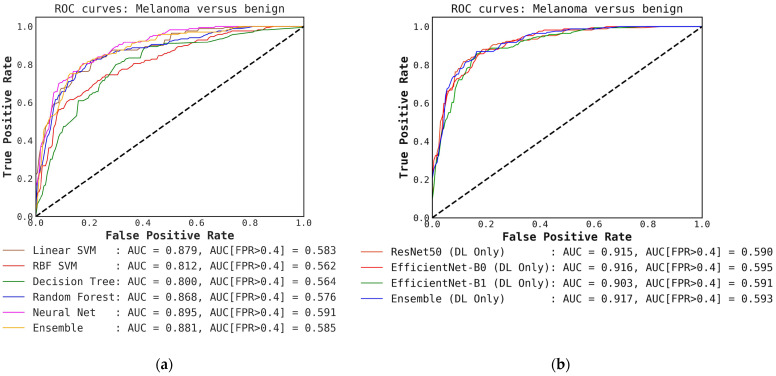
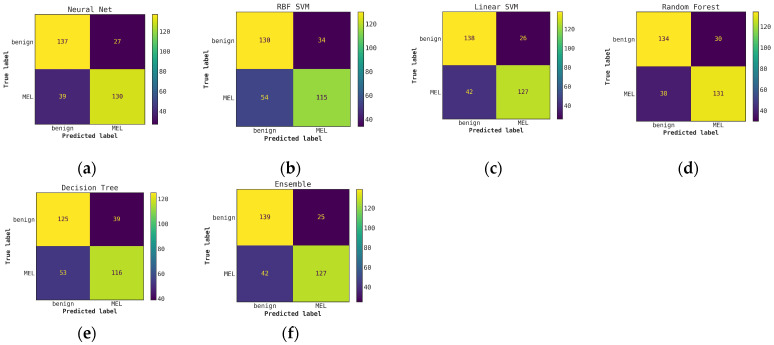
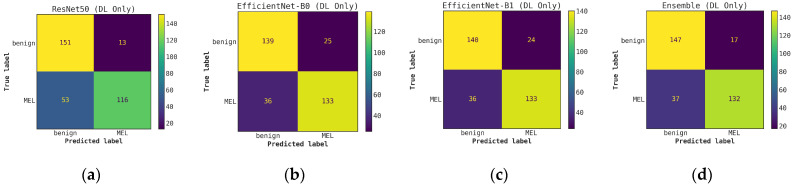
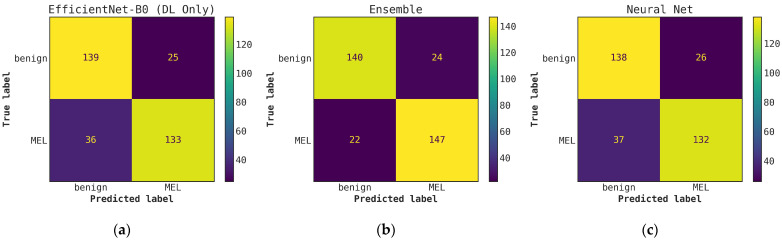
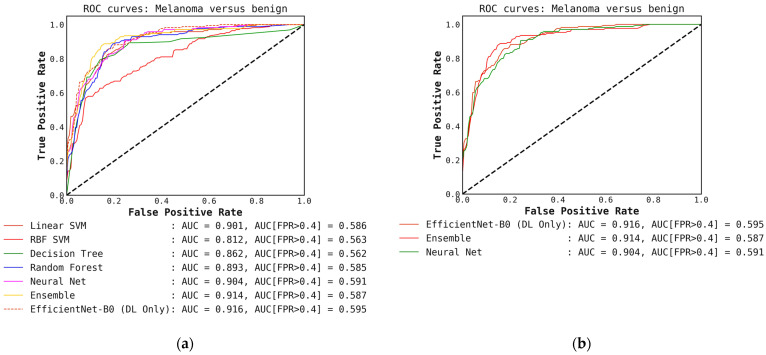
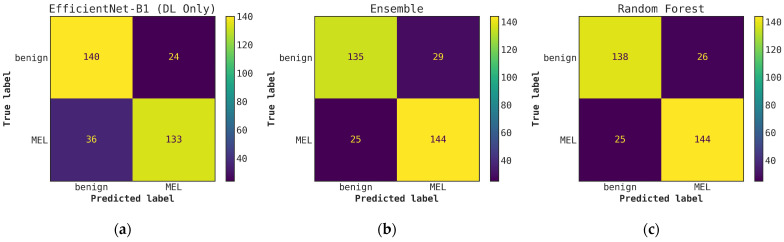
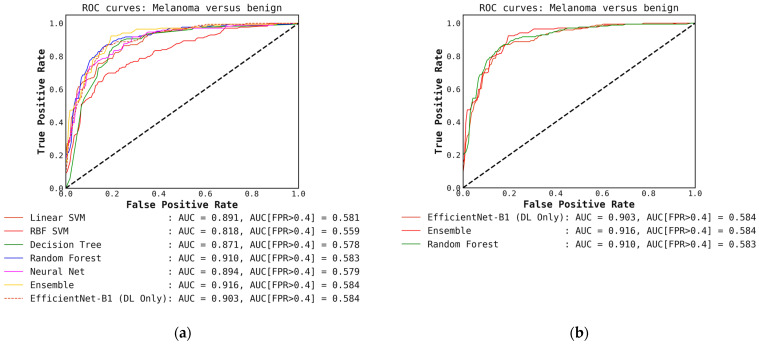
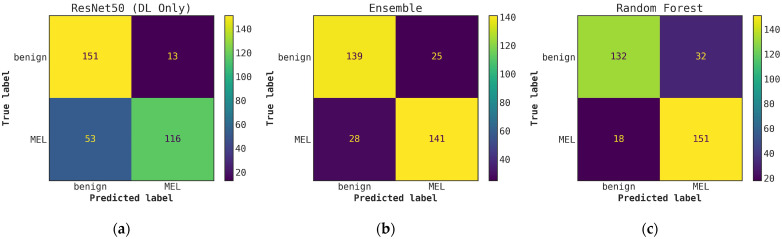
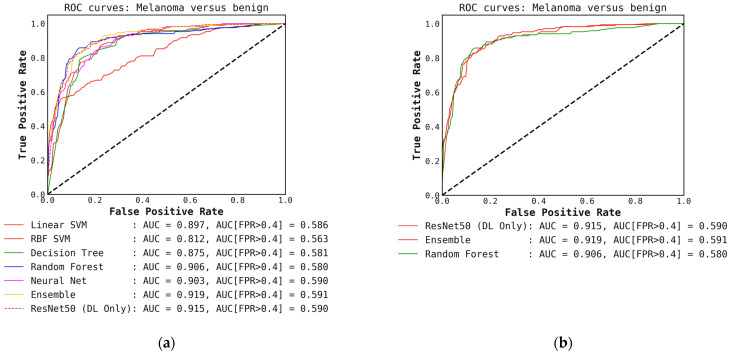
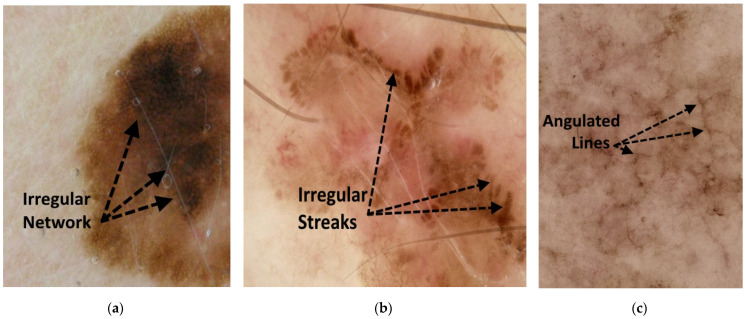
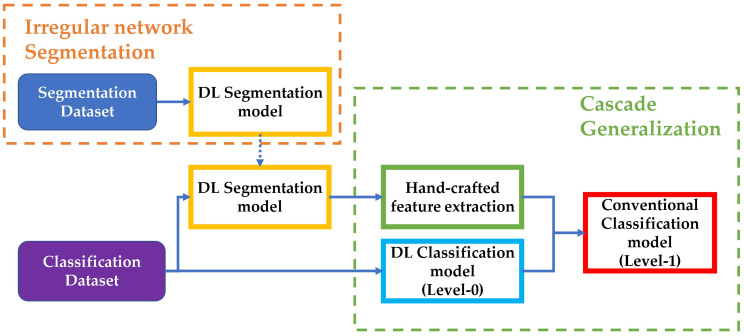
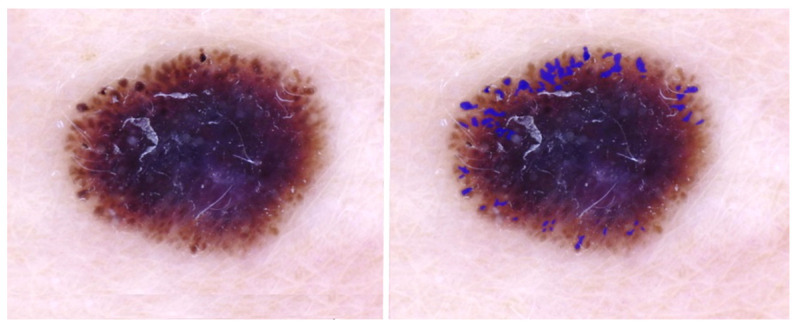
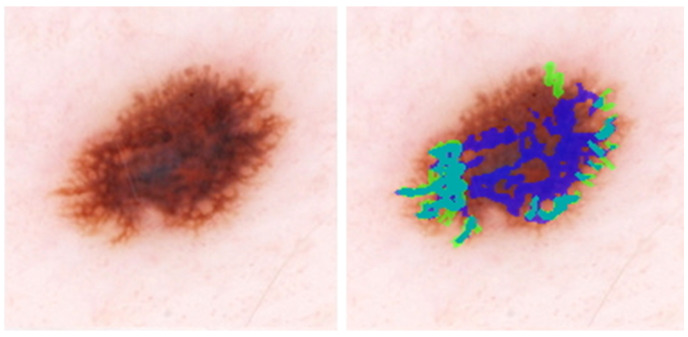
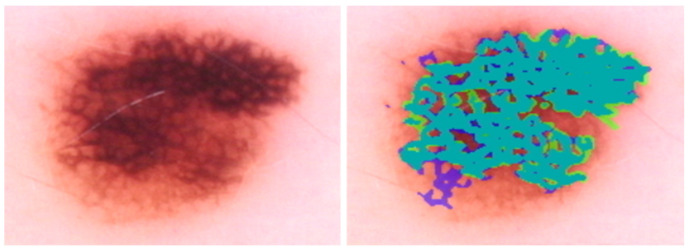
Deep learning has achieved significant success in malignant melanoma diagnosis. These diagnostic models are undergoing a transition into clinical use. However, with melanoma diagnostic accuracy in the range of ninety percent, a significant minority of melanomas are missed by deep learning. Many of the melanomas missed have irregular pigment networks visible using dermoscopy. This research presents an annotated irregular network database and develops a classification pipeline that fuses deep learning image-level results with conventional hand-crafted features from irregular pigment networks. We identified and annotated 487 unique dermoscopic melanoma lesions from images in the ISIC 2019 dermoscopic dataset to create a ground-truth irregular pigment network dataset. We trained multiple transfer learned segmentation models to detect irregular networks in this training set. A separate, mutually exclusive subset of the International Skin Imaging Collaboration (ISIC) 2019 dataset with 500 melanomas and 500 benign lesions was used for training and testing deep learning models for the binary classification of melanoma versus benign. The best segmentation model, U-Net++, generated irregular network masks on the 1000-image dataset. Other classical color, texture, and shape features were calculated for the irregular network areas. We achieved an increase in the recall of melanoma versus benign of 11% and in accuracy of 2% over DL-only models using conventional classifiers in a sequential pipeline based on the cascade generalization framework, with the highest increase in recall accompanying the use of the random forest algorithm. The proposed approach facilitates leveraging the strengths of both deep learning and conventional image processing techniques to improve the accuracy of melanoma diagnosis. Further research combining deep learning with conventional image processing on automatically detected dermoscopic features is warranted.
深度学习在恶性黑色素瘤诊断方面取得了显著成功。这些诊断模型正在向临床应用过渡。然而,由于黑色素瘤诊断准确率在90%左右,深度学习仍会遗漏相当一部分黑色素瘤。许多被遗漏的黑色素瘤在皮肤镜检查下可见不规则色素网络。本研究提出了一个带注释的不规则网络数据库,并开发了一种分类流程,将深度学习图像级结果与来自不规则色素网络的传统手工特征相融合。我们从国际皮肤影像协作组织(ISIC)2019皮肤镜数据集的图像中识别并注释了487个独特的皮肤镜下黑色素瘤病变,以创建一个真实的不规则色素网络数据集。我们训练了多个迁移学习分割模型,以在这个训练集中检测不规则网络。国际皮肤影像协作组织(ISIC)2019数据集的一个单独的、相互排斥的子集,包含500个黑色素瘤和500个良性病变,用于训练和测试深度学习模型,以进行黑色素瘤与良性病变的二元分类。最佳分割模型U-Net++在1000图像数据集上生成了不规则网络掩码。针对不规则网络区域计算了其他经典的颜色、纹理和形状特征。在基于级联泛化框架的顺序流程中,使用传统分类器,我们相对于仅使用深度学习的模型,黑色素瘤与良性病变的召回率提高了11%,准确率提高了2%,其中召回率的最大提高伴随着随机森林算法的使用。所提出的方法有助于利用深度学习和传统图像处理技术的优势,提高黑色素瘤诊断的准确性。有必要进一步开展将深度学习与传统图像处理相结合的研究,以自动检测皮肤镜特征。