Integrated Research Institute for Drug Development, College of Pharmacy, Dongguk University-Seoul, Goyang 10326, Gyeonggi, Republic of Korea.
Int J Mol Sci. 2023 Feb 17;24(4):4047. doi: 10.3390/ijms24044047.
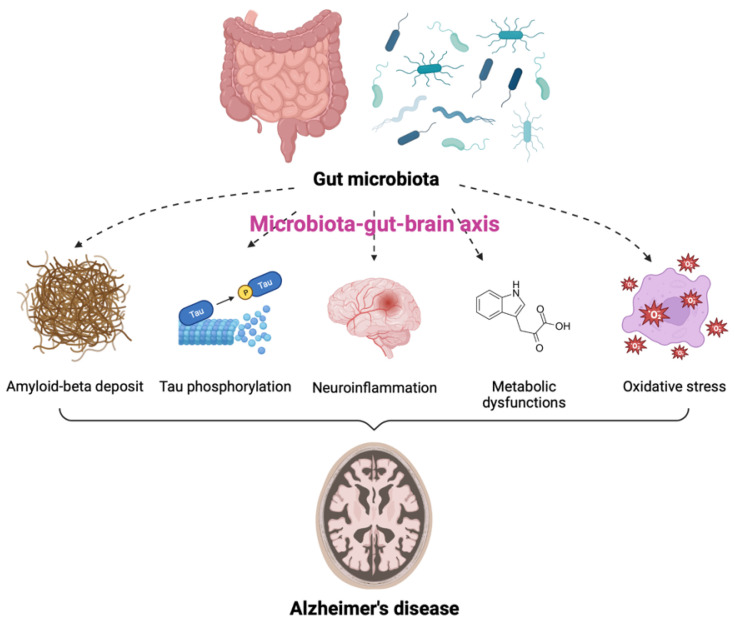
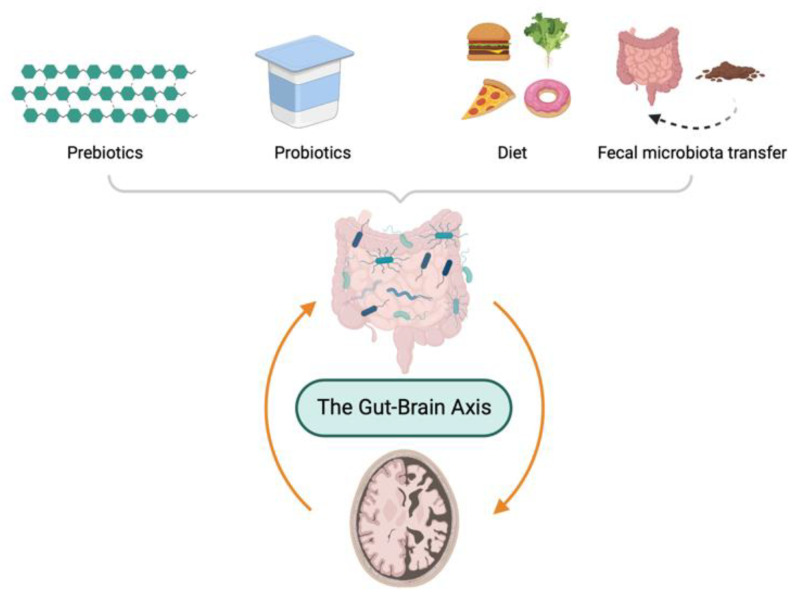
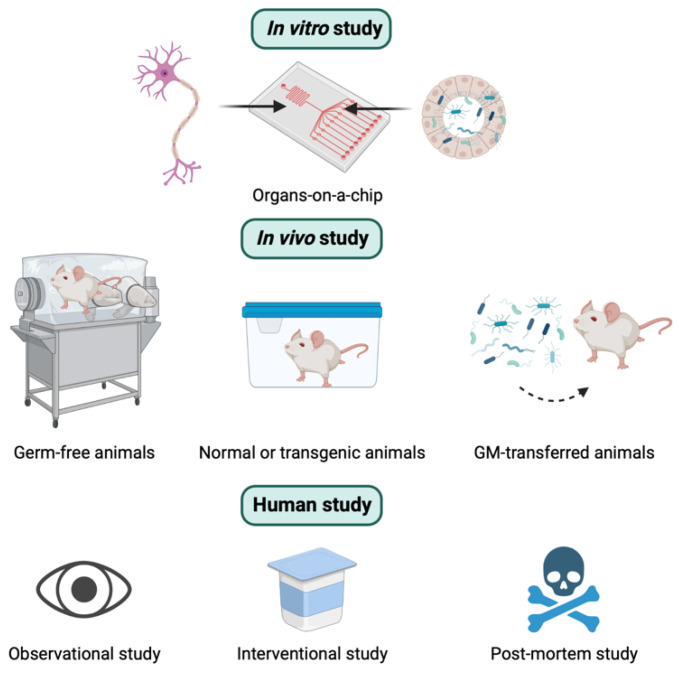
Gut microbiota (GM), the microorganisms in the gastrointestinal tract, contribute to the regulation of brain homeostasis through bidirectional communication between the gut and the brain. GM disturbance has been discovered to be related to various neurological disorders, including Alzheimer's disease (AD). Recently, the microbiota-gut-brain axis (MGBA) has emerged as an enticing subject not only to understand AD pathology but also to provide novel therapeutic strategies for AD. In this review, the general concept of the MGBA and its impacts on the development and progression of AD are described. Then, diverse experimental approaches for studying the roles of GM in AD pathogenesis are presented. Finally, the MGBA-based therapeutic strategies for AD are discussed. This review provides concise guidance for those who wish to obtain a conceptual and methodological understanding of the GM and AD relationship with an emphasis on its practical application.
肠道微生物群(GM),即胃肠道中的微生物,通过肠道和大脑之间的双向交流,有助于调节大脑内稳态。GM 紊乱已被发现与各种神经退行性疾病有关,包括阿尔茨海默病(AD)。最近,微生物群-肠道-大脑轴(MGBA)不仅成为了解 AD 病理的一个诱人课题,也为 AD 提供了新的治疗策略。在这篇综述中,描述了 MGBA 的一般概念及其对 AD 发展和进展的影响。然后,介绍了用于研究 GM 在 AD 发病机制中作用的各种实验方法。最后,讨论了基于 MGBA 的 AD 治疗策略。这篇综述为那些希望获得 GM 与 AD 关系的概念和方法学理解的人提供了简明的指导,重点是其实际应用。