Rak Jakub, Kabesova Martina, Benes Jiri, Pouckova Pavla, Vetvicka David
LabInstruments s.r.o., Kralovicka 1430/1, 323 00 Pilsen, Czech Republic.
Institute of Biophysics and Informatics, First Faculty of Medicine, Charles University, Salmovska 1, 120 00 Prague, Czech Republic.
Life (Basel). 2023 Jan 21;13(2):305. doi: 10.3390/life13020305.
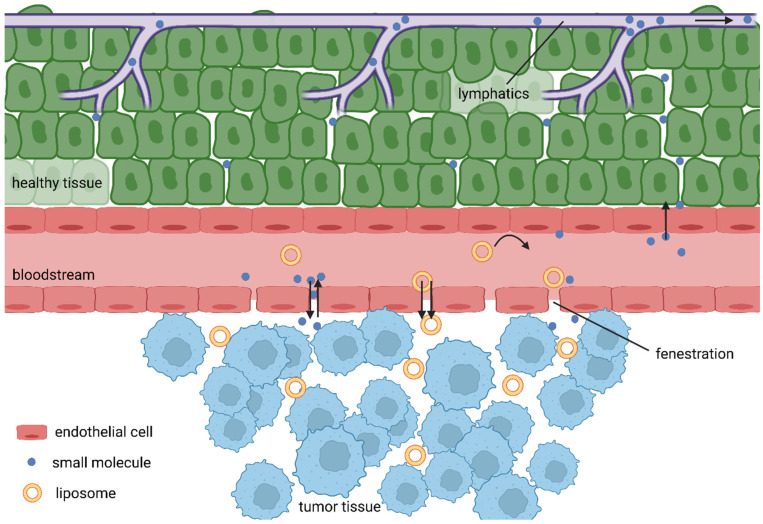
This updated review aims to describe the current status in the development of liposome-based systems for the targeted delivery of phthalocyanines for photodynamic therapy (PDT). Although a number of other drug delivery systems (DDS) can be found in the literature and have been studied for phthalocyanines or similar photosensitizers (PSs), liposomes are by far the closest to clinical practice. PDT itself finds application not only in the selective destruction of tumour tissues or the treatment of microbial infections, but above all in aesthetic medicine. From the point of view of administration, some PSs can advantageously be delivered through the skin, but for phthalocyanines, systemic administration is more suitable. However, systemic administration places higher demands on advanced DDS, active tissue targeting and reduction of side effects. This review focuses on the already described liposomal DDS for phthalocyanines, but also describes examples of DDS used for structurally related PSs, which can be assumed to be applicable to phthalocyanines as well.
这篇更新后的综述旨在描述基于脂质体的系统在光动力疗法(PDT)中用于酞菁靶向递送的发展现状。尽管在文献中可以找到许多其他药物递送系统(DDS),并且已经对酞菁或类似的光敏剂(PS)进行了研究,但脂质体是目前最接近临床应用的。PDT本身不仅可用于选择性破坏肿瘤组织或治疗微生物感染,而且最重要的是在美容医学中得到应用。从给药角度来看,一些PS可以通过皮肤进行有利递送,但对于酞菁来说,全身给药更合适。然而,全身给药对先进的DDS、主动组织靶向和副作用的减少提出了更高的要求。本综述重点关注已描述的用于酞菁的脂质体DDS,但也描述了用于结构相关PS的DDS实例,这些实例也可假定适用于酞菁。