Shen Yuanzhao, Wang Jingyu, Li Yuting, Yang Chih-Tsung, Zhou Xin
College of Veterinary Medicine, Institute of Comparative Medicine, Yangzhou University, Yangzhou 225009, China.
Jiangsu Co-Innovation Center for Prevention and Control of Important Animal Infectious Diseases and Zoonoses, Yangzhou University, Yangzhou 225009, China.
Nanomaterials (Basel). 2023 Feb 8;13(4):665. doi: 10.3390/nano13040665.
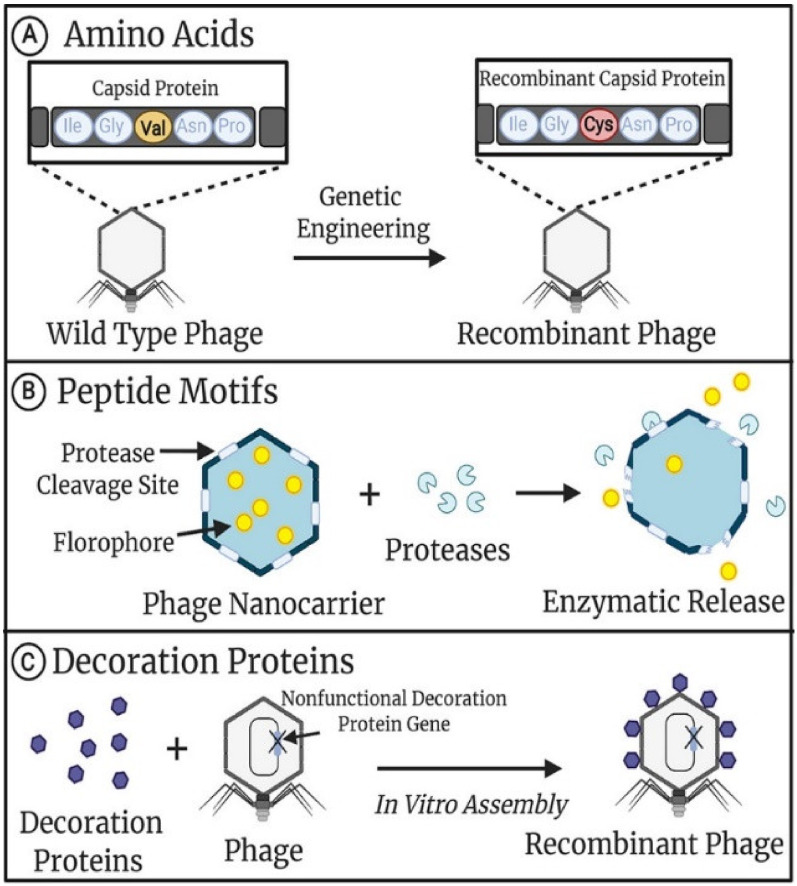
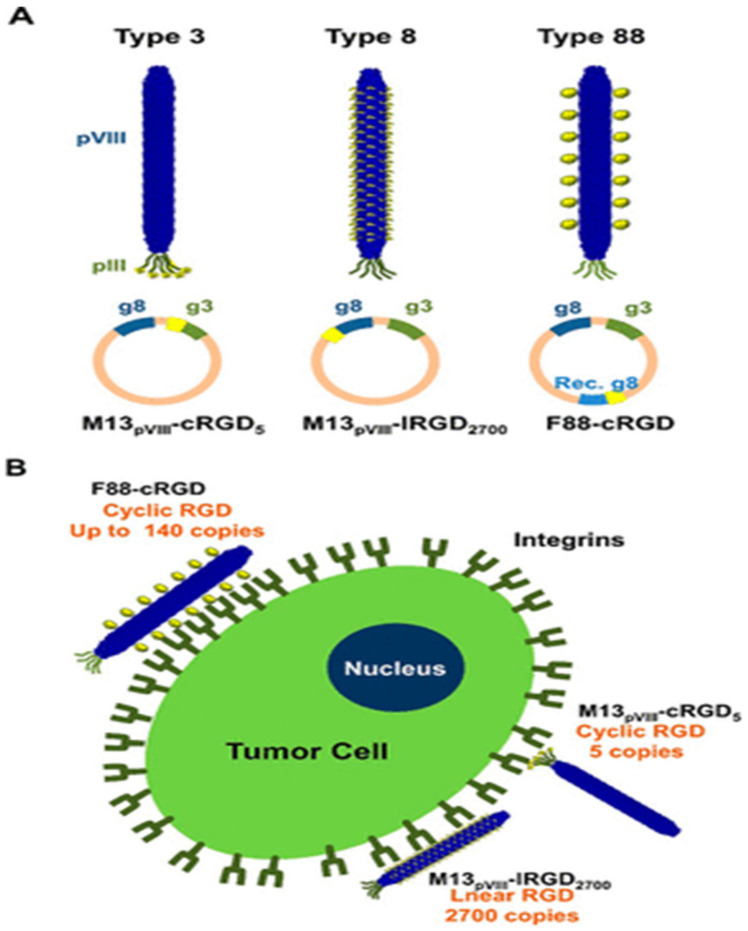
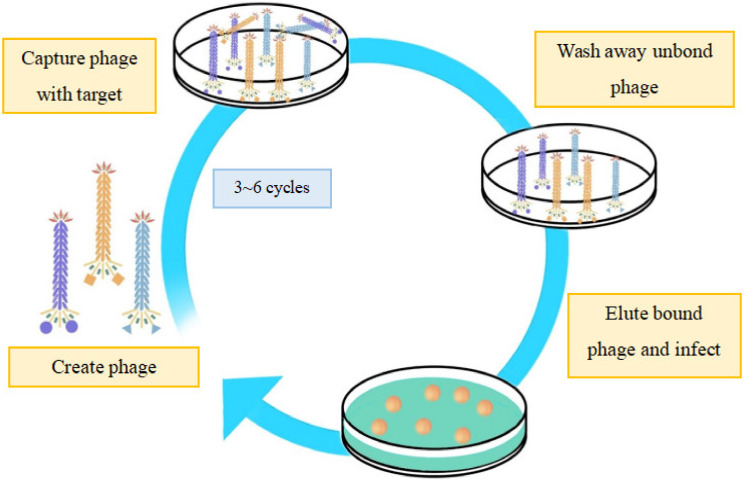
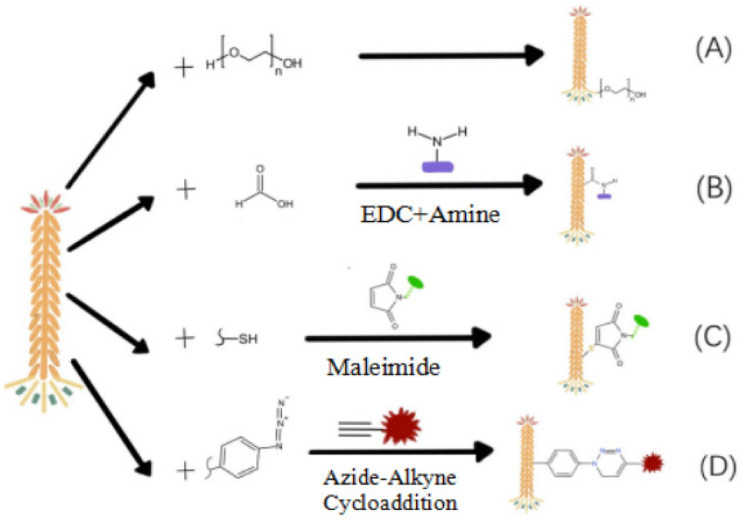
Malignant tumor is one of the leading causes of death in human beings. In recent years, bacteriophages (phages), a natural bacterial virus, have been genetically engineered for use as a probe for the detection of antigens that are highly expressed in tumor cells and as an anti-tumor reagent. Furthermore, phages can also be chemically modified and assembled with a variety of nanoparticles to form a new organic/inorganic composite, thus extending the application of phages in biological detection and tumor therapeutic. This review summarizes the studies on genetically engineered and chemically modified phages in the diagnosis and targeting therapy of tumors in recent years. We discuss the advantages and limitations of modified phages in practical applications and propose suitable application scenarios based on these modified phages.
恶性肿瘤是人类主要死因之一。近年来,噬菌体作为一种天然的细菌病毒,已通过基因工程改造,用作检测肿瘤细胞中高表达抗原的探针以及抗肿瘤试剂。此外,噬菌体还可进行化学修饰,并与多种纳米颗粒组装形成新型有机/无机复合材料,从而拓展噬菌体在生物检测和肿瘤治疗方面的应用。本文综述了近年来基因工程改造和化学修饰噬菌体在肿瘤诊断与靶向治疗方面的研究。我们讨论了修饰噬菌体在实际应用中的优缺点,并基于这些修饰噬菌体提出合适的应用场景。