Non-Communicable Diseases Research Center, Rafsanjan University of Medical Sciences, Rafsanjan, Iran.
Neurology Department, School of Medicine, Rafsanjan University of Medical Sciences, Rafsanjan, Iran.
Sci Rep. 2023 Mar 1;13(1):3459. doi: 10.1038/s41598-023-30501-6.
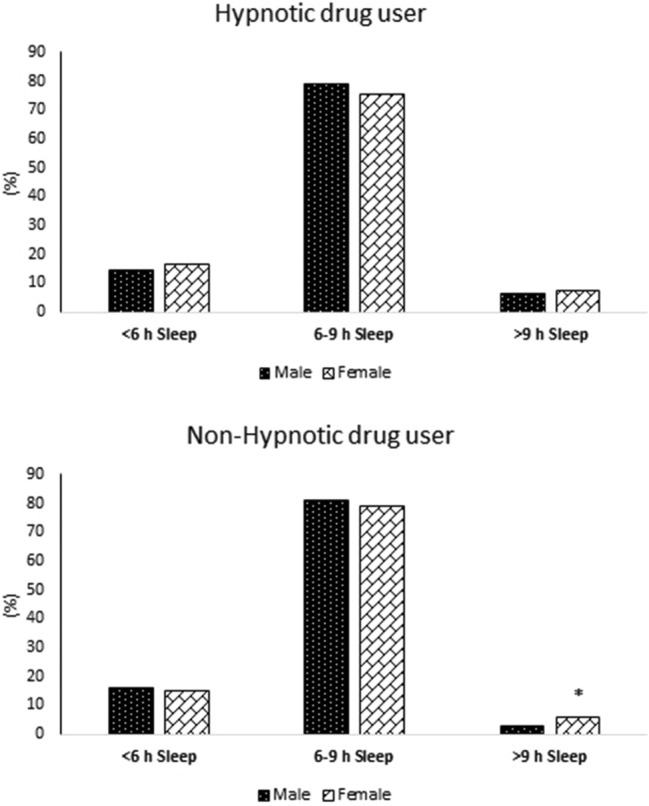
Both short sleep duration (SSD) and long sleep duration (LSD) are associated with an increased risk of morbidity and mortality. Here, we aimed to assess the prevalence of sleep duration disturbances among adults in association with demographic, medication use, personal habits, and chronic diseases, while also considering the impact of hypnotic drug use. We performed a cross-sectional study of 9991 adult participants of the Rafsanjan Cohort Study (RCS), as part of the Prospective epidemiological research studies in Iran (PERSIAN). Multivariate logistic regression analyses were conducted to assess the association between short (< 6 h) and long (> 9 h) sleep duration with demographic and lifestyle parameters and common non-communicable diseases. Additionally, we performed stratified analysis to investigate the association of sleep duration with the abovementioned factors and diseases, in groups with and without hypnotic drug use. We found higher odds of SSD significantly associated with age (P < 0.001), BMI (P < 0.001), physical activity (P < 0.001), and depression (P = 0.023). LSD displayed a positive association with the female sex (P < 0.001), opium consumption (P < 0.001), and history of MI (P = 0.045), and a reverse connection with education (P = 0.007), physical activity (P < 0.001) and alcohol consumption (P = 0.027). Stratifying for the hypnotic drug use, our sensitivity analyses indicated that in hypnotic drug users, education (P = 0.034) and physical activity (P < 0.001) were associated with LSD, in this group, significantly increased odds ratio of LSD were associated with opium consumption (P = 0.046) and thyroid dysfunction (P = 0.037). Our findings demonstrated the demographic and lifestyle factors and diseases associated with long and short sleep duration in the population of the RCS. Additionally, after stratifying for hypnotic drug use, our results indicated that some diseases are only associated with abnormal sleep duration upon using hypnotic drugs.
短睡眠时长(SSD)和长睡眠时长(LSD)均与发病率和死亡率的增加相关。在此,我们旨在评估成年人睡眠时长紊乱的流行率与人口统计学、药物使用、个人习惯和慢性疾病的相关性,同时也考虑催眠药物使用的影响。我们对 9991 名 Rafsanjan 队列研究(RCS)成年参与者进行了横断面研究,该研究是伊朗前瞻性流行病学研究(PERSIAN)的一部分。多变量逻辑回归分析用于评估短睡(<6 小时)和长睡(>9 小时)与人口统计学和生活方式参数以及常见非传染性疾病的关联。此外,我们进行了分层分析,以调查在使用和不使用催眠药物的人群中,睡眠时长与上述因素和疾病的关联。我们发现 SSD 的发生几率较高与年龄(P<0.001)、BMI(P<0.001)、身体活动(P<0.001)和抑郁(P=0.023)显著相关。LSD 与女性(P<0.001)、鸦片使用(P<0.001)和心肌梗死史(P=0.045)呈正相关,与教育(P=0.007)、身体活动(P<0.001)和酒精摄入(P=0.027)呈负相关。在分层分析催眠药物使用情况时,我们的敏感性分析表明,在催眠药物使用者中,教育(P=0.034)和身体活动(P<0.001)与 LSD 相关,在该组中,LSD 的发生几率显著增加与鸦片使用(P=0.046)和甲状腺功能障碍(P=0.037)相关。我们的研究结果表明,在 RCS 人群中,长睡眠时长和短睡眠时长与人口统计学和生活方式因素以及疾病相关。此外,在分层分析催眠药物使用情况后,我们的结果表明,一些疾病仅在使用催眠药物时与异常睡眠时长相关。