The Plant Chemetics Laboratory, Department of Biology, University of Oxford, Oxford, OX1 3RB, UK.
ZMB Chemical Biology, Faculty of Biology, University of Duisburg-Essen, 45117, Essen, Germany.
New Phytol. 2024 Jan;241(1):394-408. doi: 10.1111/nph.18857. Epub 2023 Mar 29.
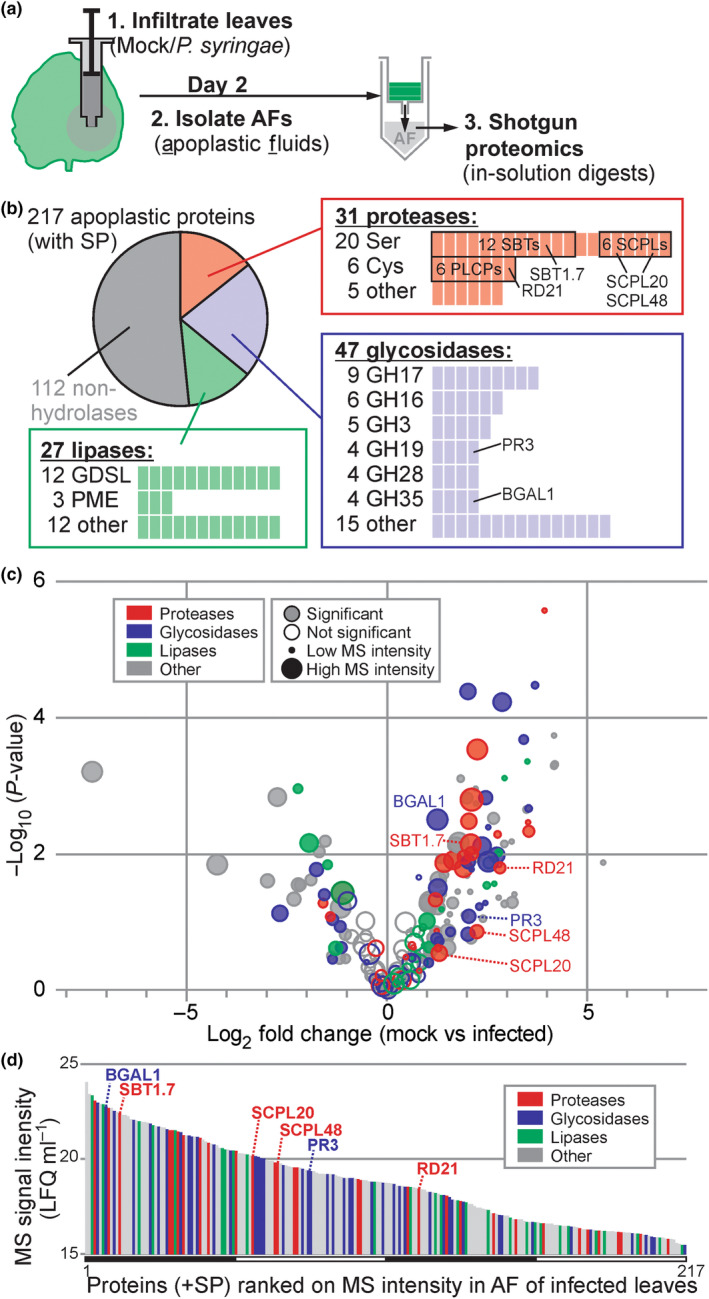
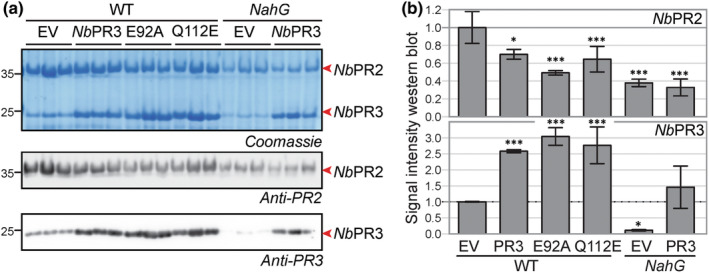
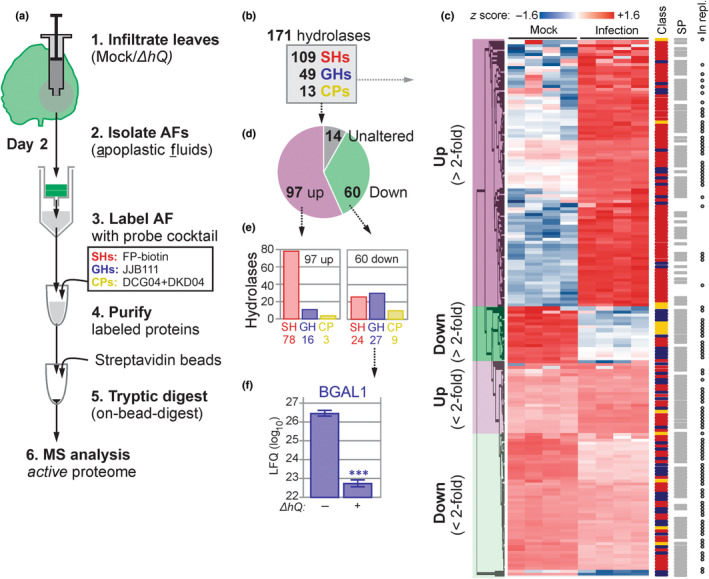
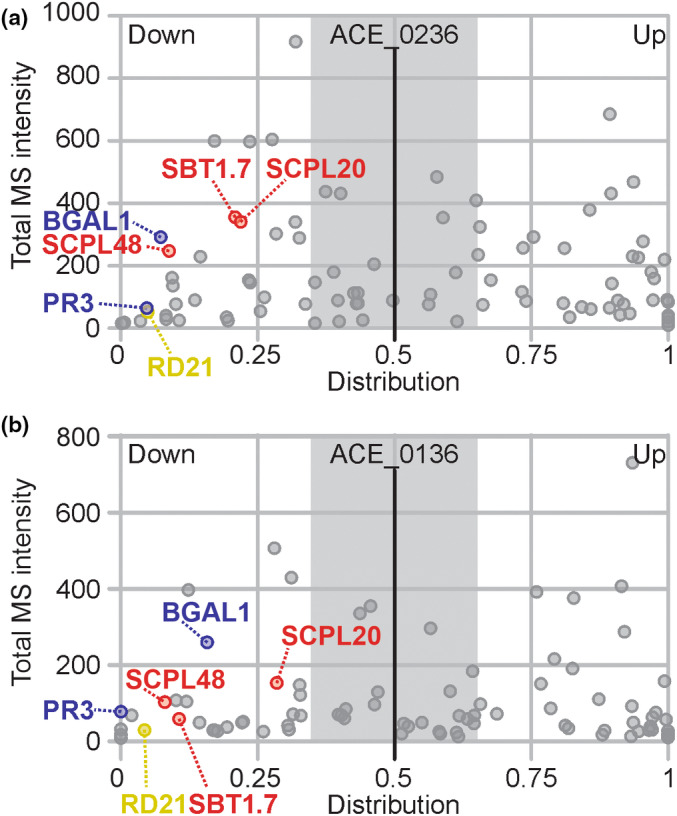
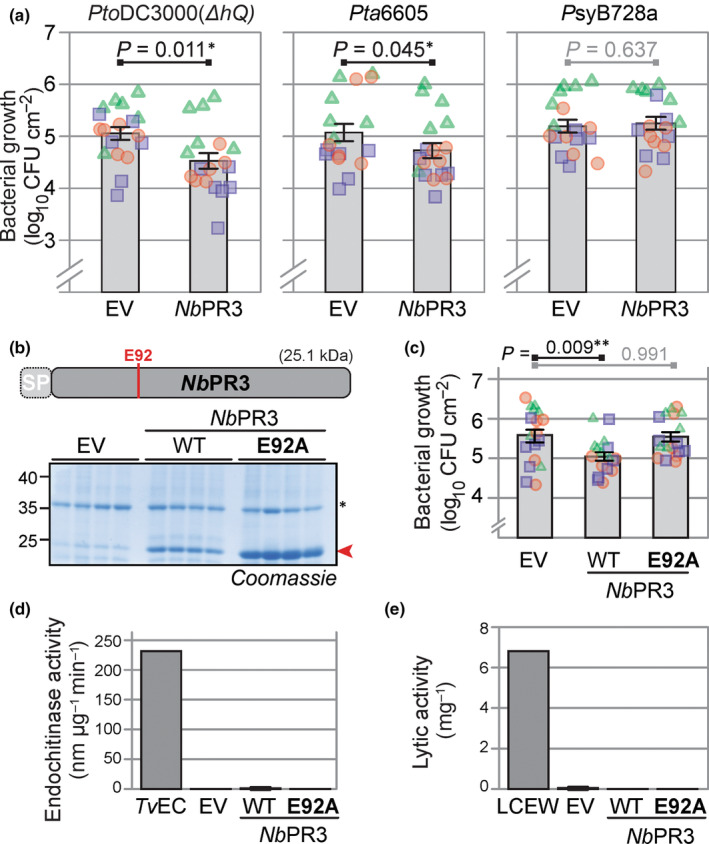
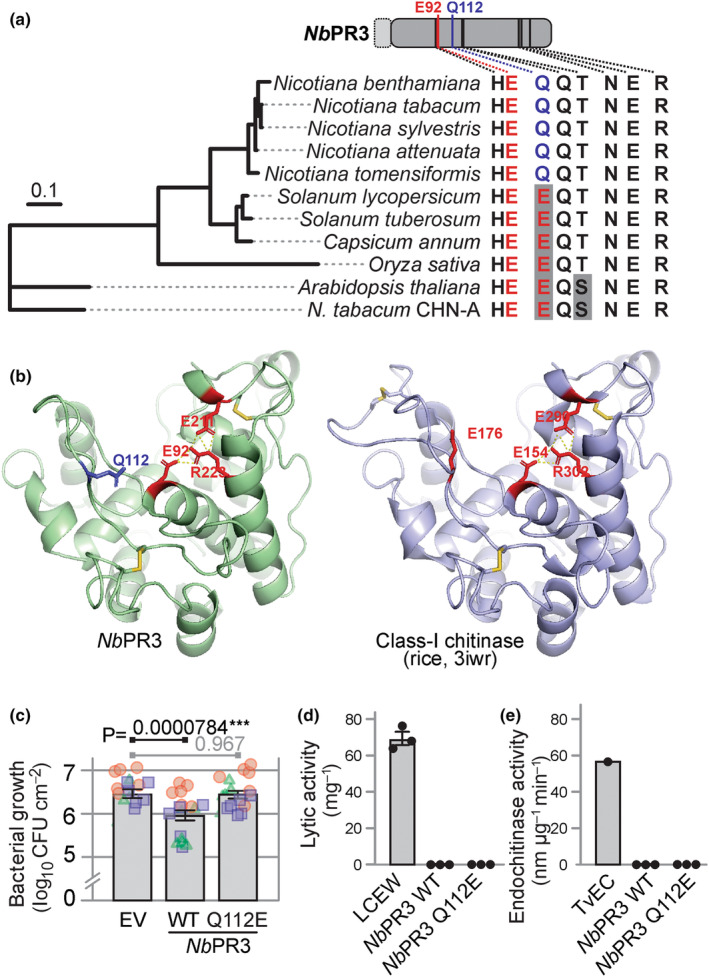
The extracellular space of plant tissues contains hundreds of hydrolases that might harm colonising microbes. Successful pathogens may suppress these hydrolases to enable disease. Here, we report the dynamics of extracellular hydrolases in Nicotiana benthamiana upon infection with Pseudomonas syringae. Using activity-based proteomics with a cocktail of biotinylated probes, we simultaneously monitored 171 active hydrolases, including 109 serine hydrolases (SHs), 49 glycosidases (GHs) and 13 cysteine proteases (CPs). The activity of 82 of these hydrolases (mostly SHs) increases during infection, while the activity of 60 hydrolases (mostly GHs and CPs) is suppressed during infection. Active β-galactosidase-1 (BGAL1) is amongst the suppressed hydrolases, consistent with production of the BGAL1 inhibitor by P. syringae. One of the other suppressed hydrolases, the pathogenesis-related NbPR3, decreases bacterial growth when transiently overexpressed. This is dependent on its active site, revealing a role for NbPR3 activity in antibacterial immunity. Despite being annotated as a chitinase, NbPR3 does not possess chitinase activity and contains an E112Q active site substitution that is essential for antibacterial activity and is present only in Nicotiana species. This study introduces a powerful approach to reveal novel components of extracellular immunity, exemplified by the discovery of the suppression of neo-functionalised Nicotiana-specific antibacterial NbPR3.
植物组织的细胞外空间含有数百种可能伤害定殖微生物的水解酶。成功的病原体可能会抑制这些水解酶以促进疾病。在这里,我们报告了拟南芥感染丁香假单胞菌后细胞外水解酶的动态。使用基于活性的蛋白质组学与生物素化探针混合物,我们同时监测了 171 种活性水解酶,包括 109 种丝氨酸水解酶(SHs)、49 种糖苷酶(GHs)和 13 种半胱氨酸蛋白酶(CPs)。这些水解酶中的 82 种(主要是 SHs)的活性在感染过程中增加,而 60 种水解酶(主要是 GHs 和 CPs)的活性在感染过程中受到抑制。活性β-半乳糖苷酶-1(BGAL1)是受抑制的水解酶之一,与丁香假单胞菌产生 BGAL1 抑制剂一致。另一种受抑制的水解酶,即病程相关的 NbPR3,当瞬时过表达时会降低细菌的生长。这依赖于其活性位点,揭示了 NbPR3 活性在抗菌免疫中的作用。尽管被注释为几丁质酶,NbPR3 不具有几丁质酶活性,并且含有一个对抗菌活性至关重要的 E112Q 活性位点取代,该取代仅存在于茄科植物中。这项研究介绍了一种揭示细胞外免疫新成分的有力方法,以发现新功能化的特异性抗菌 NbPR3 的抑制作用为例。