Center for Biological Clocks Research, Department of Biology, Texas A&M University, College Station, TX, United States.
Front Endocrinol (Lausanne). 2023 Feb 15;14:987208. doi: 10.3389/fendo.2023.987208. eCollection 2023.
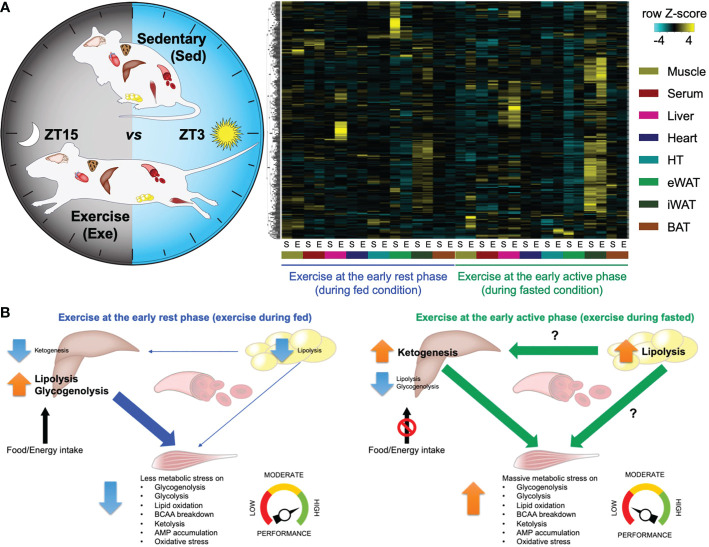
Physical activity represents a potent, non-pharmacological intervention delaying the onset of over 40 chronic metabolic and cardiovascular diseases, including type 2 diabetes, coronary heart disease, and reducing all-cause mortality. Acute exercise improves glucose homeostasis, with regular participation in physical activity promoting long-term improvements in insulin sensitivity spanning healthy and disease population groups. At the skeletal muscle level, exercise promotes significant cellular reprogramming of metabolic pathways through the activation of mechano- and metabolic sensors, which coordinate downstream activation of transcription factors, augmenting target gene transcription associated with substrate metabolism and mitochondrial biogenesis. It is well established that frequency, intensity, duration, and modality of exercise play a critical role in the type and magnitude of adaptation; albeit, exercise is increasingly considered a vital lifestyle factor with a critical role in the entrainment of the biological clock. Recent research efforts revealed the time-of-day-dependent impact of exercise on metabolism, adaptation, performance, and subsequent health outcomes. The synchrony between external environmental and behavioural cues with internal molecular circadian clock activity is a crucial regulator of circadian homeostasis in physiology and metabolism, defining distinct metabolic and physiological responses to exercise unique to the time of day. Optimising exercise outcomes following when to exercise would be essential to establishing personalised exercise medicine depending on exercise objectives linked to disease states. We aim to provide an overview of the bimodal impact of exercise timing, i.e. the role of exercise as a time-giver () to improve circadian clock alignment and the underpinning clock control of metabolism and the temporal impact of exercise timing on the metabolic and functional outcomes associated with exercise. We will propose research opportunities that may further our understanding of the metabolic rewiring induced by specific exercise timing.
身体活动是一种强有力的非药物干预手段,可以延缓 40 多种慢性代谢性和心血管疾病的发病,包括 2 型糖尿病、冠心病,并降低全因死亡率。急性运动可以改善葡萄糖稳态,有规律的身体活动参与可以促进健康人群和疾病人群的胰岛素敏感性的长期改善。在骨骼肌水平上,运动通过机械和代谢感受器的激活促进代谢途径的显著细胞重编程,协调下游转录因子的激活,增加与底物代谢和线粒体生物发生相关的靶基因转录。频率、强度、持续时间和运动方式对适应的类型和程度起着至关重要的作用,这一点已经得到了很好的证实;尽管如此,运动越来越被认为是一种重要的生活方式因素,对生物钟的同步起着关键作用。最近的研究努力揭示了运动对代谢、适应、表现和随后健康结果的时间依赖性影响。外部环境和行为线索与内部分子生物钟活动之间的同步是生理和代谢中生物钟稳态的关键调节剂,决定了一天中不同时间进行运动时独特的代谢和生理反应。根据与疾病状态相关的运动目标,确定何时进行运动以优化运动效果,对于建立个性化运动医学至关重要。我们旨在概述运动时间的双重影响,即运动作为时间给予者(time-giver)的作用,以改善生物钟的对准,并为代谢提供时钟控制,以及运动时间对与运动相关的代谢和功能结果的时间影响。我们将提出研究机会,以进一步了解特定运动时间引起的代谢重编程。