Zhu Lisha, Wang Yu, Jin Shanshan, Niu Yuting, Yu Min, Li Zixin, Chen Liyuan, Wu Xiaolan, Ding Chengye, Wu Tianhao, Shi Xinmeng, Zhang Yixin, Luo Dan, Liu Yan
Laboratory of Biomimetic Nanomaterials, Department of Orthodontics, Peking University School and Hospital of Stomatology, Beijing, 100081, China.
Beijing Institute of Nanoenergy and Nanosystems, Chinese Academy of Sciences, Beijing, 101400, China.
NPJ Regen Med. 2023 Mar 10;8(1):14. doi: 10.1038/s41536-023-00289-0.
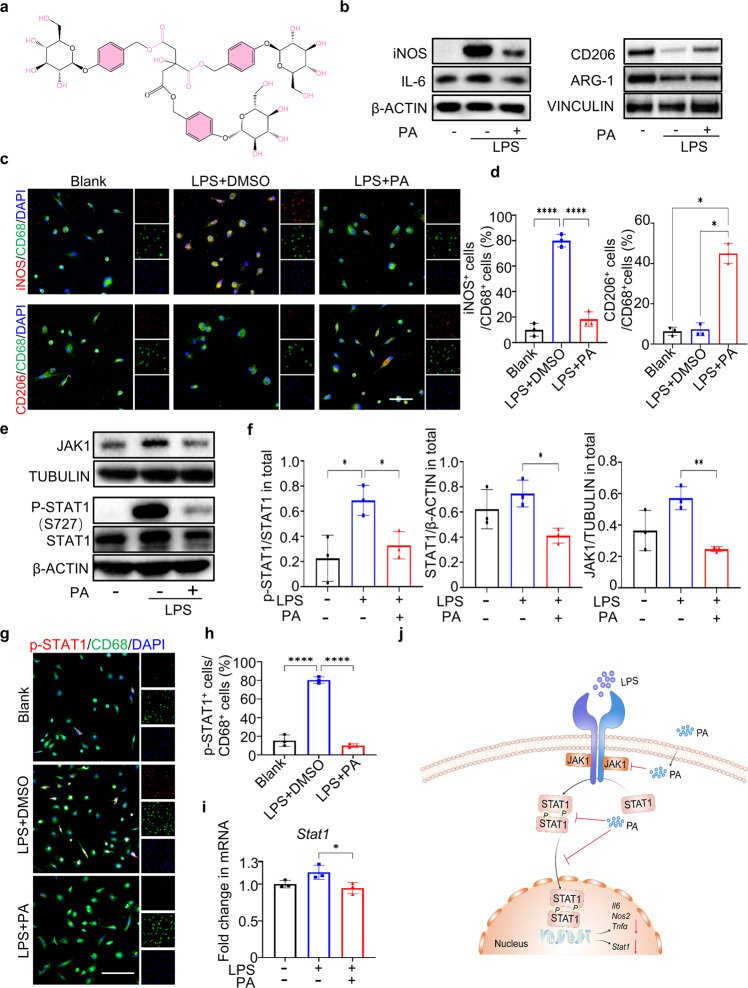
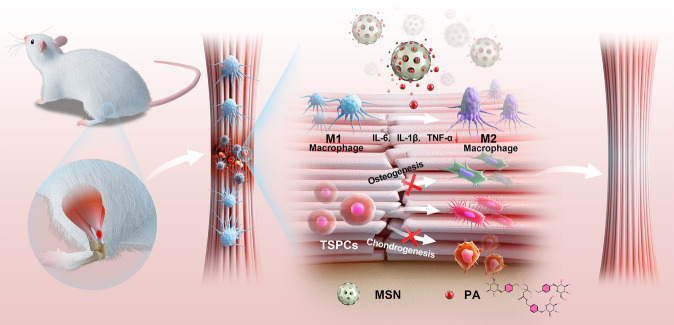
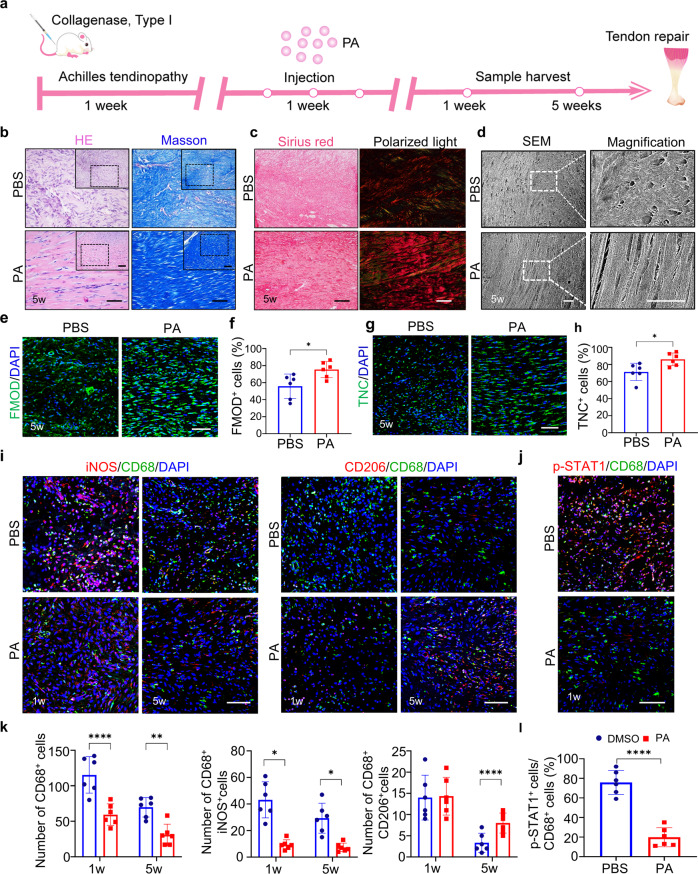
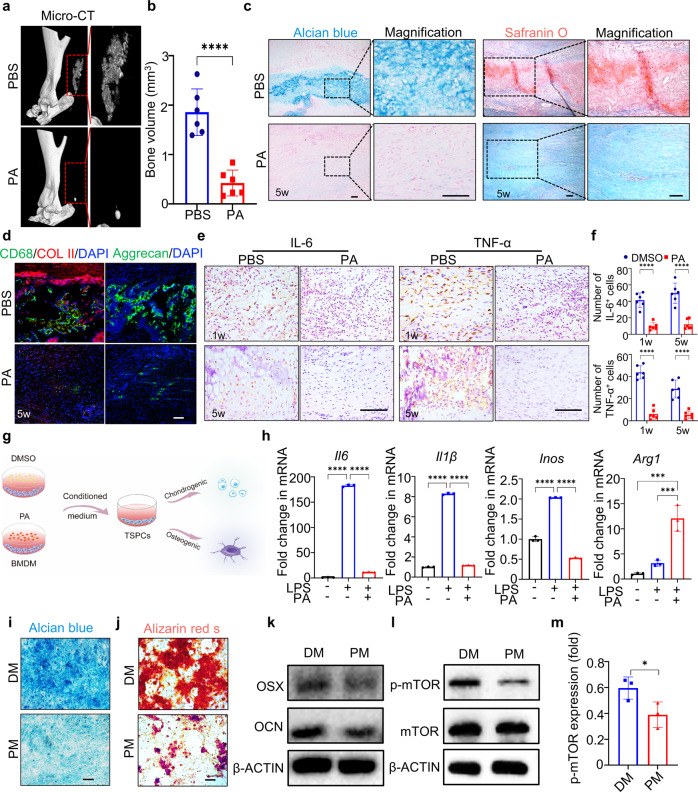
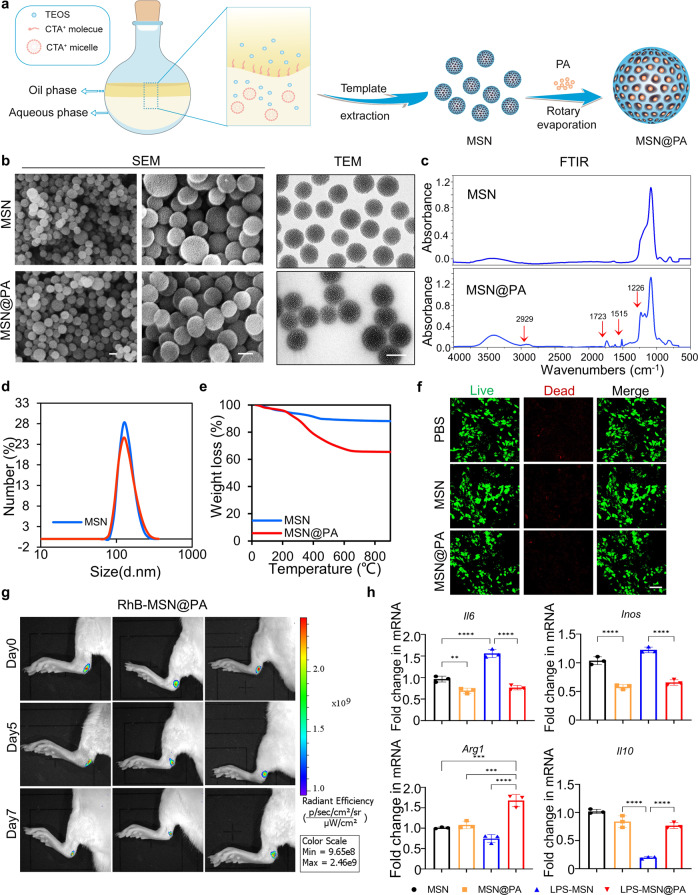
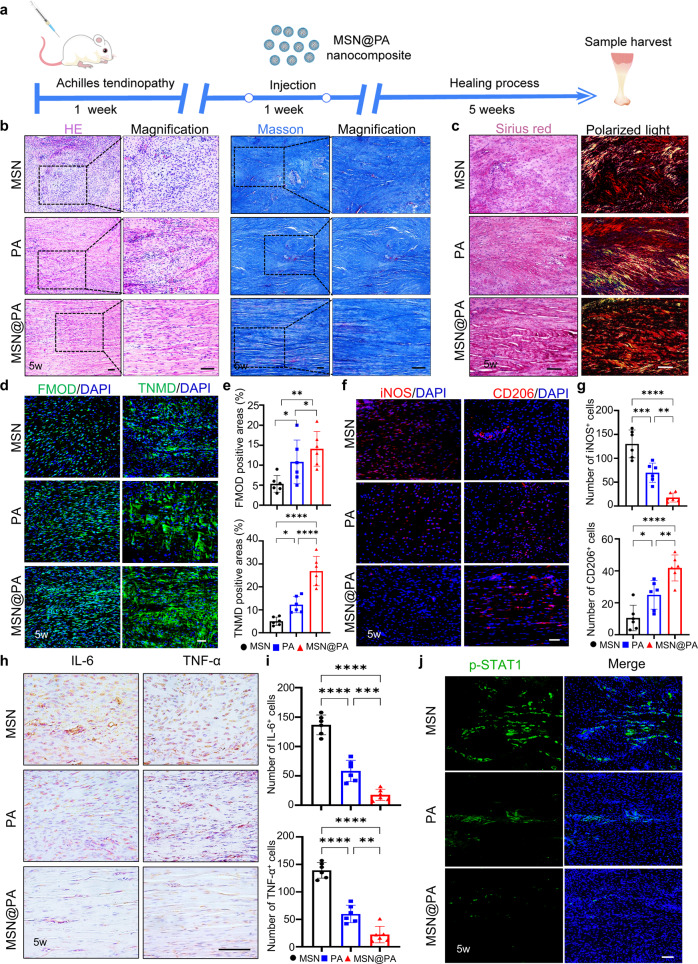
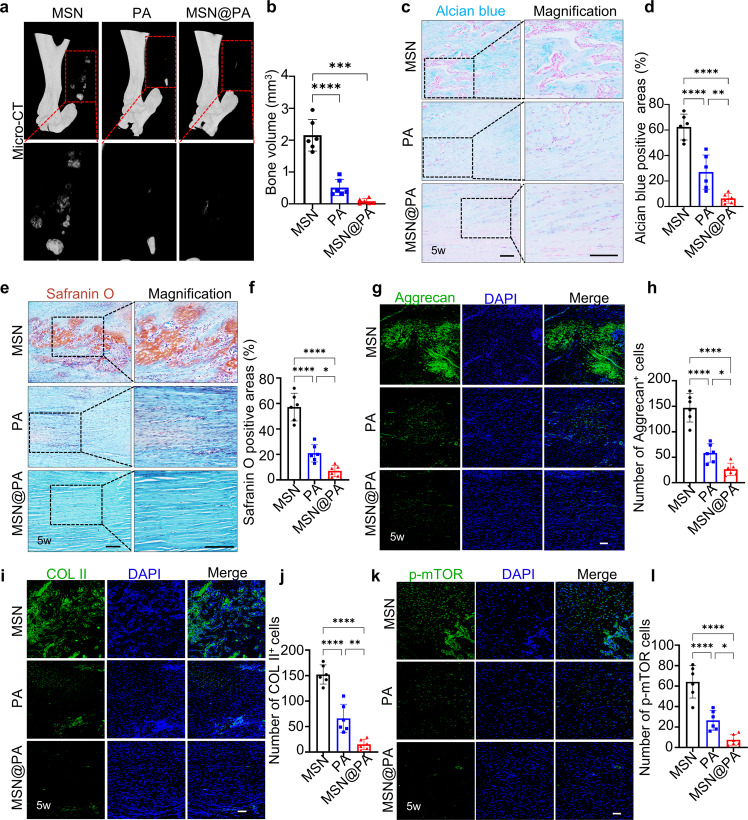
Macrophages are involved mainly in the balance between inflammation and tenogenesis during the healing process of tendinopathy. However, etiological therapeutic strategies to efficiently treat tendinopathy by modulating macrophage state are still lacking. In this study, we find that a small molecule compound Parishin-A (PA) isolated from Gastrodia elata could promote anti-inflammatory M2 macrophage polarization by inhibiting gene transcription and protein phosphorylation of signal transducers and activators of transcription 1. Local injection or sustained delivery of PA by mesoporous silica nanoparticles (MSNs) could almost recover the native tendon's dense parallel-aligned collagen matrix in collagenase-induced tendinopathy by modulating macrophage-mediated immune microenvironment and preventing heterotopic ossification. Especially, MSNs decrease doses of PA, frequency of injection and yield preferable therapeutic effects. Mechanistically, intervention with PA could indirectly inhibit activation of mammalian target of rapamycin to repress chondrogenic and osteogenic differentiation of tendon stem/progenitor cells by influencing macrophage inflammatory cytokine secretion. Together, pharmacological intervention with a natural small-molecule compound to modulate macrophage status appears to be a promising strategy for tendinopathy treatment.
巨噬细胞主要参与肌腱病愈合过程中炎症与腱形成之间的平衡。然而,通过调节巨噬细胞状态有效治疗肌腱病的病因治疗策略仍然缺乏。在本研究中,我们发现从天麻中分离出的一种小分子化合物天麻素-A(PA)可通过抑制信号转导子和转录激活子1的基因转录和蛋白磷酸化来促进抗炎性M2巨噬细胞极化。通过介孔二氧化硅纳米颗粒(MSNs)局部注射或持续递送PA,可通过调节巨噬细胞介导的免疫微环境并防止异位骨化,使胶原酶诱导的肌腱病中天然肌腱致密的平行排列胶原基质几乎恢复正常。特别是,MSNs降低了PA的剂量、注射频率并产生了较好的治疗效果。从机制上讲,PA干预可通过影响巨噬细胞炎性细胞因子分泌间接抑制雷帕霉素靶蛋白的激活,从而抑制肌腱干/祖细胞的软骨形成和成骨分化。总之,用天然小分子化合物进行药理干预以调节巨噬细胞状态似乎是一种有前景的肌腱病治疗策略。