Zhongnan Hospital of Wuhan University, Institute of Hepatobiliary Diseases of Wuhan University, Transplant Center of Wuhan University, National Quality Control Center for Donated Organ Procurement, Hubei Key Laboratory of Medical Technology on Transplantation, Hubei Clinical Research Center for Natural Polymer Biological Liver, Hubei Engineering Center of Natural Polymer-Based Medical Materials, Wuhan 430071, China.
The Third Xiangya Hospital of Central South University, Research Center of National Health Ministry on Transplantation Medicine Engineering and Technology, Changsha 410013, China.
Molecules. 2023 Feb 27;28(5):2211. doi: 10.3390/molecules28052211.
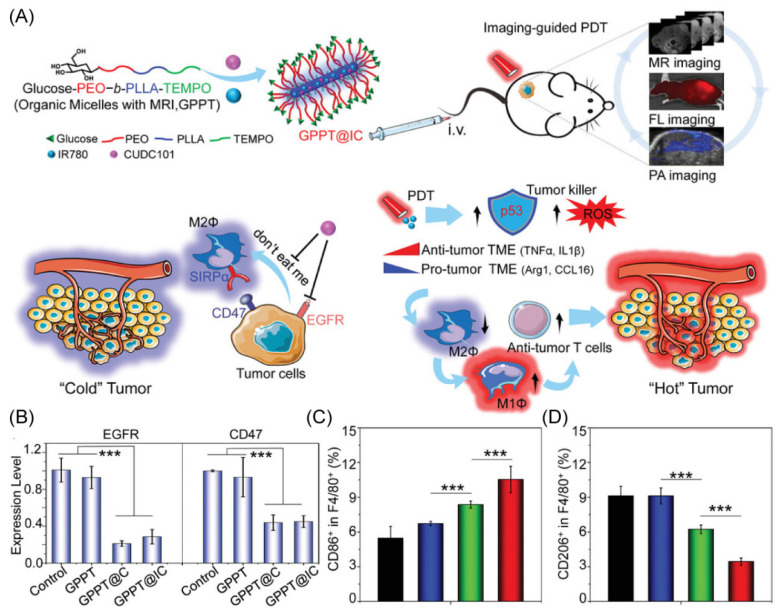
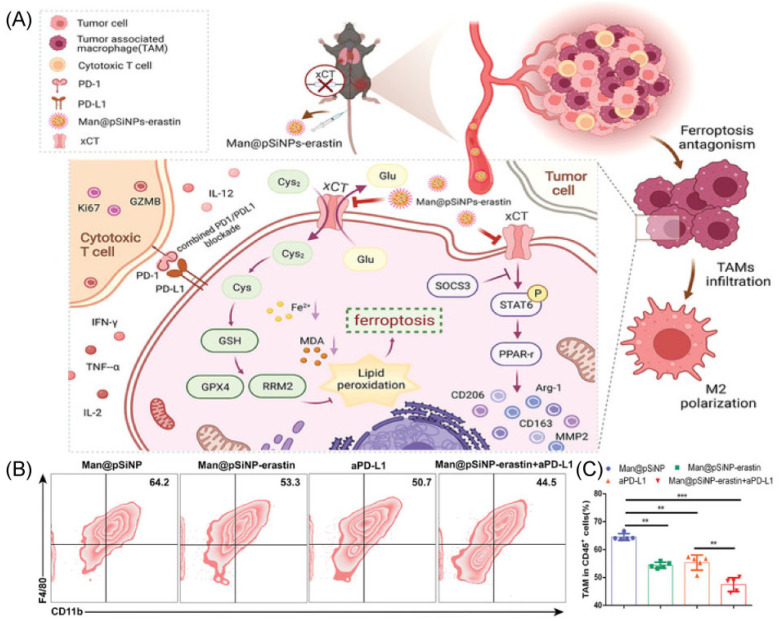
Hepatocellular carcinoma (HCC) is the fourth most common cause of cancer-related deaths in the world. However, there are currently few clinical diagnosis and treatment options available, and there is an urgent need for novel effective approaches. More research is being undertaken on immune-associated cells in the microenvironment because they play a critical role in the initiation and development of HCC. Macrophages are specialized phagocytes and antigen-presenting cells (APCs) that not only directly phagocytose and eliminate tumor cells, but also present tumor-specific antigens to T cells and initiate anticancer adaptive immunity. However, the more abundant M2-phenotype tumor-associated macrophages (TAMs) at tumor sites promote tumor evasion of immune surveillance, accelerate tumor progression, and suppress tumor-specific T-cell immune responses. Despite the great success in modulating macrophages, there are still many challenges and obstacles. Biomaterials not only target macrophages, but also modulate macrophages to enhance tumor treatment. This review systematically summarizes the regulation of tumor-associated macrophages by biomaterials, which has implications for the immunotherapy of HCC.
肝细胞癌(HCC)是全球第四大常见癌症相关死亡原因。然而,目前可供临床使用的诊断和治疗方案很少,因此迫切需要新的有效方法。由于免疫相关细胞在微环境中在 HCC 的发生和发展中起着关键作用,因此对其进行了更多的研究。巨噬细胞是专门的吞噬细胞和抗原呈递细胞(APC),不仅可以直接吞噬和消除肿瘤细胞,还可以向 T 细胞呈递肿瘤特异性抗原并启动抗肿瘤适应性免疫。然而,肿瘤部位更丰富的 M2 表型肿瘤相关巨噬细胞(TAMs)促进肿瘤逃避免疫监视,加速肿瘤进展,并抑制肿瘤特异性 T 细胞免疫反应。尽管在调节巨噬细胞方面取得了巨大成功,但仍存在许多挑战和障碍。生物材料不仅靶向巨噬细胞,还调节巨噬细胞以增强肿瘤治疗效果。本文系统总结了生物材料对肿瘤相关巨噬细胞的调节作用,这对 HCC 的免疫治疗具有重要意义。