Dong Jie, Qian Jie, Yu Kunqian, Huang Shuai, Cheng Xiang, Chen Fei, Jiang Hualiang, Zeng Wenbin
Xiangya School of Pharmaceutical Sciences, Central South University, Changsha 410083, P.R. China.
National Engineering Research Center of Rice and Byproduct Deep Processing, School of Food Science and Engineering, Central South University of Forestry and Technology, Changsha 410004, P.R. China.
Research (Wash D C). 2023;6:0075. doi: 10.34133/research.0075. Epub 2023 Mar 8.
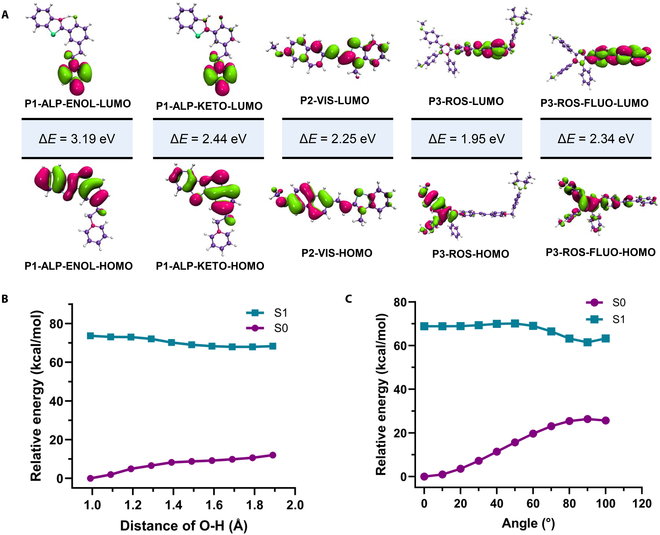
Monitoring the physiological changes of organelles is essential for understanding the local biological information of cells and for improving the diagnosis and therapy of diseases. Currently, fluorescent probes are considered as the most powerful tools for imaging and have been widely applied in biomedical fields. However, the expected targeting effects of these probes are often inconsistent with the real experiments. The design of fluorescent probes mainly depends on the empirical knowledge of researchers, which was inhibited by limited chemical space and low efficiency. Herein, we proposed a novel multilevel framework for the prediction of organelle-targeted fluorescent probes by employing advanced artificial intelligence algorithms. In this way, not only the targeting mechanism could be interpreted beyond intuitions but also a quick evaluation method could be established for the rational design. Furthermore, the targeting and imaging powers of the optimized and synthesized probes based on this methodology were verified by quantitative calculation and experiments.
监测细胞器的生理变化对于理解细胞的局部生物学信息以及改善疾病的诊断和治疗至关重要。目前,荧光探针被认为是成像最强大的工具,并已广泛应用于生物医学领域。然而,这些探针的预期靶向效果往往与实际实验不一致。荧光探针的设计主要依赖于研究人员的经验知识,这受到有限的化学空间和低效率的限制。在此,我们提出了一种新颖的多层次框架,通过采用先进的人工智能算法来预测细胞器靶向荧光探针。通过这种方式,不仅可以超越直觉解释靶向机制,还可以建立一种快速评估方法用于合理设计。此外,基于该方法优化和合成的探针的靶向和成像能力通过定量计算和实验得到了验证。