Cruz Nuno, Herculano-Carvalho Manuel, Roque Diogo, Faria Cláudia C, Cascão Rita, Ferreira Hugo Alexandre, Reis Catarina Pinto, Matela Nuno
Instituto de Biofísica e Engenharia Biomédica, Faculdade de Ciências, Universidade de Lisboa, 1749-016 Lisboa, Portugal.
iMED.ULisboa, Research Institute for Medicines, Faculdade de Farmácia, Universidade de Lisboa, Av. Prof. Gama Pinto, 1649-003 Lisboa, Portugal.
Pharmaceutics. 2023 Mar 13;15(3):928. doi: 10.3390/pharmaceutics15030928.
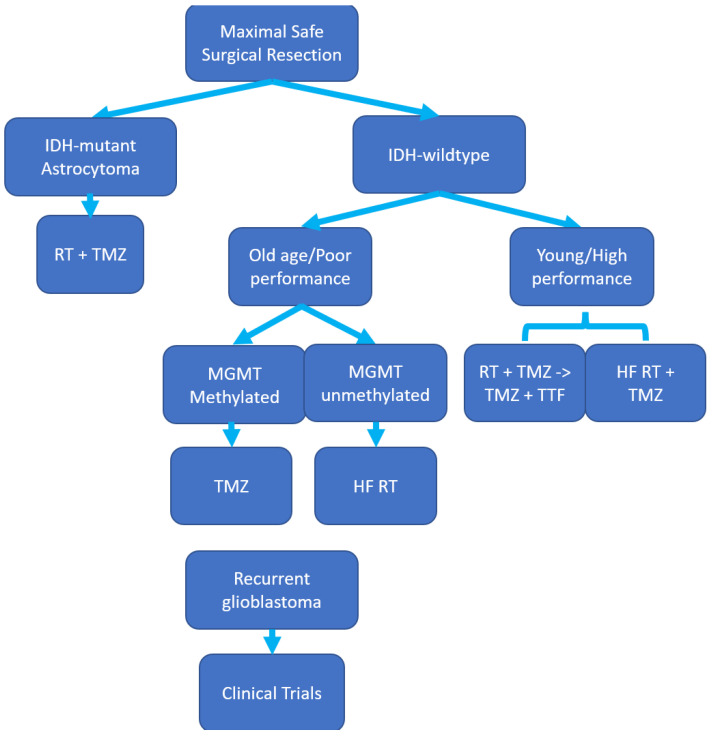
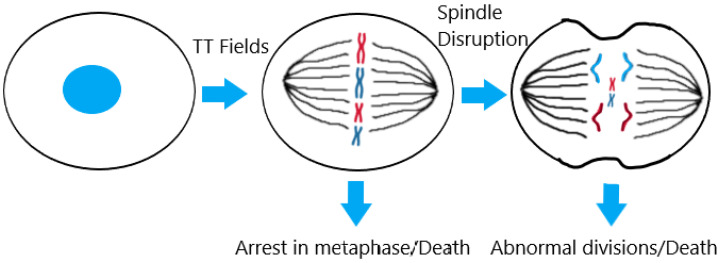
Glioblastoma multiforme (GBM) remains a challenging disease, as it is the most common and deadly brain tumour in adults and has no curative solution and an overall short survival time. This incurability and short survival time means that, despite its rarity (average incidence of 3.2 per 100,000 persons), there has been an increased effort to try to treat this disease. Standard of care in newly diagnosed glioblastoma is maximal tumour resection followed by initial concomitant radiotherapy and temozolomide (TMZ) and then further chemotherapy with TMZ. Imaging techniques are key not only to diagnose the extent of the affected tissue but also for surgery planning and even for intraoperative use. Eligible patients may combine TMZ with tumour treating fields (TTF) therapy, which delivers low-intensity and intermediate-frequency electric fields to arrest tumour growth. Nonetheless, the blood-brain barrier (BBB) and systemic side effects are obstacles to successful chemotherapy in GBM; thus, more targeted, custom therapies such as immunotherapy and nanotechnological drug delivery systems have been undergoing research with varying degrees of success. This review proposes an overview of the pathophysiology, possible treatments, and the most (not all) representative examples of the latest advancements.
多形性胶质母细胞瘤(GBM)仍然是一种具有挑战性的疾病,因为它是成人中最常见且致命的脑肿瘤,没有治愈方法且总体生存时间较短。这种无法治愈和生存时间短意味着,尽管其发病率很低(每10万人中平均发病率为3.2),但人们一直在加大努力尝试治疗这种疾病。新诊断的胶质母细胞瘤的标准治疗方法是最大程度地切除肿瘤,随后进行初始同步放化疗以及替莫唑胺(TMZ)治疗,然后再用TMZ进行进一步化疗。成像技术不仅对于诊断受影响组织的范围至关重要,而且对于手术规划甚至术中使用也很关键。符合条件的患者可以将TMZ与肿瘤治疗电场(TTF)疗法相结合,该疗法通过施加低强度和中频电场来阻止肿瘤生长。尽管如此,血脑屏障(BBB)和全身副作用仍是GBM化疗成功的障碍;因此,诸如免疫疗法和纳米技术药物递送系统等更具针对性的定制疗法一直在进行研究,且取得了不同程度的成功。本综述对病理生理学、可能的治疗方法以及最新进展中最具代表性(并非全部)的例子进行了概述。