School of Psychology, University of New South Wales, Sydney 2052, NSW, Australia.
School of Psychology, Western Sydney University Locked Bag 1797, Penrith NSW 2751, Australia.
Proc Natl Acad Sci U S A. 2023 Apr 11;120(15):e2221634120. doi: 10.1073/pnas.2221634120. Epub 2023 Apr 3.
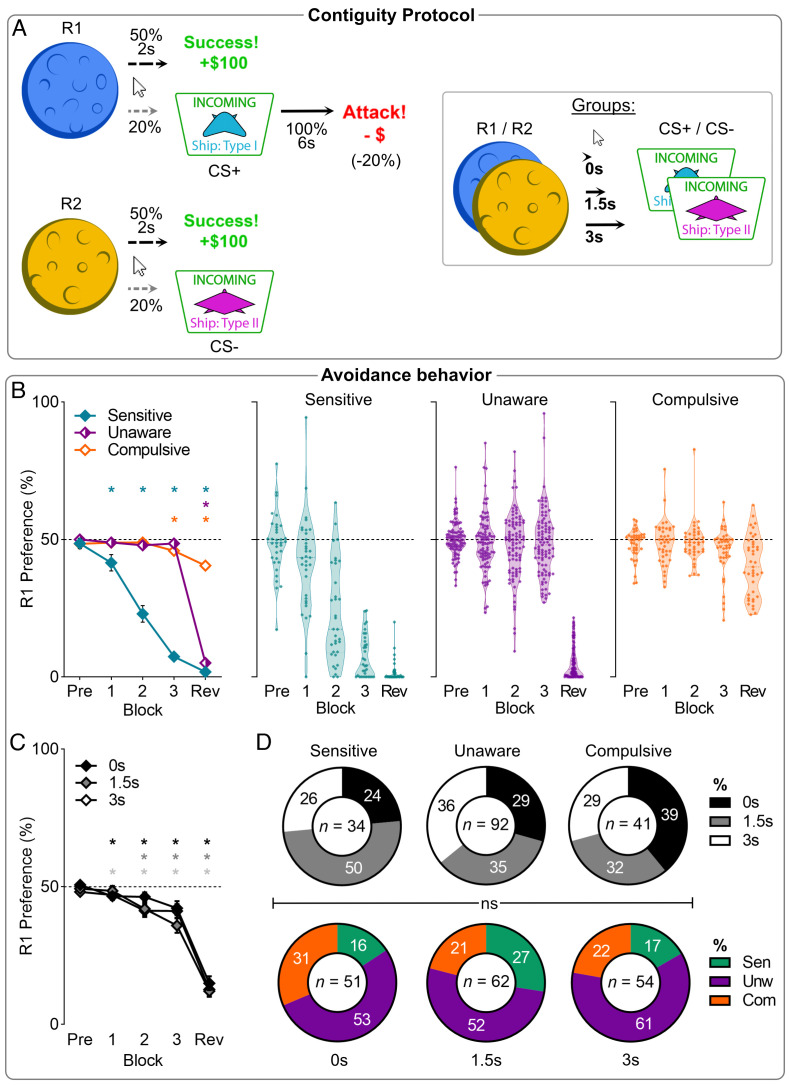
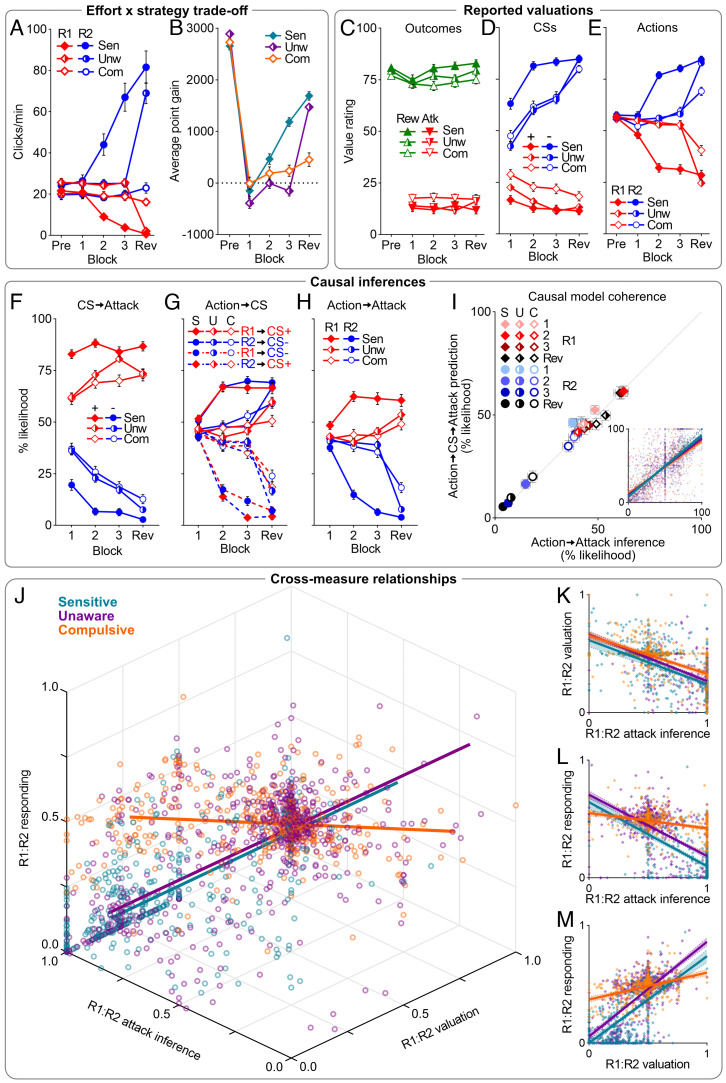
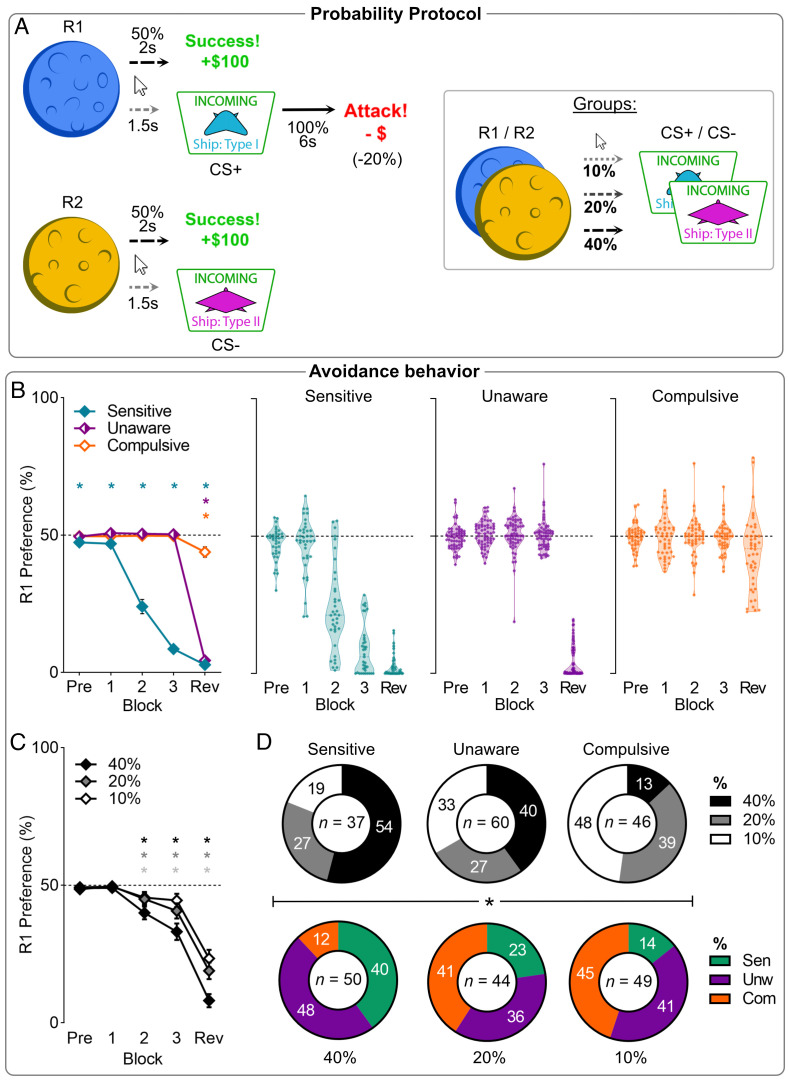
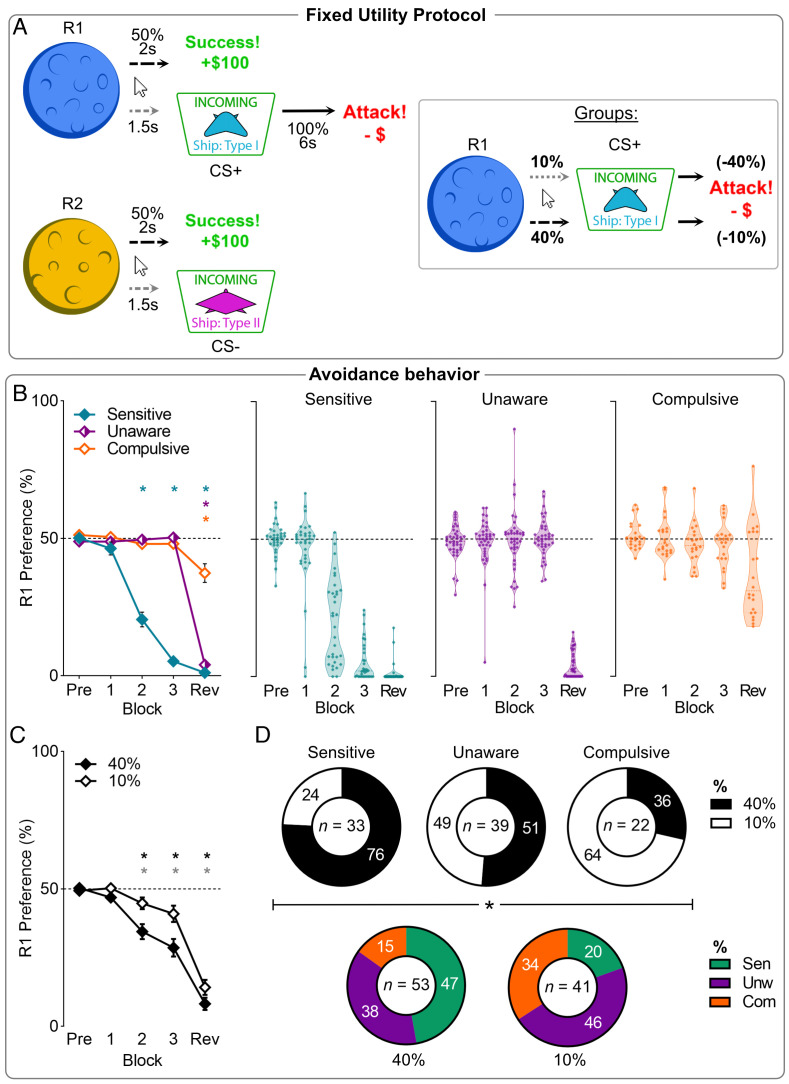
Individuals differ in their sensitivity to the adverse consequences of their actions, leading some to persist in maladaptive behaviors. Two pathways have been identified for this insensitivity: a motivational pathway based on excessive reward valuation and a behavioral pathway based on autonomous stimulus-response mechanisms. Here, we identify a third, cognitive pathway based on differences in punishment knowledge and use of that knowledge to suppress behavior. We show that distinct phenotypes of punishment sensitivity emerge from differences in what people learn about their actions. Exposed to identical punishment contingencies, some people (sensitive phenotype) form correct causal beliefs that they use to guide their behavior, successfully obtaining rewards and avoiding punishment, whereas others form incorrect but internally coherent causal beliefs that lead them to earn punishment they do not like. Incorrect causal beliefs were not inherently problematic because we show that many individuals benefit from information about why they are being punished, revaluing their actions and changing their behavior to avoid further punishment (unaware phenotype). However, one condition where incorrect causal beliefs were problematic was when punishment is infrequent. Under this condition, more individuals show punishment insensitivity and detrimental patterns of behavior that resist experience and information-driven updating, even when punishment is severe (compulsive phenotype). For these individuals, rare punishment acted as a "trap," inoculating maladaptive behavioral preferences against cognitive and behavioral updating.
个体在对自身行为的不良后果的敏感程度上存在差异,这导致一些人坚持采取适应不良的行为。对于这种不敏感,已经确定了两种途径:一种是基于过度奖励评估的动机途径,另一种是基于自主刺激-反应机制的行为途径。在这里,我们确定了第三种认知途径,它基于惩罚知识的差异以及利用这些知识来抑制行为。我们表明,从人们对自己行为的了解中,会出现不同的惩罚敏感表型。暴露于相同的惩罚条件下,一些人(敏感表型)形成正确的因果信念,并用这些信念来指导自己的行为,成功获得奖励并避免惩罚,而另一些人则形成错误但内在一致的因果信念,导致他们获得自己不喜欢的惩罚。错误的因果信念本身并不是问题,因为我们表明,许多人受益于有关他们为什么受到惩罚的信息,重新评估他们的行为,并改变他们的行为以避免进一步的惩罚(无意识表型)。然而,在惩罚不频繁的情况下,错误的因果信念是一个问题。在这种情况下,更多的人表现出对惩罚的不敏感,以及有害的行为模式,这些模式抵制经验和信息驱动的更新,即使惩罚很严重(强迫表型)。对于这些人来说,罕见的惩罚就像一个“陷阱”,使适应不良的行为偏好免受认知和行为更新的影响。