Carnegie Mellon University Africa, Kigali, Rwanda.
African Centre of Excellence in Data Science, University of Rwanda, Kigali, Rwanda.
Sci Rep. 2023 Apr 6;13(1):5629. doi: 10.1038/s41598-023-31709-2.
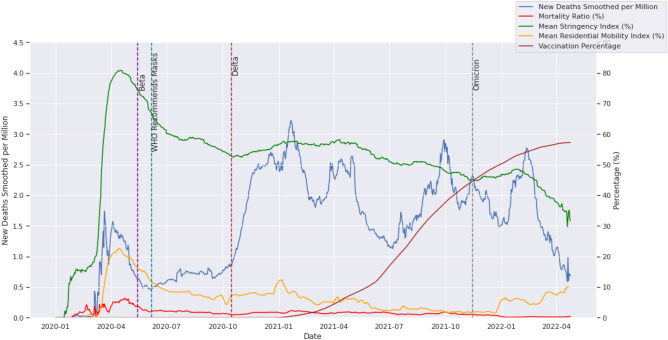
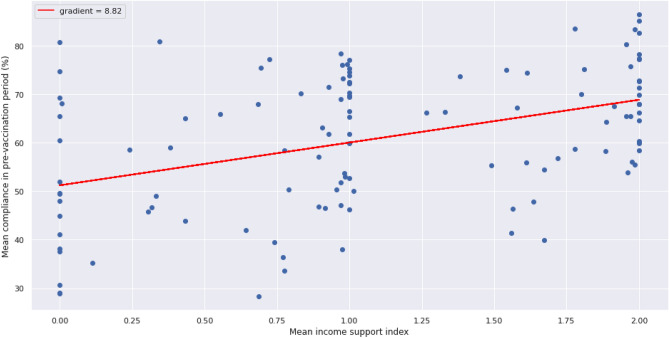
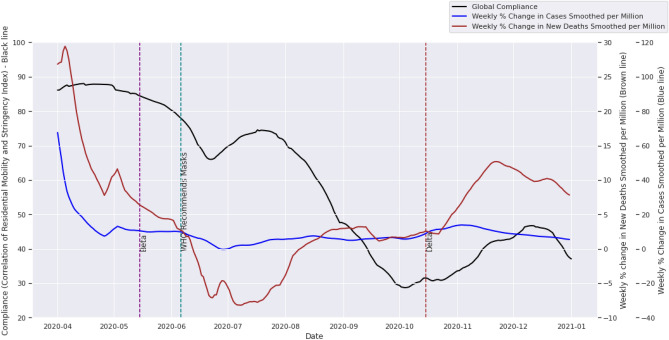
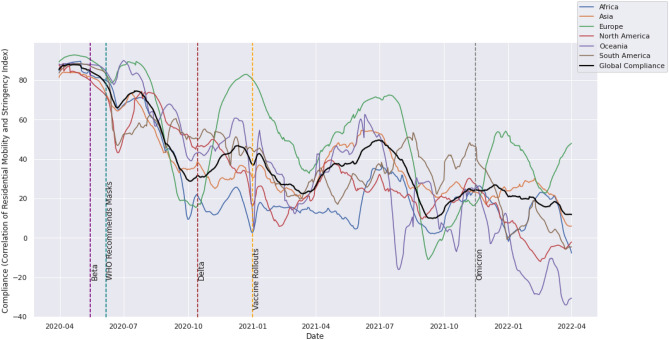
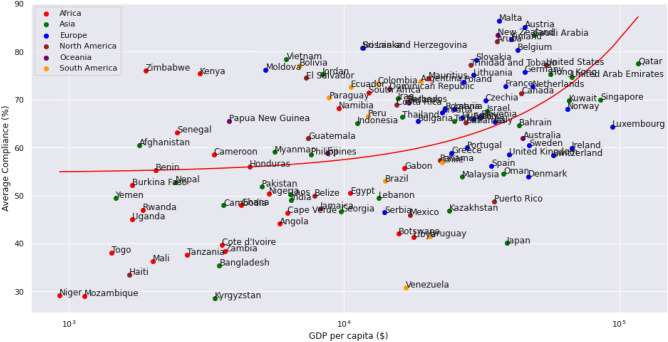
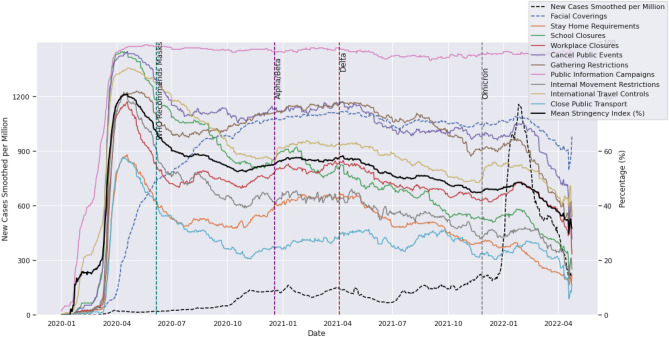
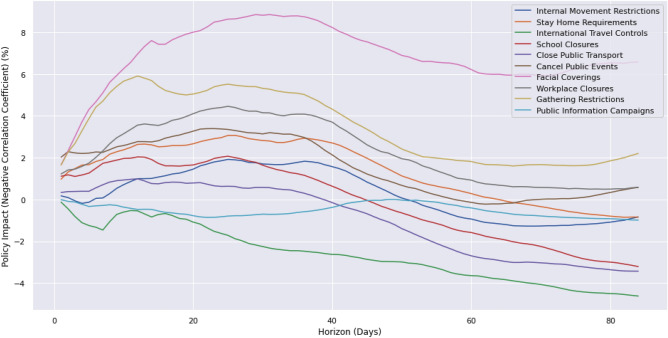
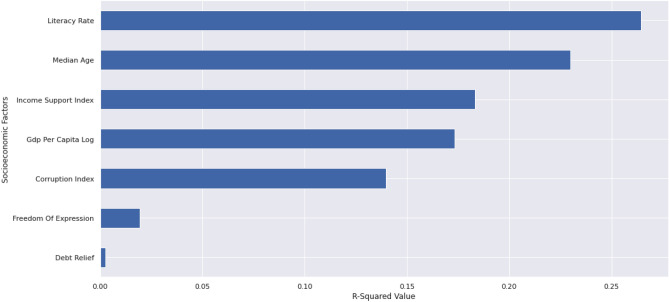
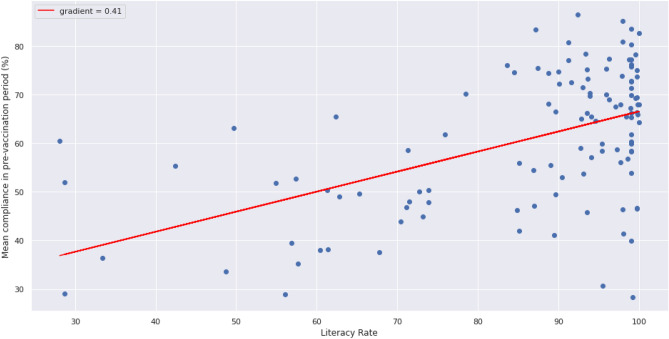
Governments implemented many non-pharmaceutical interventions (NPIs) to suppress the spread of COVID-19 with varying results. In this paper, country-level daily time series from Our World in Data facilitates a global analysis of the propagation of the virus, policy responses and human mobility patterns. High death counts and mortality ratios influence policy compliance levels. Evidence of long-term fatigue was found with compliance dropping from over 85% in the first half of 2020 to less than 40% at the start of 2021, driven by factors such as economic necessity and optimism coinciding with vaccine effectiveness. NPIs ranged from facial coverings to restrictions on mobility, and these are compared using an empirical assessment of their impact on the growth rate of case numbers. Masks are the most cost-effective NPI currently available, delivering four times more impact than school closures, and approximately double that of other mobility restrictions. Gathering restrictions were the second most effective. International travel controls and public information campaigns had negligible effects. Literacy rates and income support played key roles in maintaining compliance. A 10% increase in literacy rate was associated with a 3.2% increase in compliance, while income support of greater than half of previous earnings increased compliance by 4.8%.
各国政府实施了许多非药物干预措施(NPIs)来抑制 COVID-19 的传播,但效果各异。本文利用 Our World in Data 的国家层面每日时间序列数据,对病毒传播、政策应对和人类流动模式进行了全球分析。高死亡人数和死亡率影响了政策遵守水平。研究发现,长期疲劳的证据明显,2020 年上半年遵守率超过 85%,但到 2021 年初降至不到 40%,这是由于经济必要性和对疫苗有效性的乐观情绪等因素驱动。NPIs 的范围从面部遮盖物到对流动性的限制,本文使用对病例数量增长率的影响的实证评估对这些措施进行了比较。口罩是目前最具成本效益的 NPI,其影响是学校停课的四倍,大约是其他流动性限制措施的两倍。集会限制是第二有效的措施。国际旅行管制和公众宣传活动几乎没有效果。识字率和收入支持在维持遵守方面发挥了关键作用。识字率提高 10%,遵守率就会提高 3.2%,而收入支持超过之前收入的一半,则会使遵守率提高 4.8%。