Huang Beibei, Fong Lon W R, Chaudhari Rajan, Zhang Shuxing
Intelligent Molecular Discovery Laboratory, Department of Experimental Therapeutics, The University of Texas MD Anderson Cancer Center, Houston, TX, United States.
Front Artif Intell. 2023 Mar 23;6:1069353. doi: 10.3389/frai.2023.1069353. eCollection 2023.
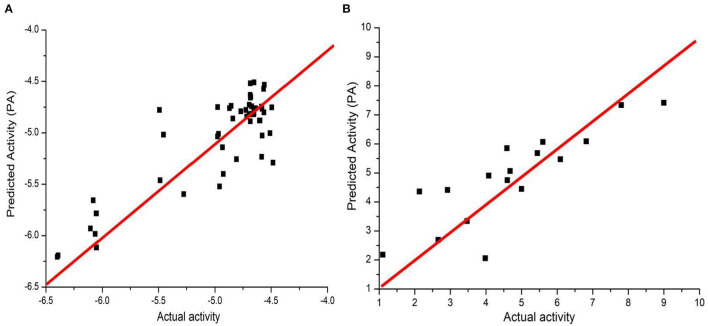
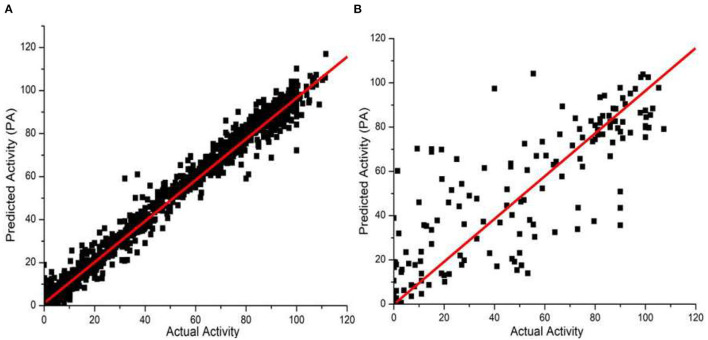
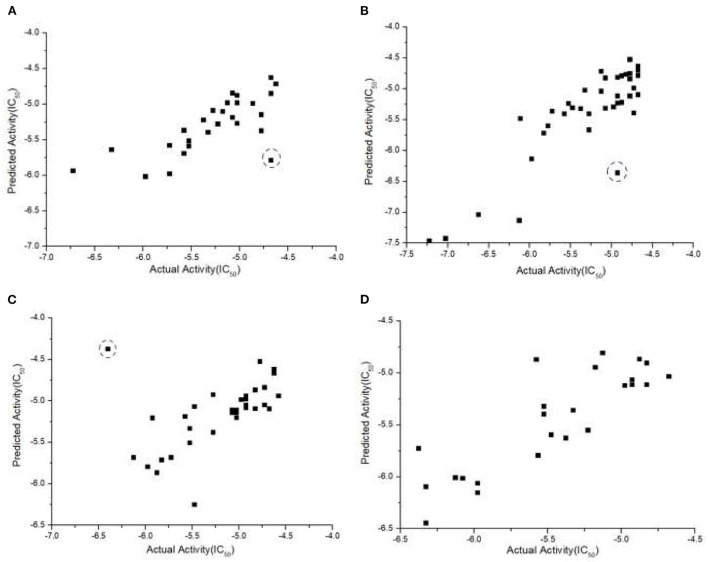
Accurate prediction of drug response is a crucial step in personalized medicine. Recently, deep learning techniques have been witnessed with significant breakthroughs in a variety of areas including biomedical research and chemogenomic applications. This motivated us to develop a novel deep learning platform to accurately and reliably predict the response of cancer cells to different drug treatments. In the present work, we describe a Java-based implementation of deep neural network method, termed JavaDL, to predict cancer responses to drugs solely based on their chemical features. To this end, we devised a novel cost function and added a regularization term which suppresses overfitting. We also adopted an early stopping strategy to further reduce overfit and improve the accuracy and robustness of our models. To evaluate our method, we compared with several popular machine learning and deep neural network programs and observed that JavaDL either outperformed those methods in model building or obtained comparable predictions. Finally, JavaDL was employed to predict drug responses of several aggressive breast cancer cell lines, and the results showed robust and accurate predictions with as high as 0.81.
准确预测药物反应是个性化医疗中的关键一步。最近,深度学习技术在包括生物医学研究和化学基因组学应用在内的多个领域取得了重大突破。这促使我们开发一个新颖的深度学习平台,以准确可靠地预测癌细胞对不同药物治疗的反应。在当前工作中,我们描述了一种基于Java的深度神经网络方法实现,称为JavaDL,仅根据药物的化学特征来预测癌症对药物的反应。为此,我们设计了一种新颖的代价函数并添加了一个抑制过拟合的正则化项。我们还采用了早期停止策略来进一步减少过拟合并提高模型的准确性和鲁棒性。为了评估我们的方法,我们与几个流行的机器学习和深度神经网络程序进行了比较,发现JavaDL在模型构建方面要么优于那些方法,要么获得了可比的预测结果。最后,JavaDL被用于预测几种侵袭性乳腺癌细胞系的药物反应,结果显示预测稳健且准确,准确率高达0.81。