Department of Chemistry, Molecular Sciences Research Hub, Imperial College London, London, W12 0BZ, UK.
Department of Pure and Applied Chemistry, University of Strathclyde, Glasgow, G1 1RD, UK.
Chem Commun (Camb). 2023 May 2;59(36):5312-5328. doi: 10.1039/d3cc00573a.
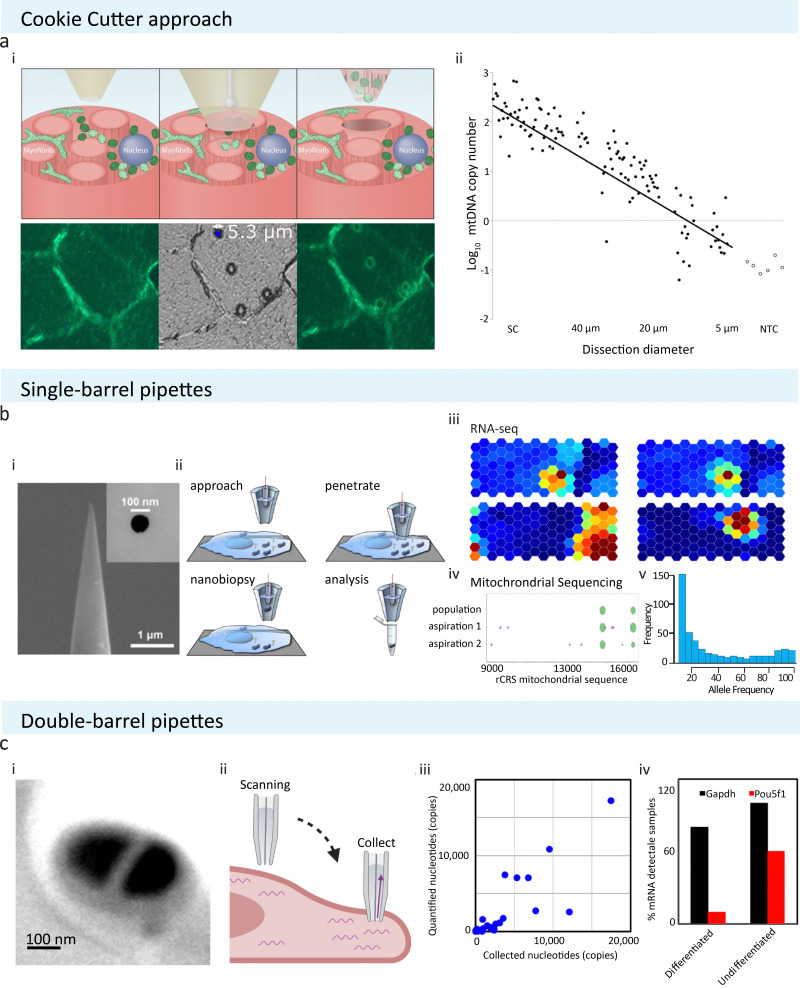
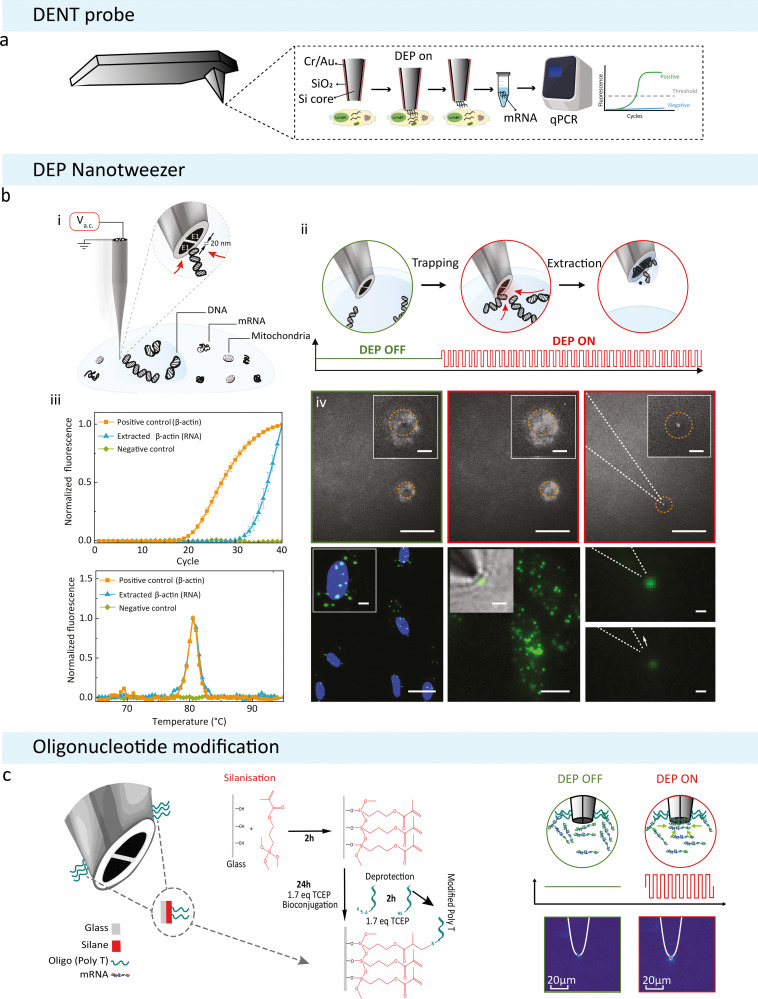
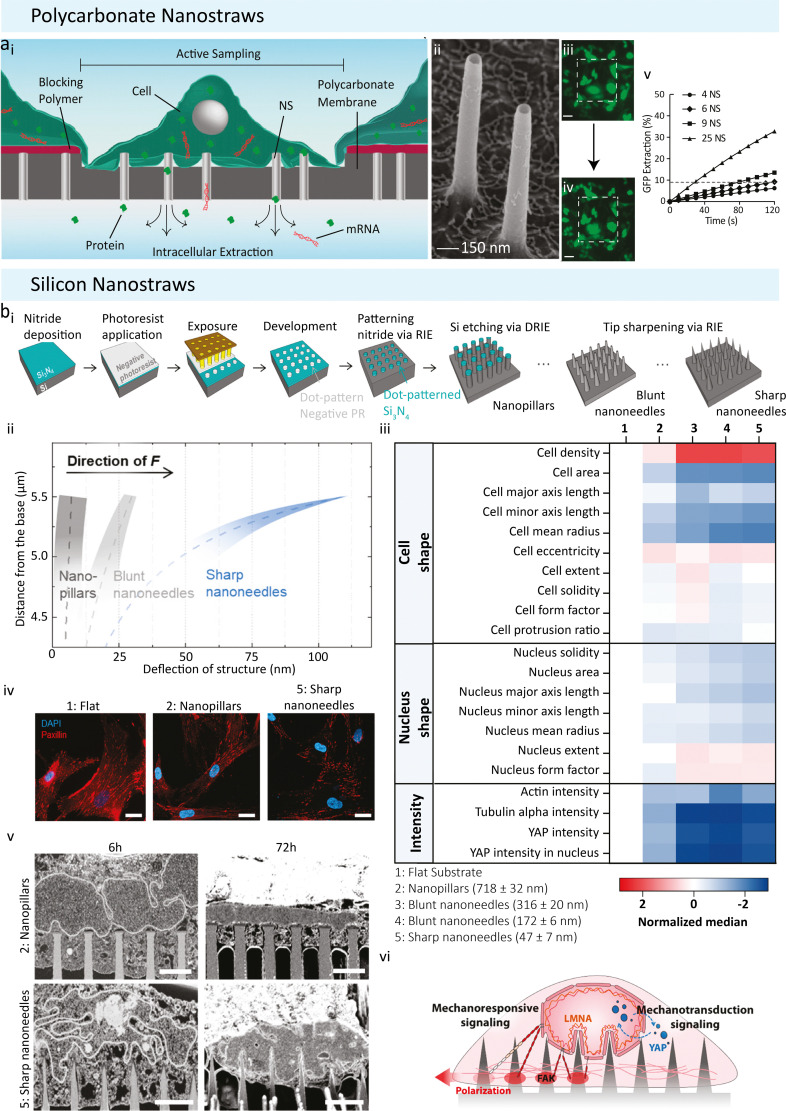
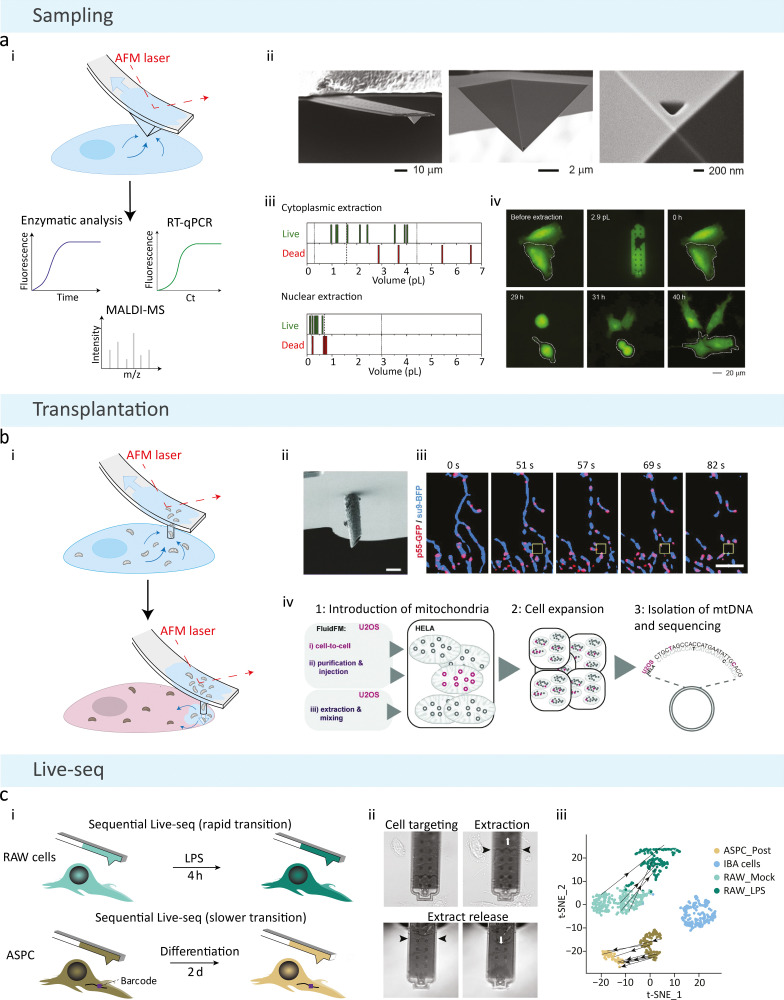
Recent innovations in single-cell technologies have opened up exciting possibilities for profiling the omics of individual cells. Minimally invasive analysis tools that probe and remove the contents of living cells enable cells to remain in their standard microenvironment with little impact on their viability. This negates the requirement of lysing cells to access their contents, an advancement from previous single-cell manipulation methods. These novel methods have the potential to be used for dynamic studies on single cells, with many already providing high intracellular spatial resolution. In this article, we highlight key technological advances that aim to remove the contents of living cells for downstream analysis. Recent applications of these techniques are reviewed, along with their current limitations. We also propose recommendations for expanding the scope of these technologies to achieve comprehensive single-cell tracking in the future, anticipating the discovery of subcellular mechanisms and novel therapeutic targets and treatments, ultimately transforming the fields of spatial transcriptomics and personalised medicine.
单细胞技术的最新创新为分析单个细胞的组学提供了令人兴奋的可能性。微创分析工具可以探测和提取活细胞的内容物,使细胞在其标准微环境中保持不变,对其活力几乎没有影响。这否定了以前的单细胞操作方法中需要裂解细胞才能获得其内容物的要求。这些新方法有可能用于对单细胞进行动态研究,其中许多方法已经提供了高的细胞内空间分辨率。在本文中,我们重点介绍了旨在去除活细胞内容物以进行下游分析的关键技术进展。综述了这些技术的最新应用及其当前的局限性。我们还提出了扩大这些技术范围的建议,以实现未来的全面单细胞跟踪,预计将发现亚细胞机制和新的治疗靶点和治疗方法,最终改变空间转录组学和个性化医学领域。