Urban Institute, Kyushu University, 744 Motooka, Nishi-ku, Fukuoka, 819-0395, Japan.
Sci Rep. 2023 Apr 11;13(1):5905. doi: 10.1038/s41598-023-33235-7.
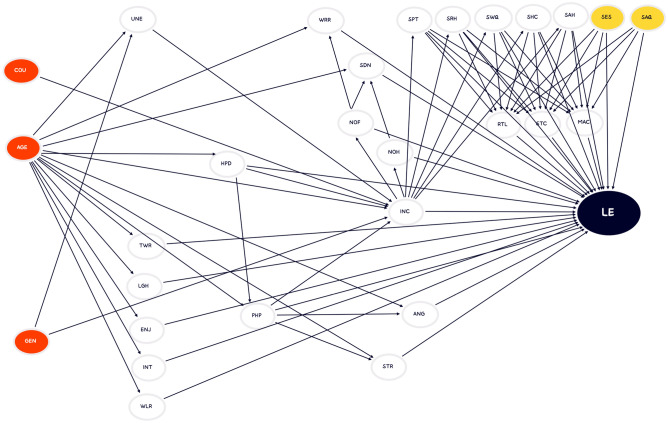
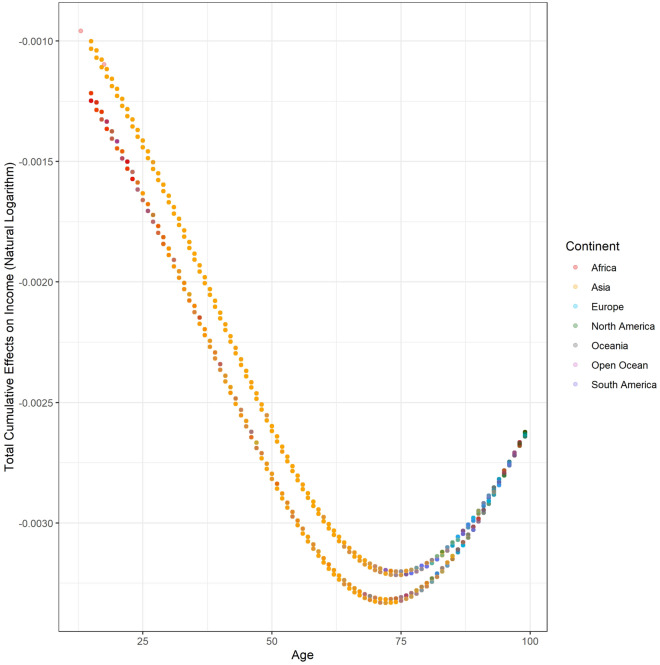
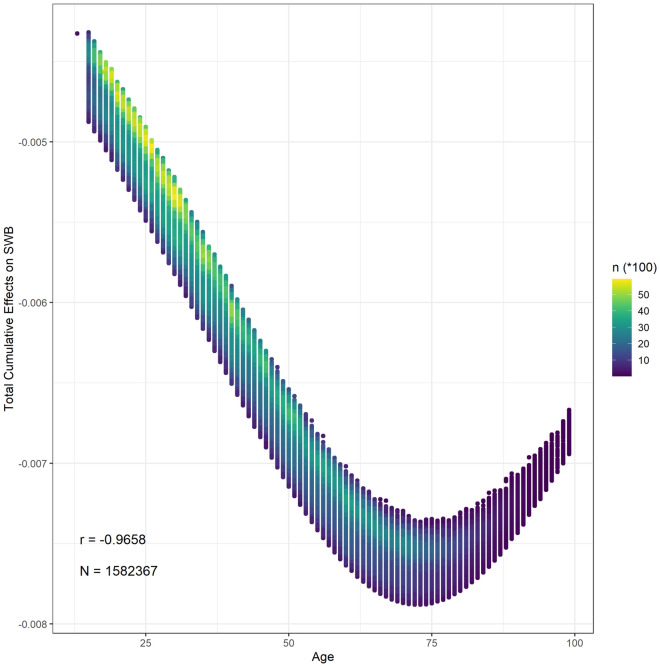
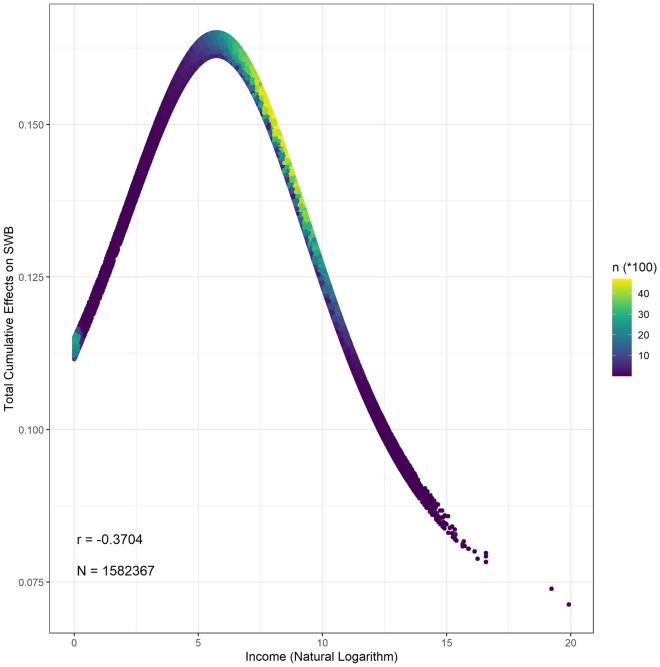
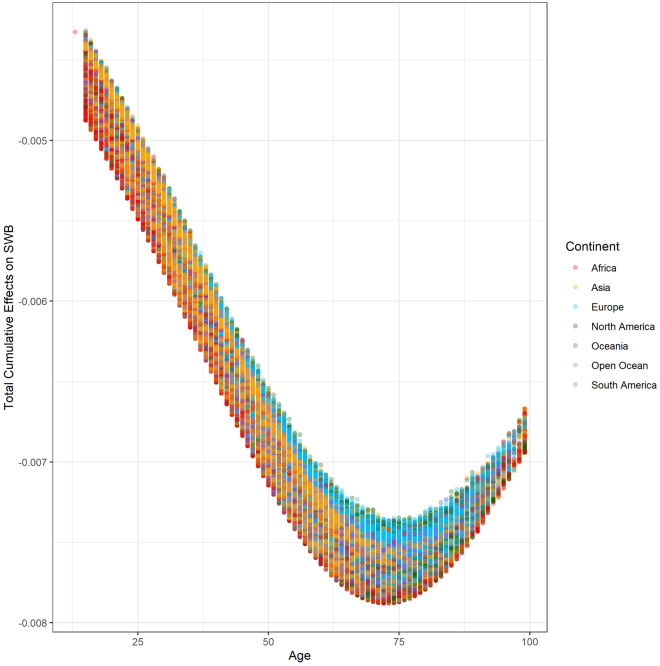
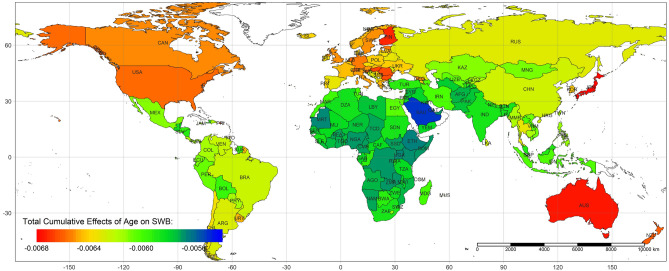
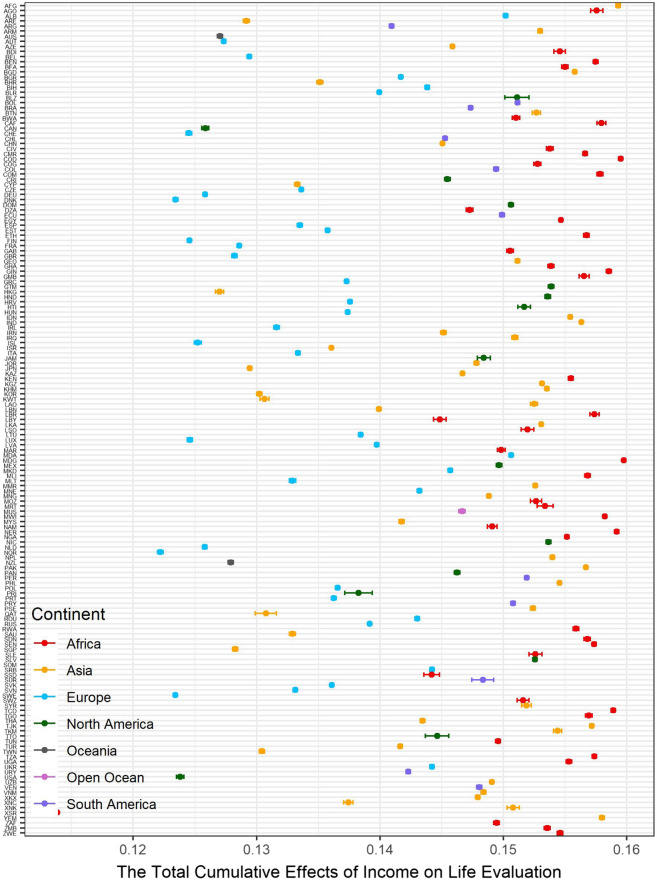
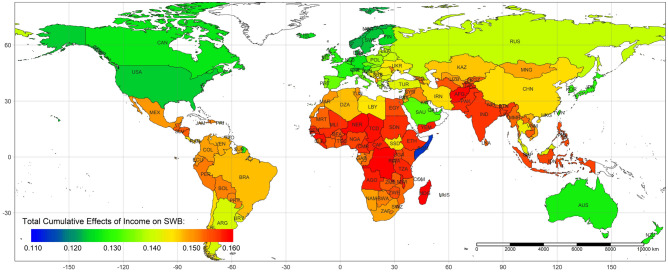
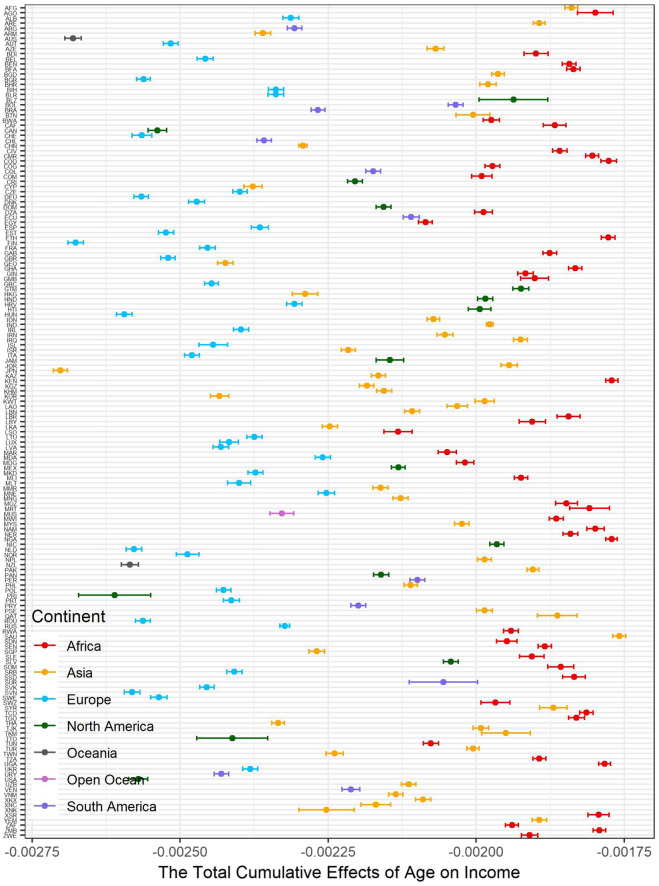
The relationships among human well-being, income, and age have long been debated. The association between human well-being and income is believed to be U-shaped, although the reasons remain elusive. A recent study shows a turning point in the link between human well-being and income; that is, increased income does not always improve well-being. However, the mechanisms of the effects of income and age on human well-being are unknown. Here, we illustrate the total cumulative effects of income and age on evaluated well-being through all observed causal pathways based on a 1.6-million-observation global dataset and the structural causal model. This is the first study to investigate those casual relationships globally. We find that an increase in age always reduces evaluated well-being, and the adverse effects are aggravated with age. Furthermore, increased income continuously improves human well-being, but the impacts gradually become marginal with higher income. Our results demonstrate that physical health improvement in older people is the most effective way to intervene against the harmful effects of age on well-being. Moreover, increased income may dramatically enhance the well-being of people living close to the poverty line.
人类福祉、收入和年龄之间的关系一直备受争议。人们认为,人类福祉与收入之间的关系呈 U 型,尽管其原因仍难以捉摸。最近的一项研究表明,人类福祉与收入之间的联系出现了转折点;也就是说,收入的增加并不总是能提高幸福感。然而,收入和年龄对人类幸福感影响的机制尚不清楚。在这里,我们通过基于 160 万次观测的全球数据集和结构因果模型,展示了收入和年龄对评估幸福感的总累积效应。这是首次在全球范围内研究这些因果关系的研究。我们发现,年龄的增长总是会降低幸福感,并且随着年龄的增长,这种负面影响会加剧。此外,收入的增加会持续提高人类的幸福感,但随着收入的增加,其影响会逐渐变得微不足道。我们的研究结果表明,改善老年人的身体健康是对抗年龄对幸福感产生不利影响的最有效方法。此外,增加收入可能会显著提高接近贫困线的人们的幸福感。